Walleye are the ice belt's marquee fish, and they reward planning more than talent. Their eyes, built with a reflective layer that trades daytime sharpness for low-light dominance, set the schedule. Their relationship with structure sets the map. Veteran hardwater anglers describe consistent winter walleye fishing as an appointment: right edge, right window, rods ready before the light changes.
Where winter walleye set up
The season arc, explained fully in our best times to ice fish guide, moves walleye predictably:
| Phase | Primary locations | Typical depths |
|---|---|---|
| First ice | Weedline edges, shallow rock and gravel bars, points | 6-15 ft |
| Midwinter | Deep edges of bars and humps, basin transitions, mud flats | 15-35 ft |
| Late ice | Flats and edges near inlets and spawning shorelines | 5-15 ft |
The unifying idea is the edge. Walleye hold on transitions, hard to soft bottom, weeds to open water, flat to drop, and slide shallow along those edges to feed as light falls, then retreat deep after the window. The classic setup drills a line of holes from the top of a structure edge down its face, so the school's evening commute passes under at least one of them.
On big fertile waters like the Winnebago system and the Wisconsin River flowages from our Wisconsin starting guide, basin mud flats add a midwinter pattern of roaming fish that graze invertebrates and bait across nearly featureless bottom, where covering water matters even more.
The one-two presentation
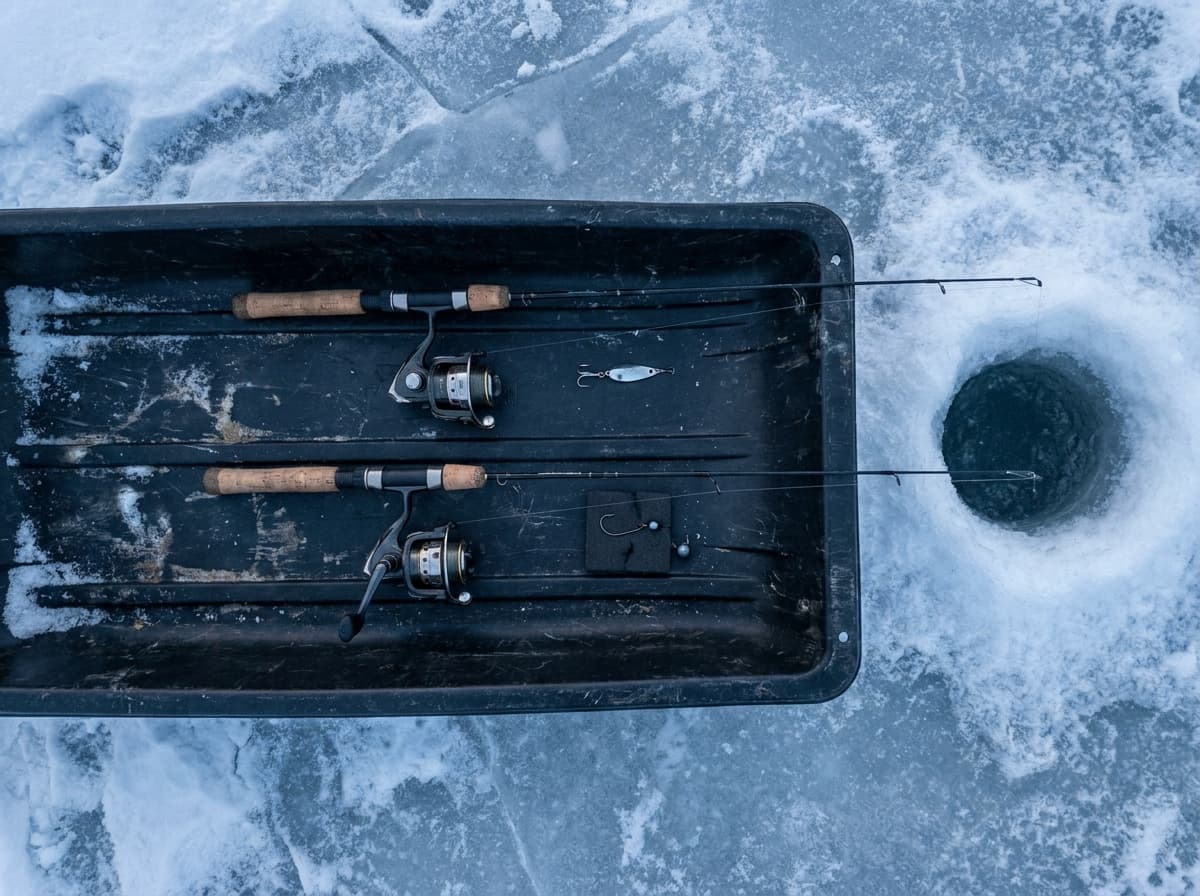
The standard winter walleye program pairs an active rod with a passive one wherever regulations allow multiple lines:
The jigging rod calls. A flash spoon, rattle spoon, or lipless bait, typically tipped with a minnow head, worked with aggressive snaps and long pauses. The commotion pulls fish from distance; the pause converts. Jigging raps and glide baits add a horizontal swing that often out-fishes spoons on pressured water.
The dead stick closes. A live fathead or shiner on a plain hook or small jig under a float or on a soft-tip rod, set a few feet from the jigging hole, hovering a foot off bottom. Fish that rise to the noise but refuse the hardware slide over and eat the natural offer. On many nights the dead stick out-catches the jigging rod, which is the point: the pair works as one system. Tip-ups running the same live bait across a wider spread extend this logic, and our jigging versus tip-ups comparison covers when each shines.
Fishing the windows
The dawn and dusk pattern is the closest thing hardwater fishing has to a law. A practical schedule for an evening bite: holes drilled and electronics set 45 minutes before sunset, lines down 30 minutes before, and full attention through the last light and the first hour of dark. Walleye frequently keep feeding after full dark on clear lakes, and stained water shifts the bite earlier into daylight. Midday walleye happen, especially on snow-covered ice, deep structure, and overcast days, but the windows are where a season's numbers are made.
Reading the flasher matters doubly at prime time. A thick mark rising off bottom to meet a snapped spoon is the signature walleye look, covered in detail in our flasher guide: commit to that fish, slow everything down, and lift the bait away from it rather than dropping to it.
Gear notes without the catalog
A 28 to 36 inch medium or medium-light ice rod with a fast tip covers jigging; the dead stick wants a soft, slow tip a walleye cannot feel. Line runs 6 to 8 lb fluorocarbon or braid with a fluoro leader. Lure weight scales with depth: quarter-ounce spoons shallow, three-eighths and up past 20 feet. The full buying breakdowns live in our roundups of the best ice fishing rods and best ice fishing flashers.
The non-negotiables sit outside the tackle bag: walleye water at dusk means traveling and fishing in failing light, so the safety system, picks, rope, spud bar, flotation, and a filed plan, plus a conditions check in the Ice & Water Report, comes first. No ice is ever one hundred percent safe, and after-dark trips shrink every margin. The ice fishing hub connects the complete seasonal system.
Regulations deserve a check too: walleye bag limits, size windows, and line counts vary by state and often by water, so verify current rules for your lake before the trip.
What is the best bait for walleye through the ice?
Live minnows anchor the sport: fatheads for dead sticks and tip-ups everywhere, with shiners or small suckers where available and legal for larger fish. On the jigging rod, a minnow head on a spoon adds scent without killing the action. Where minnow use is restricted, preserved baits and scented plastics on jigs fill the role; check your state's bait regulations.
How deep should I fish for winter walleye?
Fish the structure phase, not a magic number: 6 to 15 feet on first-ice bars and weed edges, 15 to 35 on midwinter structure and flats, back shallow toward staging areas at late ice. On any given edge, start with holes across the full depth range and let the flasher vote. In deep clear lakes, check well off bottom too; walleye suspend more than tradition admits.
Are tip-ups or jigging better for walleye?
Both, deliberately: jigging out-fishes tip-ups when fish are aggressive and localized, while a tip-up spread wins for coverage on flats, roaming schools, and after-dark sets. The standard system runs a jigging rod in hand with tip-ups or a dead stick spread within legal line limits. The full comparison is in jigging versus tip-ups.
Why am I marking walleye that will not bite?
Followers that rise and fade are the most common walleye frustration, and the fixes run in order: longer pauses, smaller profile, live bait on a dead stick beside the jigging hole, and finally a move to fresh, unpressured holes on the same edge. Some marks are simply off-window fish that will eat at dusk; note the location and return at prime time.