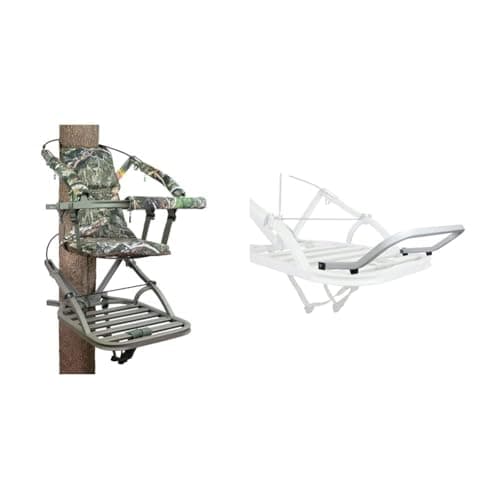
One of our picks
Summit Viper SD Climbing Treestand
Best for: Mobile hunters on public or big timber who move with the sign and hunt straight-trunk hardwoods.
Treestands · saddles · fit
Choose a treestand system for your access plan. Compare elevated hunting systems by fit, rated capacity, attachment method, platform space, packed weight, and setup workflow.
One of our picks
Best for: Mobile hunters on public or big timber who move with the sign and hunt straight-trunk hardwoods.
Research catalog updated
Tree, load, and restraint path
A climbing stand, hang-on, ladder stand, and saddle are different ways to reach the same elevated hunting position. Start with the tree shape, whether the setup moves or stays put, the platform and seat space, the total load, and the manufacturer-required restraint system before comparing weight or comfort.
Published capacity includes the hunter and carried gear. Read the exact manual, inspect every component, practice the system at ground level, and use the manufacturer's full-body fall-arrest and climbing guidance. No stand or saddle replaces training or a deliberate setup check.
A climber needs a suitable straight trunk and a clear climb path. A hang-on or ladder stand asks for a tree-specific attachment and a separate climbing route. A saddle depends on a platform, climbing aids, tether, and lineman's rope that work together. Choose around the actual trees and access you have.
Add the hunter, boots, layers, pack, optics, water, seat or platform, climbing aids, and any equipment carried up the tree. Check the stand or saddle size, platform dimensions, seat height, waist range, and every published limit. A comfortable fit still needs room to move without shifting the system.
Add the manufacturer's full-body fall-arrest harness or saddle tether, lineman's rope, climbing sticks or ladder, platform, straps, hauling line, gear hooks, and storage. Include a ground-level practice session and inspection routine before treating the purchase as ready for a hunt.
Official manufacturer resource
Use the current manufacturer page and manual to confirm the climber's tree fit, included cables, backpack components, weight limit, and required restraint procedure.
Check Viper detailsOfficial manufacturer resource
Review the current M150 hang-on documentation for platform, seat, receiver, capacity including user and equipment, attachment, and full-body harness requirements.
Check M150 instructionsOfficial manufacturer resource
Compare the current kit's saddle sizes, weight rating, tether, lineman's rope, recliner, and included storage before pricing the rest of the saddle system.
Check Workhorse detailsManufacturer resources checked August 8, 2026.
Three places to start
Line up fit, strengths, limitations, and useful specifications before you open a retailer page.
Swipe sideways to compare every model.
| Compare | 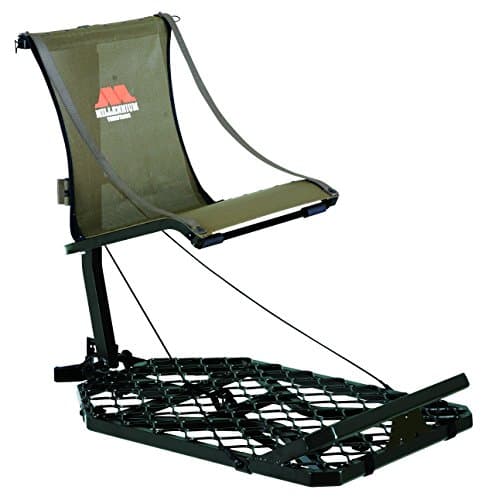 Lower price range Lower price rangeMillennium M150 Monster Hang-OnMillennium | 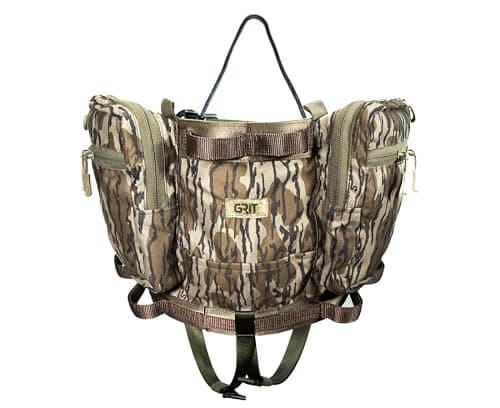 Middle price range Middle price rangeTethrd Grit Workhorse Saddle KitTethrd | Higher price rangeSummit Viper SD Climbing TreestandSummit |
|---|---|---|---|
| Price range | $150-300 | $150-300 | $300-600 |
| Best for | All-day rut sits on preset trees where comfort keeps you in the stand until the buck shows. | First-time saddle hunters who want one box that gets them most of the way into the system. | Mobile hunters on public or big timber who move with the sign and hunt straight-trunk hardwoods. |
| Strong point | Widely considered the comfort king of hang-on stands | The value benchmark for getting into saddle hunting as a system | The most popular climber in the Summit lineup, refined over decades |
| Watch for | Heavy and bulky for true hang-and-hunt mobility | Heavier and bulkier than Tethrd's premium saddles | 20 pounds gets heavy on long walks in |
| Style | Hang-on, lock-on stand | Saddle hunting kit | Climbing stand |
| Construction | Aluminum | Not specified | Aluminum with Dead Metal sound deadening |
| Weight | About 19.5 pounds | Not specified | About 20 pounds |
| Next step | Check at AmazonProduct details | Check at AmazonProduct details | Check at AmazonProduct details |
We chose one lower, middle, and higher-priced model from products we researched and matched to a current retailer page. This is a useful starting point, not a ranking.
What to compare
Once you know how and where you will use the gear, the specifications become much easier to compare.
Check harness or saddle sizing, bridge and belt range, boot space, and rated capacity with clothing and carried gear.
Platform, stand, sticks, straps, and tree diameter must work together within the maker's stated use.
Rehearse at low height, follow the manual, inspect every component, and use the required connection system throughout the climb and sit.
Build around the job
Each system connects tree stands & saddles to the other roles that matter in the field. Keep what already works and replace only the weak link.
Shop every activitySportsman Authority picks
Every card tells you who it fits, what it does well, what to watch for, and where to check the current price.
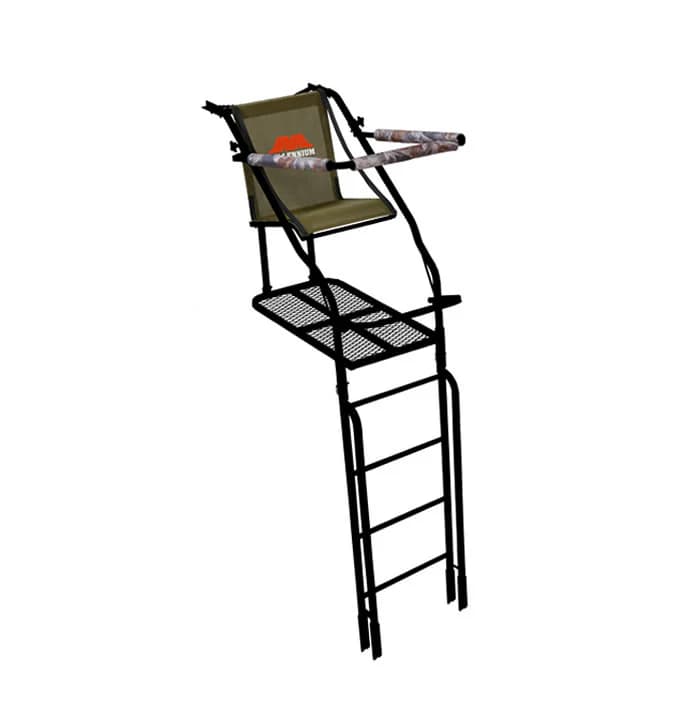
Millennium · Tree Stands & Saddles
Best for: Private-land setups over food plots and funnels where the stand lives all season.
Taller than most ladder stands, getting you above sight lines. The main tradeoff is installation is genuinely a two-person job.
$300-600
Millennium · Tree Stands & Saddles
Best for: All-day rut sits on preset trees where comfort keeps you in the stand until the buck shows.
Widely considered the comfort king of hang-on stands. The main tradeoff is heavy and bulky for true hang-and-hunt mobility.
$150-300
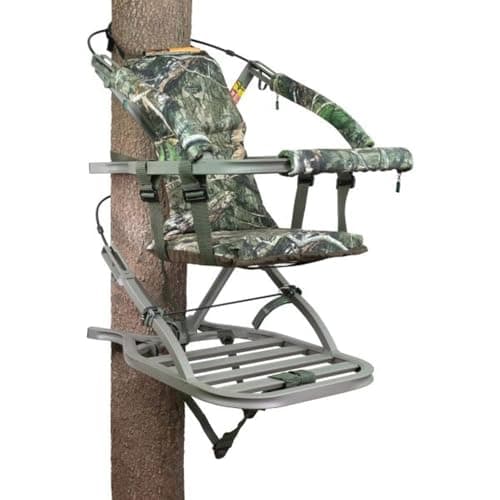
Summit · Tree Stands & Saddles
Best for: Smaller-framed hunters who found full-size climbers bulky and heavy to pack.
Lighter and more packable than the full-size Viper. The main tradeoff is cramped for larger-bodied hunters or bulky late-season layers.
$150-300
Summit · Tree Stands & Saddles
Best for: Mobile hunters on public or big timber who move with the sign and hunt straight-trunk hardwoods.
The most popular climber in the Summit lineup, refined over decades. The main tradeoff is 20 pounds gets heavy on long walks in.
$300-600
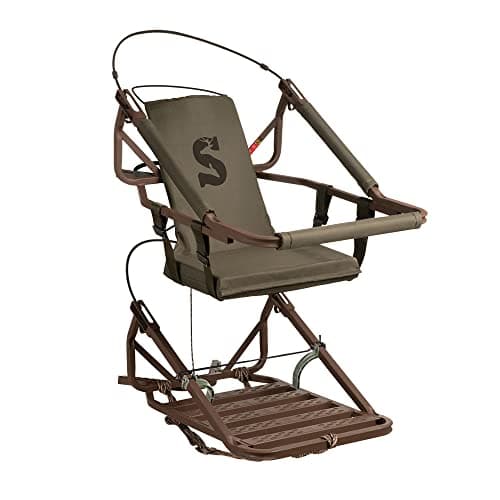
Summit · Tree Stands & Saddles
Best for: Budget-minded hunters who hunt close to the truck and want Viper comfort for less.
Viper comfort and climbing system at a lower price. The main tradeoff is nine pounds heavier than the aluminum SD, a real burden walking in.
$150-300
Tethrd · Tree Stands & Saddles
Best for: First-time saddle hunters who want one box that gets them most of the way into the system.
The value benchmark for getting into saddle hunting as a system. The main tradeoff is heavier and bulkier than Tethrd's premium saddles.
$150-300
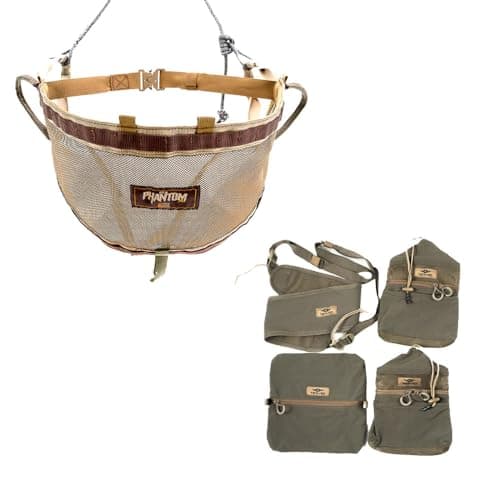
Tethrd · Tree Stands & Saddles
Best for: Committed mobile hunters ready to build a full ultralight saddle system around a premium saddle.
Flagship comfort and weight savings from the market leader. The main tradeoff is tether, platform, and sticks are all sold separately, so system cost climbs fast.
$150-300
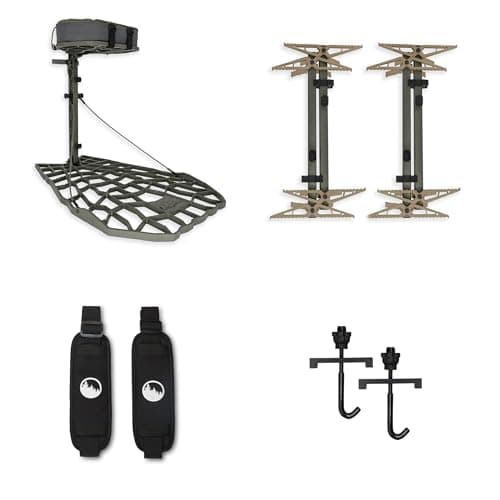
XOP · Tree Stands & Saddles
Best for: Run-and-gun public land hunters carrying a stand and sticks on their back every hunt.
Light enough for genuine hang-and-hunt mobility. The main tradeoff is seat padding is thin for all-day sits.
$150-300
Category FAQ
Choose around the trees and access you actually have. A climber needs a suitable straight trunk and a clear climb path. A hang-on or ladder stand works around a selected tree but adds attachment and climbing hardware. A saddle is a system of saddle, platform, climbing method, tether, and lineman's rope rather than a standalone seat.
Usually, the manufacturer's published limit includes the hunter and equipment. Add clothing, boots, pack, optics, water, climbing aids, platform, and anything carried up the tree before comparing your total with the exact manual. Never assume a listed capacity applies only to body weight.
Follow the exact stand or saddle manual and use the manufacturer's full-body fall-arrest harness or tether guidance. A saddle setup also needs a compatible tether and lineman's rope, while a stand can require a harness, attachment strap, and climbing procedure. Practice the complete system at ground level and inspect every component before use.
Budget for climbing sticks or ladder, platform or receiver, straps, hauling line, gear hooks, storage, full-body fall-arrest equipment, tether, lineman's rope, and a practice or inspection routine. Confirm compatibility and weight ratings across the complete system instead of mixing parts from product photos.