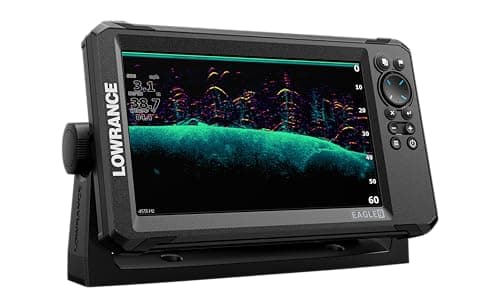
One of our picks
Lowrance Eagle 9
Best for: The angler who wants maximum screen and full sonar coverage under a grand without a trolling motor network.
Sonar · transducer · mapping
Choose a fish finder that fits the way you fish. Compare sonar, mapping, screen, and transducer packages for kayaks, small boats, and full marine consoles.
One of our picks
Best for: The angler who wants maximum screen and full sonar coverage under a grand without a trolling motor network.
Research catalog updated
Sonar and rig path
A fish finder is a system, not just a display. Start with the boat or kayak, the water you fish, and the views you actually need. Then match the transducer, mount, mapping, power, and future add-ons before comparing screen size or headline depth.
A large screen cannot fix the wrong transducer or a poor mount. Check what is included in the box, how the transducer will sit in the water, how much power the unit draws, and whether the mapping or networking features support the next upgrade you are likely to make.
A kayak, small tiller boat, and full console have different space, mounting, visibility, and power limits. Measure the mounting area, confirm the voltage, and choose a screen you can read from the seat you actually fish from.
Traditional CHIRP, DownScan or Down Imaging, SideScan or Side Imaging, and live views answer different questions. Confirm the included transducer, mounting style, connector, depth range, and whether its view matches the structure and speed you fish.
Add the display, transducer, gimbal or flush mount, fuse and wiring, battery or charging source, map card, protective cover, and installation. If live sonar or a trolling-motor network may come later, check compatibility before buying the first unit.
Official manufacturer resource
Check the official Eagle 9 package, TripleShot HD transducer, C-MAP options, screen, power, mounting, and supported charting before comparing listings.
Check Lowrance Eagle 9Official manufacturer resource
Review the official 7-inch package and the distinction between traditional CHIRP and ClearVü sonar when a simpler GPS fish-finder setup is the better fit.
Check Garmin STRIKER VividOfficial manufacturer resource
Compare the manufacturer's MEGA Side Imaging, MEGA Down Imaging, Dual Spectrum CHIRP, GPS, and AutoChart approach when structure detail is the priority.
Check Humminbird HELIX 7Manufacturer resources checked August 8, 2026.
Three places to start
Line up fit, strengths, limitations, and useful specifications before you open a retailer page.
Swipe sideways to compare every model.
| Compare | 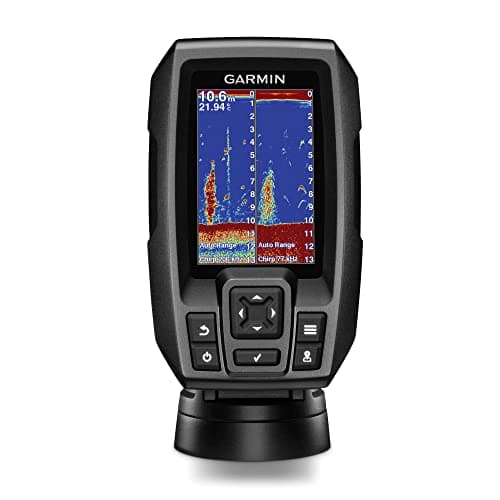 Lower price range Lower price rangeGarmin Striker 4Garmin | 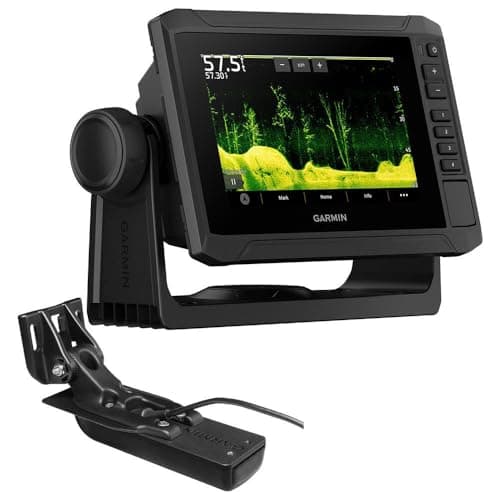 Middle price range Middle price rangeGarmin ECHOMAP UHD2 74svGarmin | 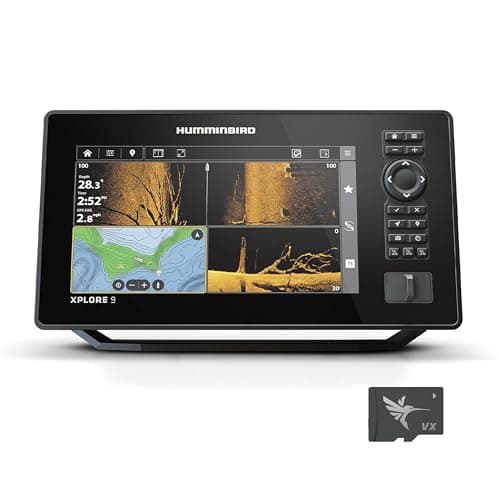 Higher price range Higher price rangeHumminbird XPLORE 9Humminbird |
|---|---|---|---|
| Price range | $50-150 | $600-1000 | Over $1000 |
| Best for | The small-boat angler adding real sonar and waypoints for the price of a tank of gas. | The serious walleye or bass angler building toward live sonar who wants Garmin mapping now. | The committed Humminbird and Minn Kota boat owner modernizing to a touchscreen live-sonar-ready system. |
| Strong point | The default first sonar unit for jon boats, kayaks, and ice-to-open-water crossover | Clear preloaded inland mapping with Quickdraw custom contours | Humminbird's current-generation touchscreen platform, far faster than HELIX |
| Watch for | No mapping support at all, waypoints draw on a blank screen | Costs meaningfully more than an Eagle 9 with a smaller screen | Premium price before adding the MEGA Live 2 transducer |
| Display | 3.5 in color display | 7 in keyed-assist touchscreen | 9 in touchscreen, 2025 platform |
| Sonar | CHIRP traditional sonar with included dual-beam transducer | UHD ClearVu and SideVu scanning plus CHIRP with GT54 series transducer | Not specified |
| Mapping | Not specified | Preloaded LakeVu g4 inland maps for the US | Builds custom maps on the water |
| Next step | Check at AmazonProduct details | Check at AmazonProduct details | Check at AmazonProduct details |
We chose one lower, middle, and higher-priced model from products we researched and matched to a current retailer page. This is a useful starting point, not a ranking.
What to compare
Once you know how and where you will use the gear, the specifications become much easier to compare.
Choose traditional 2D, down imaging, side imaging, or live sonar around the water and structure you actually fish.
Balance daylight visibility and usable split screens against dash space, glove use, and menu complexity.
Confirm the included transducer, mounting position, power draw, and mapping coverage before comparing price.
Build around the job
Each system connects fish finders to the other roles that matter in the field. Keep what already works and replace only the weak link.
Shop every activityFish Finders roleAdds depth, structure, mapping, and sonar context to the water being covered.
Trolling Motors · Marine Batteries · Tackle Boxes & Bags
See the complete setupFish Finders roleHelps separate productive depth, structure, bait, and boat position from empty water.
Spinning Combos · Walleye Lures · Fishing Line
See the complete setupFish Finders roleBrings compact depth and structure information into a limited console area.
Fishing Kayaks · Kayak Fishing Accessories · Marine Batteries
See the complete setupSportsman Authority picks
Every card tells you who it fits, what it does well, what to watch for, and where to check the current price.
Garmin · Fish Finders
Best for: The serious walleye or bass angler building toward live sonar who wants Garmin mapping now.
Clear preloaded inland mapping with Quickdraw custom contours. The main tradeoff is costs meaningfully more than an Eagle 9 with a smaller screen.
$600-1000
Garmin · Fish Finders
Best for: The small-boat angler adding real sonar and waypoints for the price of a tank of gas.
The default first sonar unit for jon boats, kayaks, and ice-to-open-water crossover. The main tradeoff is no mapping support at all, waypoints draw on a blank screen.
$50-150
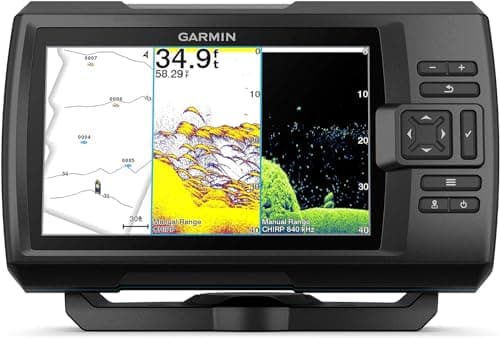
Garmin · Fish Finders
Best for: The value buyer who wants a big screen and scanning sonar but does not need lake maps.
Big readable screen at a working-angler price. The main tradeoff is still no chartplotting, which caps its usefulness on big water.
$300-600
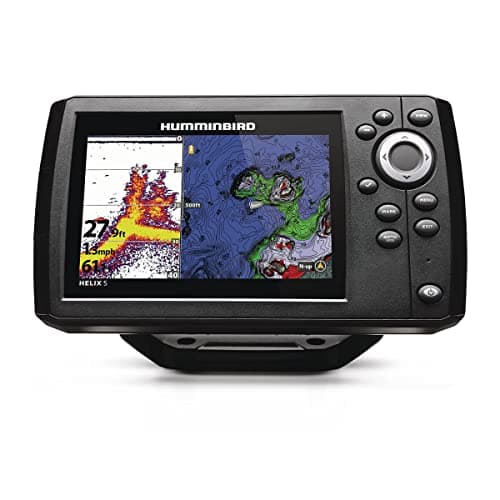
Humminbird · Fish Finders
Best for: The budget-minded angler who insists on real mapping, especially on small unmapped natural lakes.
AutoChart Live draws your own depth contours on unmapped lakes. The main tradeoff is interface is dated and menu-heavy compared to newer Humminbird lines.
$300-600
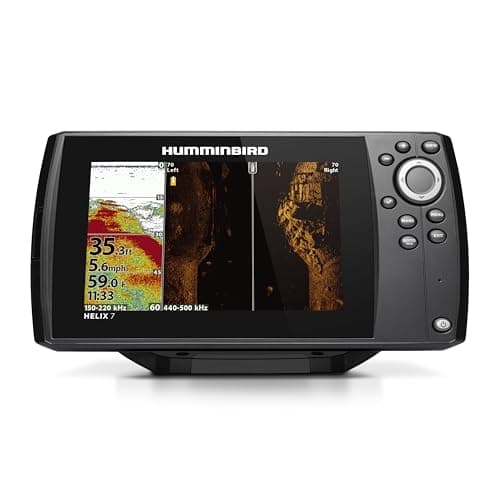
Humminbird · Fish Finders
Best for: The structure hunter who prioritizes detailed side imaging over touchscreen polish.
Cheapest entry into Humminbird's MEGA imaging, the industry benchmark for side scanning. The main tradeoff is keypad-only interface feels slow after using touchscreens.
$600-1000
Humminbird · Fish Finders
Best for: The committed Humminbird and Minn Kota boat owner modernizing to a touchscreen live-sonar-ready system.
Humminbird's current-generation touchscreen platform, far faster than HELIX. The main tradeoff is premium price before adding the MEGA Live 2 transducer.
Over $1000
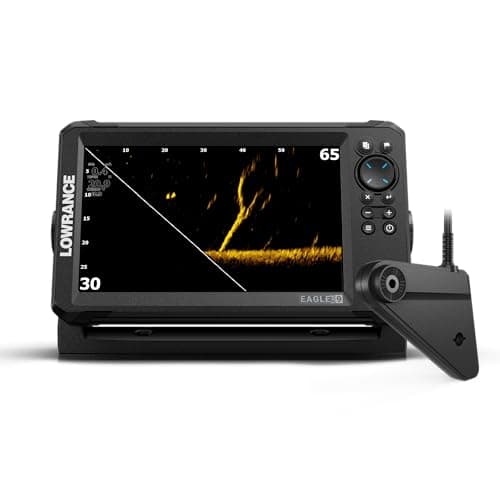
Lowrance · Fish Finders
Best for: The angler who wants maximum screen and full sonar coverage under a grand without a trolling motor network.
Huge screen for the money in the 2024-era Eagle refresh of the Hook line. The main tradeoff is no networking with other units or radar-style expansion.
$600-1000
Lowrance · Fish Finders
Best for: The angler who wants to see fish react in real time without spending flagship money on a live sonar system.
The cheapest complete path into forward-facing live sonar from a major brand. The main tradeoff is live image resolution and range trail LiveScope and MEGA Live 2.
$600-1000
Category FAQ
Start with the question you need the screen to answer. Traditional CHIRP helps show fish targets and depth, DownScan or Down Imaging adds detail below the boat, and SideScan or Side Imaging looks out to the sides. Choose the transducer and view that fit your water, speed, structure, and mounting position instead of paying for every mode by default.
Some packages include a transducer and some displays are sold without one. Read the exact package name, part number, connector, and included-items list. A display that looks inexpensive can require a separate transducer, mount, or adapter before it can do the work you expect.
GPS and mapping are useful when you mark waypoints, follow a contour, return to structure, or fish unfamiliar water. They are less important on a simple portable or kayak setup where the priority is a clear depth and fish view. Check the included basemap or card, update path, and coverage for the water you fish.
Budget for the transducer, mount, fuse, wiring, battery or charging source, map card, cover, and installation time. A transom or trolling-motor mount can change the parts list. If you may add live sonar or a networked trolling motor later, confirm compatibility before locking into a display family.