One of our picks
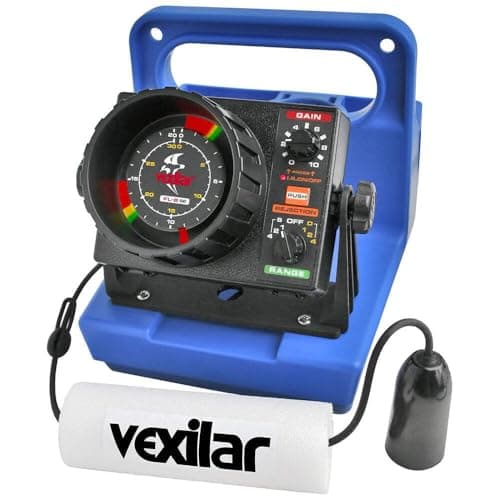
Vexilar FL-8SE Genz Pack
Best for: Beginners and value-focused anglers who want the time-tested standard that started modern ice sonar.
Ice sonar · flashers · live views
Choose hardwater sonar you can read and carry. Compare portable hardwater sonar by display language, target separation, transducer coverage, battery life, and hole-to-hole mobility.
One of our picks
Best for: Beginners and value-focused anglers who want the time-tested standard that started modern ice sonar.
Research catalog updated
Display, transducer, and carry path
A hardwater sonar unit has to answer a question quickly in a cold shelter, on a bucket, or while you move between holes. Start with how you read a display, then fit target separation, transducer coverage, GPS or mapping, battery, cable handling, and the carry system to the day.
A larger screen or live view does not automatically make a better hardwater setup. Confirm the exact transducer, battery, shuttle or bag, cable length, cold-weather handling, and included accessories before comparing a feature list.
A mechanical-style flasher shows jig and fish movement directly, while a graph or live view can add history, structure, and directional context. Pick the interface you can interpret with gloves and low light instead of buying every mode by default.
Traditional CHIRP and dual-beam views are useful for depth and target separation, while live forward or down views can show fish movement around the hole. Confirm cone coverage, mounting pole, cable flexibility, interference controls, and the water depth you actually fish.
Battery weight, runtime, charger, shuttle or bag, screen protection, cable storage, and a stable transducer position determine whether the unit is useful from hole to hole. If summer boat use matters, confirm the conversion kit and the mount and wiring path before paying for the crossover feature.
Official manufacturer resource
Review the current FLX-28 family for automatic depth ranging, digital depth, display palettes, weed mode, Ice-Ducer options, and battery or Pro Pack configurations.
Check FLX-28 configurationsOfficial manufacturer resource
Use the current ICE HELIX 7 page to compare CHIRP sonar, GPS and Humminbird Basemap, all-season options, ice transducer compatibility, battery, and shuttle packages.
Check ICE HELIX detailsOfficial manufacturer resource
Review the official LiveScope Plus bundle for forward and down views, target separation, lithium battery, flexible cold-weather cable, pole mount, display, and boat crossover options.
Check LiveScope bundleManufacturer resources checked August 9, 2026.
Three places to start
Line up fit, strengths, limitations, and useful specifications before you open a retailer page.
Swipe sideways to compare every model.
| Compare | 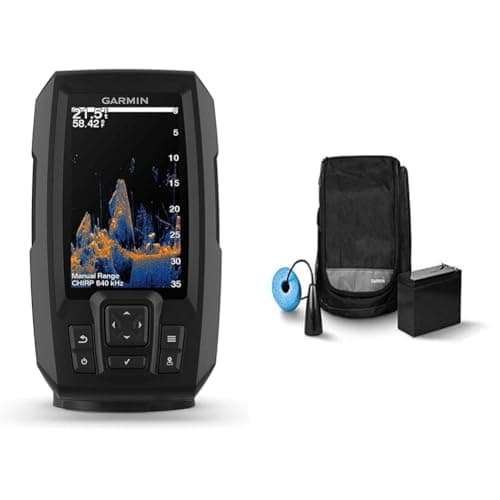 Lower price range Lower price rangeGarmin STRIKER Vivid 4cv Ice Fishing BundleGarmin | Middle price rangeVexilar FL-8SE Genz PackVexilar | 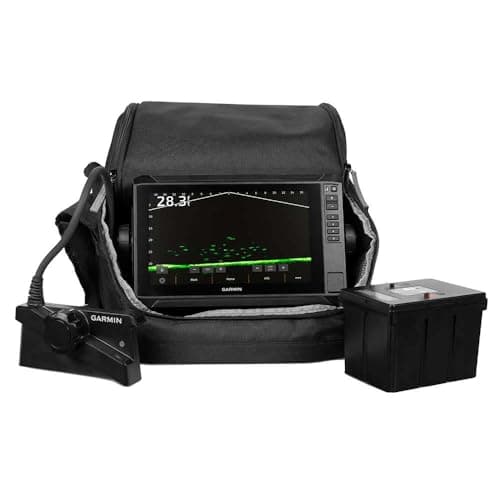 Higher price range Higher price rangeGarmin LiveScope Plus Ice Fishing Bundle LIGarmin |
|---|---|---|---|
| Price range | $300-600 | $300-600 | Over $1000 |
| Best for | Budget-minded anglers who want modern CHIRP sonar and GPS in one starter ice package. | Beginners and value-focused anglers who want the time-tested standard that started modern ice sonar. | All-in anglers chasing roaming schools of crappie, perch, and walleye who can justify a flagship investment. |
| Strong point | True CHIRP sonar clarity at an entry-level bundle price | Entry-level price with reliable performance in the coldest weather | Live sonar shows fish moving and reacting to your lure in near real time |
| Watch for | Small 4.3 inch screen gets cramped in split-screen views | Lacks the acute target separation of higher-end units | Costs several times more than a premium flasher |
| Display | 4.3 inch color display | Circular flasher with three-color LED display | 9 inch ECHOMAP UHD2 93sv fishfinder and chartplotter |
| Power | Not specified | 12 volt 7 amp battery with charger | 16.5 amp hour lithium battery with charger |
| Transducer | Not specified | Self-leveling Ice-Ducer | LiveScope Plus LVS34-IF live sonar transducer |
| Next step | Check at AmazonProduct details | Check at AmazonProduct details | Check at AmazonProduct details |
We chose one lower, middle, and higher-priced model from products we researched and matched to a current retailer page. This is a useful starting point, not a ranking.
What to compare
Once you know how and where you will use the gear, the specifications become much easier to compare.
Mechanical-style flashers reward direct interpretation while graph and live views can shorten the learning curve.
Separation, interference rejection, zoom, and cone control matter more than headline depth on typical inland water.
Battery weight, shuttle protection, handle shape, and transducer storage decide how useful a unit feels across many holes.
Build around the job
Each system connects flashers & sonar to the other roles that matter in the field. Keep what already works and replace only the weak link.
Shop every activityFlashers & Sonar roleShows depth, bottom, lure, and fish response while moving from hole to hole.
Ice Augers · Ice Rods & Combos · Ice Fishing Line · Ice Reference Gear & Sleds · Float Suits
See the complete setupFlashers & Sonar roleKeeps a fast depth and target read available when camera visibility drops.
Underwater Cameras · Ice Reference Gear & Sleds · Ice Augers
See the complete setupSportsman Authority picks
Every card tells you who it fits, what it does well, what to watch for, and where to check the current price.
Garmin · Flashers & Sonar
Best for: All-in anglers chasing roaming schools of crappie, perch, and walleye who can justify a flagship investment.
Live sonar shows fish moving and reacting to your lure in near real time. The main tradeoff is costs several times more than a premium flasher.
Over $1000
Garmin · Flashers & Sonar
Best for: Budget-minded anglers who want modern CHIRP sonar and GPS in one starter ice package.
True CHIRP sonar clarity at an entry-level bundle price. The main tradeoff is small 4.3 inch screen gets cramped in split-screen views.
$300-600
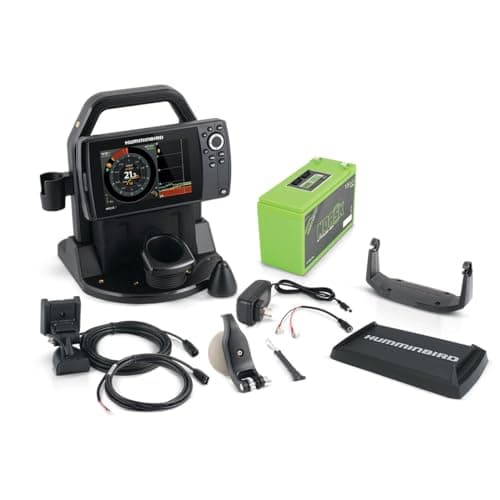
Humminbird · Flashers & Sonar
Best for: Structure-hunting anglers who navigate by GPS mapping and want one unit for ice and open water.
Combines 2D sonar and HD digital lake mapping in one unit. The main tradeoff is expensive versus dedicated flashers.
$600-1000
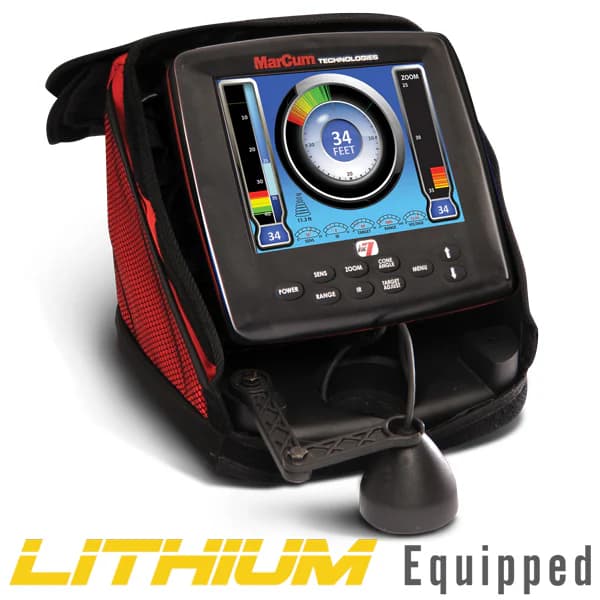
MarCum · Flashers & Sonar
Best for: Expert anglers who want the most precise dedicated ice sonar and fish in crowded community holes.
Industry-leading noise rejection lets you fish tight to other anglers' sonar. The main tradeoff is no GPS or mapping.
$600-1000
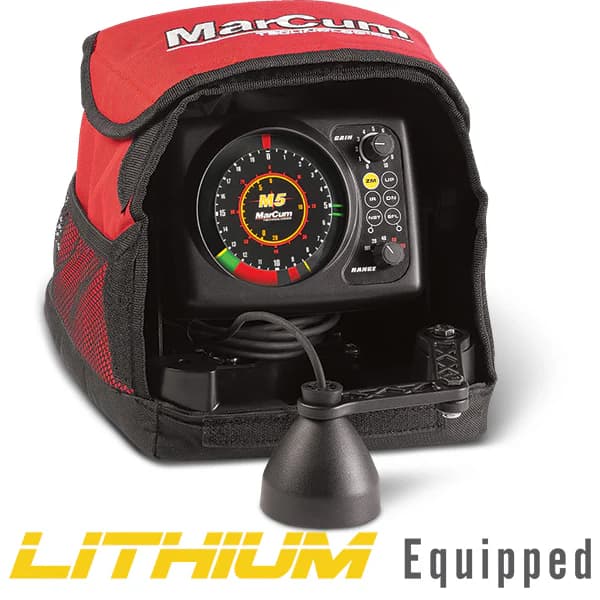
MarCum · Flashers & Sonar
Best for: Flasher purists who want classic real-time response without lugging a lead-acid battery.
Real-time mechanical dial response with modern lithium power. The main tradeoff is no digital depth readout or mapping.
$300-600
Vexilar · Flashers & Sonar
Best for: Beginners and value-focused anglers who want the time-tested standard that started modern ice sonar.
Entry-level price with reliable performance in the coldest weather. The main tradeoff is lacks the acute target separation of higher-end units.
$300-600
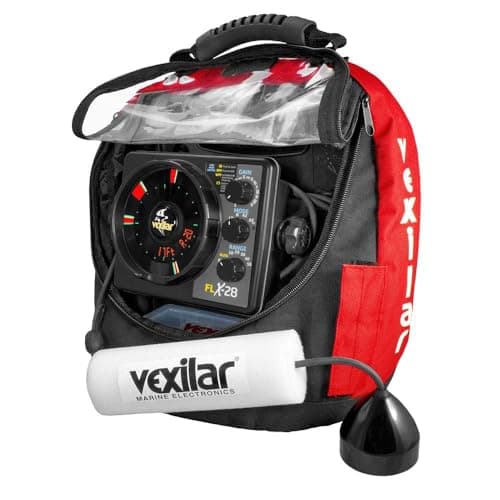
Vexilar · Flashers & Sonar
Best for: Committed flasher anglers who want maximum tuning control without switching to an LCD unit.
Most feature-rich pure flasher in the Vexilar line. The main tradeoff is costs as much as some digital sonar and GPS combos.
$600-1000
Category FAQ
Choose the display you can interpret quickly and carry comfortably. A flasher gives direct jig and fish movement, while a graph adds history, mapping, and structure context. Live sonar adds directional movement but also adds cost, battery demand, cable management, and setup. Match the view to the questions you ask on the ice.
Start with cone coverage, target separation, depth, hole size, and whether you fish vertically or need a forward or down view. Confirm the exact transducer, pole, cable, connector, and mounting position in the package. A display cannot add the view that the included transducer does not support.
Use the maker's runtime guidance, then account for screen brightness, live sonar draw, temperature, hole hopping, and how often you can recharge. Compare the battery, charger, shuttle, bag, and carry weight as one system. Lithium can reduce carry weight, but the exact capacity and cold-weather instructions still matter.
Some systems have an all-season or boat conversion path, while others are built around a dedicated ice shuttle and transducer. Check the manufacturer's compatible transducer, mount, power, cable, software, and charting accessories before assuming a portable ice pack can move to the boat without extra parts.