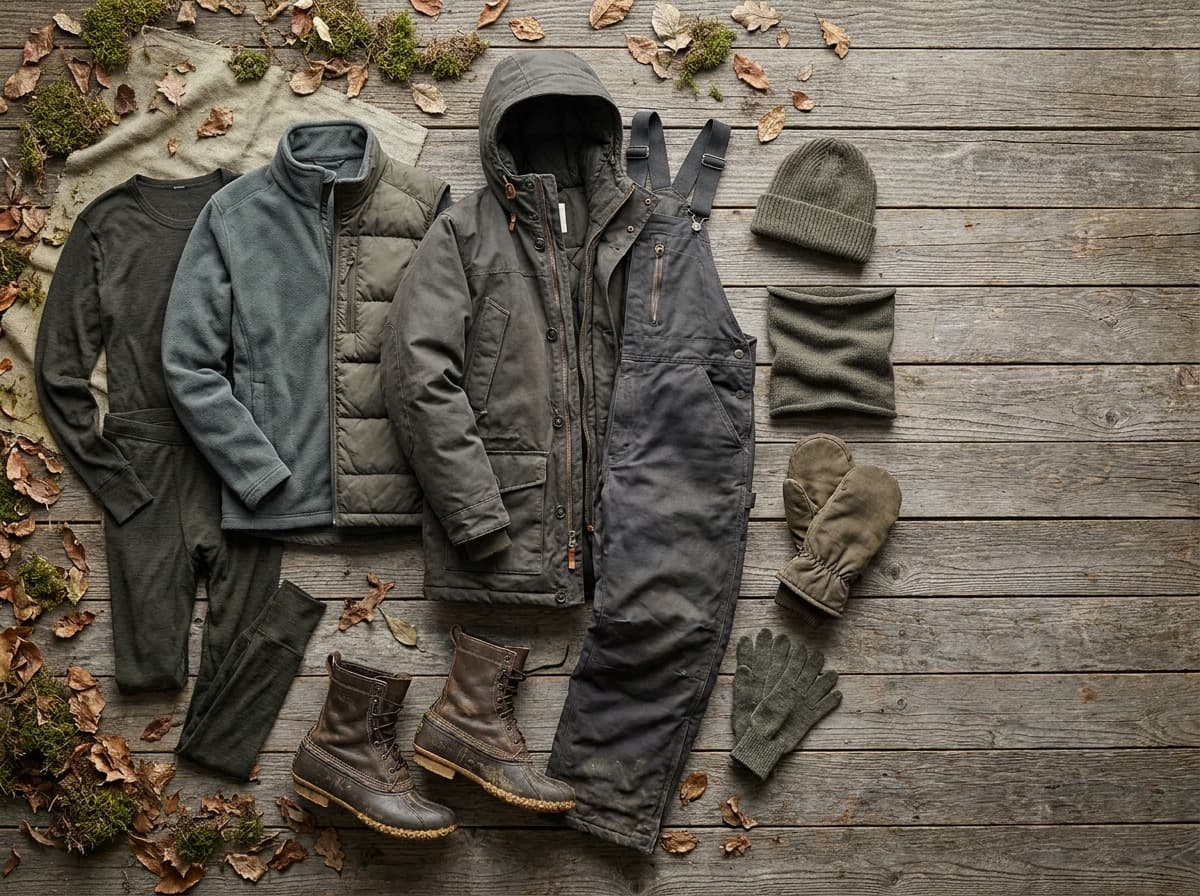
Ice fishing cold is a specific kind of cold: hours of low activity, wind with no terrain to break it, and constant contact with ice, water, and metal. Clothing that handles a ski hill fails on a frozen lake because skiing generates heat and jigging does not. Veteran hardwater anglers solve it with a system, and the system is the same across body types and budgets.
The three-layer system
| Layer | Job | What works | What fails |
|---|---|---|---|
| Base | Move sweat off skin | Merino or synthetic long underwear, top and bottom | Cotton anything, which holds moisture against skin |
| Mid | Trap warm air | Fleece, wool, or synthetic puffy; add a second mid on brutal days | Tight layers that compress and kill the air gap |
| Shell | Block wind and water | Insulated, windproof, waterproof bibs plus parka | Fashion parkas and uninsulated rain gear |
Two principles run the whole table. First, moisture is the enemy: damp skin loses heat many times faster than dry skin, which is why the base layer and the no-cotton rule matter more than any single expensive piece. Second, warmth is trapped air: layers work because each one adds still air, and anything that compresses the stack, including too-tight boots and gloves, removes insulation you paid for. The merino versus synthetic decision at the base is the same one hikers face, and Kit Authority's roundup of the best base layers breaks down the fabrics that anchor this system.
Bibs and parka: the shell decision
Purpose-built ice fishing bibs and parkas earn their cost with details general winter gear lacks: reinforced knees and seat for kneeling on ice, high chest coverage on bibs for wind at the waist, vents for the walk out, and drop-in pockets sized for tackle and picks.
The most important option is flotation. Float suits carry buoyancy assist built into the shell, and as our ice fishing safety guide covers, Minnesota DNR fatality data shows drowning rather than hypothermia is the killer in through-the-ice incidents, which makes a float shell the highest-value clothing upgrade in the sport. No suit makes falling through survivable by default, and no ice is ever one hundred percent safe, but flotation buys the minutes self-rescue requires.
Women's fits are standard coverage here, not a footnote. Major ice suit makers now cut bibs, parkas, and float suits for women, with shorter torsos, adjusted hip and chest proportions, and drop seats that make mid-trip layers workable in a shelter or behind a windbreak. The practical guidance from anglers who have fished both: buy the cut that matches your body, because a shell that fits traps air correctly and a borrowed men's suit that bunches and gaps does not. Sizing runs the same way for everyone: size the shell to fit over your full mid layer, not over a t-shirt in the store.
Boots, socks, and the ground problem
Feet fail first on the ice because boots touch the coldest surface all day. The fixes, in order of importance:
- Pack boots with removable liners, rated well below the temperatures you expect. Ratings assume activity, so a boot rated to 40 below is a reasonable target for long sits in single digits.
- Two-sock system: a thin synthetic liner against skin, heavy merino over it, and never so thick that the boot compresses your toes.
- Stand on something. A foam mat, a sled bottom, or a bucket rest breaks conduction with the ice and is the cheapest warm-feet trick in the sport.
- Cleats over the boots for glare ice; slips cause more ice fishing injuries than anything else.
Hands, head, and face
Hands do the wet work, so one glove cannot do the job. The standard system is a thin liner glove for tying knots and running electronics, a waterproof insulated glove or mitten over it for everything else, and chemical hand warmer packets in the outer pair. Mittens beat gloves for raw warmth; convertible mitts split the difference. For anglers who run cold or fish deep winter, battery-heated options have matured; our heated gear hub and roundup of the best heated gloves and socks cover that territory.
Up top, a windproof insulated hat, a neck gaiter or balaclava for wind days, and polarized sunglasses or goggles. Snow-covered ice doubles the sun; a bluebird February day burns faces and blinds sight-fishing eyes without protection.
Dressing for the trip you are actually taking
The run-and-gun angler drilling dozens of holes, as described in our beginner's guide, sweats on the move and chills at each stop: vent early, shed the parka while drilling, and close everything before the first drop. The sit-and-wait angler in a shelter needs maximum insulation and can trade mobility for it. Night anglers chasing the windows in our best times to ice fish guide should add a full step of insulation beyond the daytime plan, because temperatures fall fast after sunset and activity falls with them. Check lake-specific freeze signals in the Ice & Water Report, then use the guides library to finish the plan.
Can I just wear jeans and a winter coat ice fishing?
For a short walk-out trip on a mild day, people do it, and they are usually the first ones off the ice. Denim is cotton: it soaks up snowmelt and slush, holds the moisture against your legs, and loses its insulating value almost entirely when damp. Even budget synthetic long underwear under wind pants outperforms jeans by a wide margin.
What do boot temperature ratings actually mean?
They are manufacturer estimates that assume active use, not hours of sitting on a frozen lake, and there is no universal testing standard behind them. Treat ratings as comparative rather than literal: a boot rated to 40 below will outperform one rated to 25 below, but neither guarantees warm toes at those numbers while stationary. Fit, dry socks, and breaking contact with the ice matter as much as the rating.
How do women's ice fishing bibs differ from men's?
Cut, not capability: shorter torso length, proportionally adjusted hips and chest, narrower shoulders, and often a drop seat design. Insulation, waterproofing, and flotation options match the men's lines from the same makers. The fit difference is functional, because a shell that matches your proportions seals air gaps a mismatched one leaves open.
What single upgrade makes the biggest warmth difference?
For most anglers, boots. Feet are in continuous contact with the ice, they are the most common reason trips end early, and a proper pack boot with liners plus the two-sock system fixes the failure point the rest of the outfit cannot compensate for. If your boots are already sound, a float suit shell is next, since it upgrades warmth and safety at once.