No ice is ever fully safe. Not early season, not midwinter, not on a lake with trucks parked on it, and every item in this roundup exists because of that fact. The safety half of the list is cheap, wearable, and only works if it is actually on your body or immediately accessible: picks for self-rescue, traction for glare ice, a spud bar for detecting changes, a properly fitted and worn US Coast Guard-approved PFD, and a throw rope for helping someone else. Float-assist suits add buoyancy but are not rated PFDs. The hauling half, the sleds, decides whether the rest comes along. Our ice fishing safety guide covers the practices; this roundup covers the gear. Check conditions for your lake in the Ice & Water Report before any trip, and treat every reading as a starting point for your own checks, not a promise.
The non-negotiable first buy: Frabill Ice Safety Picks
If you buy one item from this page, buy these. Frabill's model 6579 pairs two hand spikes with retractable guards and a cord that stretches to 72 inches. You hold a handle in each hand before pulling on your coat, which leaves the picks waiting at the base of your sleeves instead of buried in a pocket. If you go through, the points give soaked, gloved hands a way to bite into the ice. Practice the pull and grip motion before a cold emergency so the movement is familiar.
The non-negotiable first buy
Frabill · Ice Reference Gear & Sleds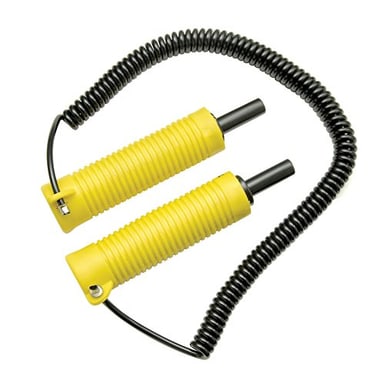
Frabill Ice Safety Picks
The cheapest piece of gear that can change the outcome of a breakthrough. The main tradeoff is only work if worn accessibly; picks buried in a pocket rescue no one.
Best for: Every angler on hard water who wants a simple self-rescue tool kept within immediate reach.
View product details- Price band
- $25–$50
- Design
- Paired hand spikes with retractable point guards
- Carry
- 72 inch cord keeps the handles within reach at the base of each sleeve
- Model
- 6579, SKU PMC6579
Why it works
- The cheapest piece of gear that can change the outcome of a breakthrough
- Retractable guards cover the points until the handles are pulled into use
- Designed to stay at the sleeve bases instead of being buried in a pocket
Watch for
- Only work if worn accessibly; picks buried in a pocket rescue no one
- Practice the pull and grip motion before a cold emergency
Best ice cleats: Kahtoola MICROspikes Footwear Traction
Falls on glare ice end more seasons than breakthroughs do, and the MICROspikes are the benchmark answer: 12 heat-treated stainless spikes per foot on a welded chain harness that stretches over bulky pac boots and bites hard on bare ice. They are the aggressive option for frozen terrain. That also makes them heavier and more than most mixed-surface walks need, and they cost roughly double hardware-store coil designs.
Best ice cleats
Kahtoola · Ice Reference Gear & Sleds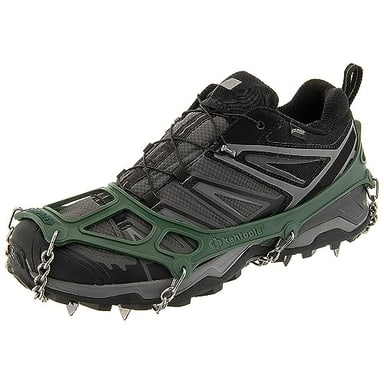
Kahtoola MICROspikes Footwear Traction
Benchmark chain-style traction that bites hard on glare ice. The main tradeoff is more aggressive and heavier than most mixed-surface walks require.
Best for: Glare-ice mornings when a fall on the walk out is the day's biggest hazard.
View product details- Price band
- $100–$150
- Spikes
- 12 heat-treated stainless steel spikes per foot
- Spike length
- 3/8 in
- Harness
- Stretch elastomer pulls over boots
Why it works
- Benchmark chain-style traction that bites hard on glare ice
- Stainless spikes shrug off seasons of parking-lot and lake abuse
- Fast on and off over bulky pac boots
Watch for
- More aggressive and heavier than most mixed-surface walks require
- Costs roughly double the hardware-store coil designs
Best light traction: Kahtoola EXOspikes Footwear Traction
The EXOspikes trade the chains for 12 tungsten-carbide tipped studs in a lighter, lower-profile build made for mixed walking: ice, snow, and the gravel or pavement crossings that eat softer spikes. For walk-in anglers covering distance, the weight and quiet are noticeable. The shorter studs bite less aggressively on wet glare ice than full chain spikes, so match the tool to the surface you expect most.
Best light traction
Kahtoola · Ice Reference Gear & Sleds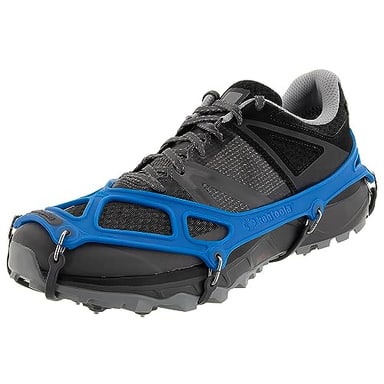
Kahtoola EXOspikes Footwear Traction
Lighter and less clanky than chains for long walks to distant spots. The main tradeoff is shorter studs bite less aggressively on wet glare ice than chain spikes.
Best for: Walk-in anglers covering mixed ground where full chains are overkill.
View product details- Price band
- $100–$150
- Spikes
- 12 tungsten-carbide tipped studs per foot
- Weight
- 6.6 to 8.1 oz per pair by size
- Use case
- Mixed walking on ice, snow, and bare ground
Why it works
- Lighter and less clanky than chains for long walks to distant spots
- Tungsten carbide tips wear slowly on gravel and pavement crossings
Watch for
- Shorter studs bite less aggressively on wet glare ice than chain spikes
Best one-piece chisel: Eskimo Redneck CH11
The spud bar is the oldest ice tool there is, and the Eskimo Redneck CH11 keeps the design simple: a fully welded one-piece steel shaft, triple-action chisel head, foam grip, and wrist tether. With no threaded joints to loosen, it is ready for repeated checks ahead of your route and for reopening skimmed-over holes. The tradeoff is transport. A one-piece chisel takes up more room in the truck and sled than a sectional model.
Best one-piece chisel
Eskimo · Ice Reference Gear & Sleds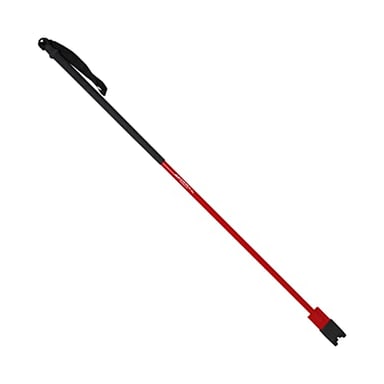
Eskimo Redneck One-Piece Ice Chisel (CH11)
Fully welded construction removes the joints that can loosen on sectional chisels. The main tradeoff is one-piece construction takes more room in a sled than a sectional chisel.
Best for: Anglers who want a durable one-piece chisel for checking the surface ahead and reopening holes.
View product details- Price band
- $25–$50
- Model
- CH11
- Design
- Fully welded one-piece steel chisel
- Head
- Triple-action chipper
Why it works
- Fully welded construction removes the joints that can loosen on sectional chisels
- Triple-action head concentrates each stroke across three points
- Foam grip damps vibration and the tether keeps the tool attached at the wrist
Watch for
- One-piece construction takes more room in a sled than a sectional chisel
- Freight charges may apply because of its length
Best budget sled: Shappell Jet Ice Fishing Sled
The Jet Sled is the default gear tub of ice fishing: molded polyethylene in sizes from junior to magnum, light enough to hand-pull quickly across snow, with a big accessory ecosystem of covers, hitches, and racks. An In-Depth Outdoors forum member sums up years of owner consensus: not as thick as an Otter, but lighter and actually faster on the snow. That thinner hull is the tradeoff, wearing faster under hard use over rough ice, and shallow-lipped loads want a cover or straps in drifted snow.
Best budget sled
Eagle Claw Shappell · Ice Reference Gear & Sleds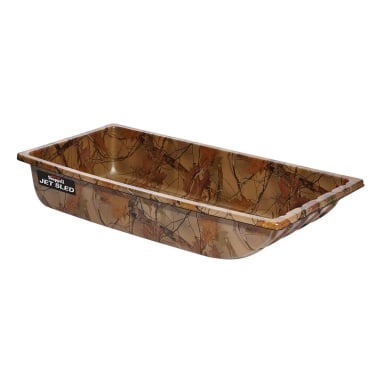
Eagle Claw Shappell Jet Sled 1
The default affordable gear sled sold nearly everywhere. The main tradeoff is thinner hull than an Otter, so hard use over rough ice wears it faster.
Best for: Hauling a typical hand-pull load of auger, bucket, and shelter on a budget.
View product details- Price band
- $100–$150
- Material
- Thermoformed HDPE
- Dimensions
- 54 x 25 x 10 inches
- Colors
- All Terrain Camo, Blaze Orange, Winter Camo, or Black
Why it works
- The default affordable gear sled sold nearly everywhere
- Lighter than premium roto-molded sleds and quick across snow
- Big accessory ecosystem including covers and tow hitches
Watch for
- Thinner hull than an Otter, so hard use over rough ice wears it faster
- Shallow-lipped loads want a cover or straps in drifted snow
Best heavy-duty sled: Otter Pro Sled
The Otter Pro is the buy-once tub: roto-molded polyethylene, the toughest construction on the sled market, built to survive snowmobile towing and pressure-ridge crossings that grind thinner sleds away in a season, with Hyfax runner kits available to protect the hull for years of machine use. The reviewers at Trapping Today put it plainly: Otter sleds are the toughest on the market and built to last. It costs two to three times a comparable Jet Sled and is heavier to lift into a truck bed or pull by hand, which is exactly the trade.
Best heavy-duty sled
Otter Outdoors · Ice Reference Gear & Sleds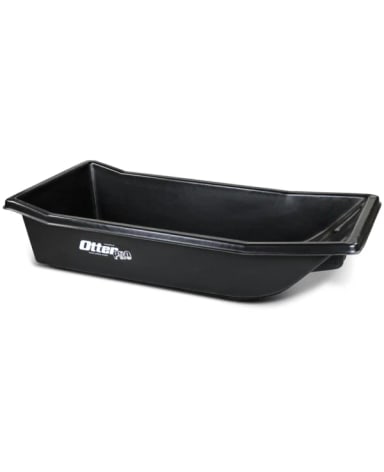
Otter Pro Sled Medium
Roto-molded construction is the toughest sled build on the market. The main tradeoff is costs two to three times a comparable Jet Sled.
Best for: Snowmobile and ATV towing where a thin sled would be ground away in a season.
View product details- Price band
- $150–$250
- Material
- Roto-molded polyethylene for maximum strength
- Dimensions
- 65 x 32 x 15 inches
- Weight
- 32 pounds
Why it works
- Roto-molded construction is the toughest sled build on the market
- Thick hull survives snowmobile towing and rough pressure-ridge crossings
- Hyfax kit option protects the hull for years of machine towing
Watch for
- Costs two to three times a comparable Jet Sled
- Heavier to lift into truck beds and heavier to hand-pull
Low-profile manual flotation option: Onyx M-24 Manual Inflatable Belt Pack PFD
The M-24 is a secondary, low-profile option for eligible adult competent swimmers who understand its manual operation. Its owner's manual says it is a US Coast Guard Type V device with Type III performance, for people age 16 or older and over 80 pounds, and not for non-swimmers or weak swimmers. After pulling the inflation handle, the wearer must position and don the inflated bladder correctly. Cold shock and rapid loss of hand function can interfere with those steps, which is why a properly fitted, inherently buoyant, worn PFD is the more conservative default for high-risk ice travel. Inspect the armed-status indicator before every use and rearm the unit after inflation. No PFD substitutes for staying off questionable ice. Anglers wanting built-in buoyancy should read our best ice fishing suits roundup.
Low-profile manual option
Onyx · Ice Reference Gear & Sleds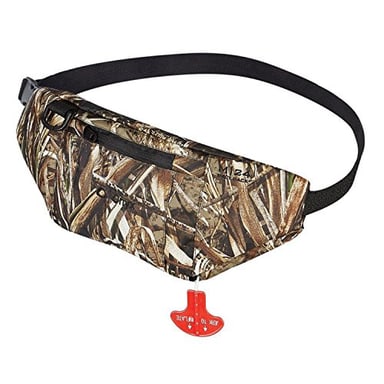
Onyx M-24 Manual Inflatable Belt Pack PFD
Adds flotation for anglers whose suits have no float assist. The main tradeoff is manual only: you must find and pull the handle during cold-water shock.
Best for: A flotation layer over non-float bibs during early and late ice windows.
View product details- Price band
- $100–$150
- Type
- Manual-inflation belt pack PFD with CO2 cylinder
- Profile
- Low-profile waist belt worn over outerwear
- Rearm
- Replaceable CO2 rearm kits sold separately
Why it works
- Adds flotation for anglers whose suits have no float assist
- Barely noticeable at the waist compared with wearing a vest PFD
- Popular crossover from open-water fishing, so rearm kits are easy to find
Watch for
- Manual only: you must find and pull the handle during cold-water shock
- Not a substitute for a float suit or for staying off questionable ice
Best rescue throw bag: NRS Standard Rescue Throw Bag
The throw bag is the tool for helping someone else without becoming the second victim: up to 75 feet of floating polypropylene rescue line in a stuff bag, thrown from firm footing so you never approach the broken edge. It is the whitewater rescue standard adapted naturally to ice, visible and grippable for a person in the water, and compact enough to travel all season. It demands practice: accurate throws are a skill, and the bag must be repacked correctly after every use. Keep one bag immediately accessible within each active travel cluster, not buried in a distant group sled.
Best rescue throw bag
NRS · Ice Reference Gear & Sleds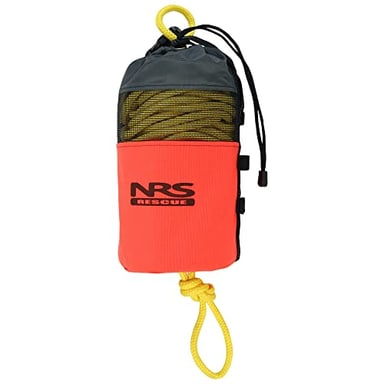
NRS Standard Rescue Throw Bag
Lets you attempt a reach-throw rescue without approaching thin ice yourself. The main tradeoff is accurate throws take practice, and the bag must be repacked correctly after every use.
Best for: Group trips on early ice: one bag in the sled covers everyone on the outing.
View product details- Price band
- $25–$50
- Rope
- Floating polypropylene rescue rope, up to 75 feet depending on model
- Design
- Stuff-bag deployment; hold the end and throw the bag
- Origin
- Whitewater rescue standard adapted naturally to ice
Why it works
- Lets you attempt a reach-throw rescue without approaching thin ice yourself
- Floating line is visible and grippable for a person in the water
- Compact enough to live in the sled all season
Watch for
- Accurate throws take practice, and the bag must be repacked correctly after every use
Fit, sizing, and handling
Safety gear only works when it fits the person carrying it. Women and smaller-framed anglers should check PFD adjustment, pick-cord reach, cleat sizing, spud-bar grip diameter, sled-handle height, and the loaded pull force rather than relying on unisex labels. Build the load so the least powerful person in the group can still move it and reach rescue tools immediately.
How we picked
Safety gear was chosen on a simple standard: proven designs, worn or deployed in seconds, recommended consistently across safety-minded sources and owner feedback; sleds were judged on hull toughness, pull weight, and accessory ecosystems, with cited owner communities like In-Depth Outdoors and Trapping Today carrying extra weight because sleds live or die over years of abuse. This kit rides along with everything else on the ice: shelters from our best ice shelters roundup, an auger from the best ice augers guide, and the layers in our what to wear ice fishing guide. Ice thickness guidance lives in how thick does ice need to be, current conditions are in the Ice & Water Report, and the rest of the season's coverage is in the ice fishing hub.
What is the minimum safety kit for ice fishing?
Picks worn around the neck, traction on your boots, a spud bar for detecting changes, repeated drilled measurements, and a properly fitted and worn US Coast Guard-approved PFD. Keep a throw bag immediately accessible within each active travel cluster. A float-assist suit can add buoyancy but is not a rated PFD, and a manual belt pack has eligibility and deployment limitations.
Jet Sled or Otter: which should I buy?
Match the sled to the miles. Hand-pulling a typical auger, bucket, and shelter load, the lighter, cheaper Jet Sled is the sensible default. Towing behind a snowmobile or ATV, or dragging over rough and refrozen ice regularly, the Otter's roto-molded hull is the one that survives, especially with a Hyfax kit.
Do I need a PFD if my suit has float assist?
Float-assist suits add buoyancy but are not rated personal flotation devices. Use a properly fitted and worn US Coast Guard-approved PFD for the direct flotation role. The M-24 is a secondary manual option only for eligible adult competent swimmers who can pull the handle and correctly position the bladder during an emergency. No layer of gear makes questionable ice acceptable to walk.
How do I actually check ice before walking out?
Treat every trip as unverified: read local conditions and recent temperature swings, then confirm on site by spudding ahead of your route and drilling test holes as you go, comparing against published thickness guidelines for foot and machine travel. Ice varies within a single lake, and no reading, report, or guideline makes any ice fully safe.