The difference between gamey, dried-out venison and clean, tender meat is rarely the animal. It is how the meat was handled between the field and the freezer. The good news is that the whole process comes down to one variable you can control at every stage: temperature.
The one rule is temperature
Meat spoils when it is warm long enough for bacteria to grow. University of Minnesota Extension defines the temperature danger zone as 40 to 140 degrees Fahrenheit, and Penn State Extension warns that the longer venison sits above about 41 degrees from harvest to processing, the greater the risk that pathogens reach dangerous levels. Every step that follows is really about getting the meat below 40 degrees and keeping it there until you cook or freeze it.
Chill first, before anything else
After field dressing, the priority is cooling. NDSU Extension's care and handling guide calls improper temperature "meat's worst enemy" and recommends propping the chest cavity open with a clean stick to let air circulate, and filling the cavity with bags of ice to speed cooling in warm weather. Keep the meat clean and dry, since damp meat spoils faster; wipe the cavity with a paper towel or clean cloth rather than grass or snow, which contaminate it.
During transport, keep the carcass cool, out of direct sunlight, and open to air. NDSU specifically advises against tying a still-warm carcass across a hood or sealing it in a trunk, both of which trap heat when you are trying to shed it.
Aging: what it does and when to skip it
Aging holds a carcass cold for a period so natural enzymes break down proteins, which can make the meat more tender and flavorful. NDSU Extension describes aging as holding carcasses or cuts at 34 to 37 degrees Fahrenheit for 10 to 14 days, while also noting that aging the carcass two to three days is often sufficient. Michigan State University Extension similarly says two to three days is enough for an older deer, and stresses that aging only works if the temperature stays consistently cold.
The conditions matter as much as the time:
- Keep it consistently cold, around 34 to 37 degrees. Warmer, and you are back in the danger zone; NDSU warns that without proper cooler space, spoilage or dehydration results.
- Do not let it freeze. Below freezing the meat partially freezes and aging stops, and NDSU notes freezing may toughen the meat.
- Leave the hide on to protect the meat and hold moisture during aging.
- Skip aging for lean carcasses. NDSU says aging is not recommended for carcasses with little or no fat covering, since they dry out.
- Skip aging if you are grinding. If the meat is destined for burger or sausage, NDSU notes aging is unnecessary.
Packaging for the freezer
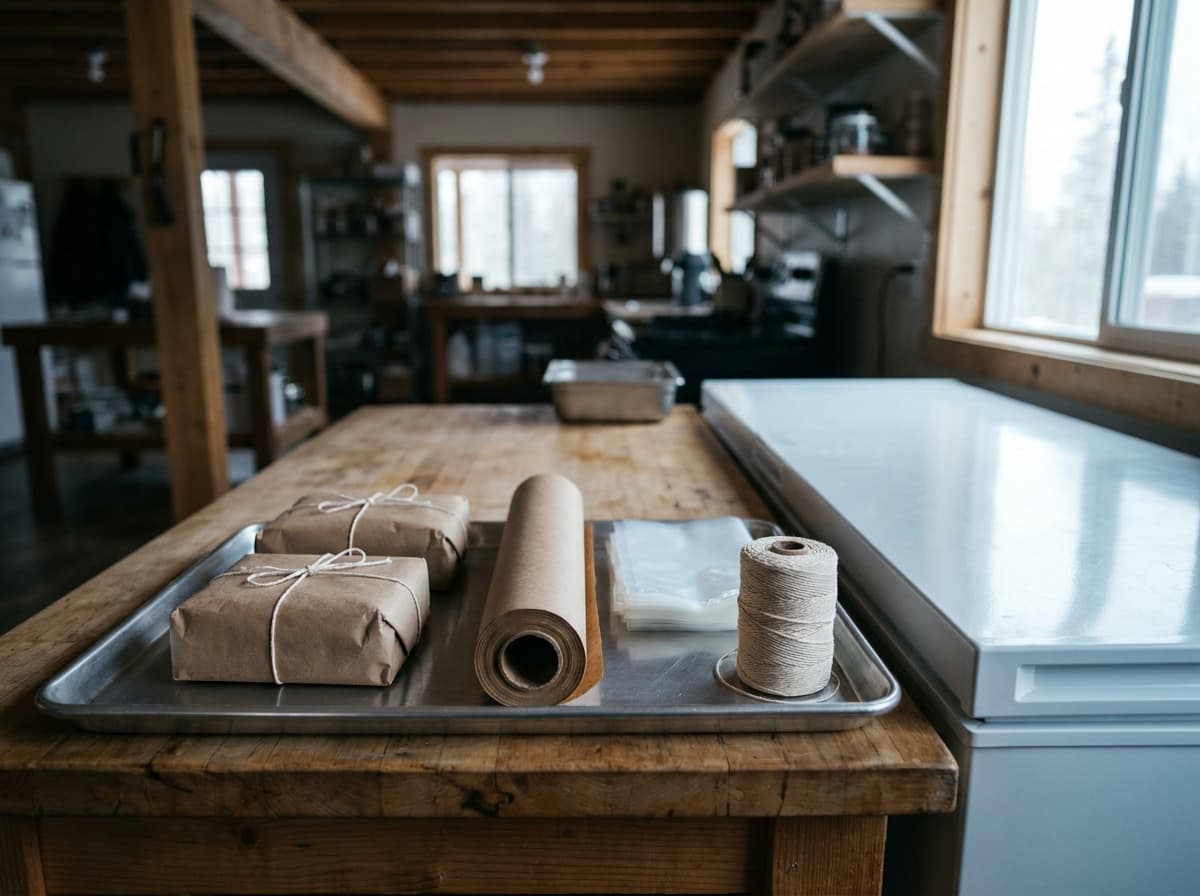
How you wrap venison determines how it keeps. The enemy in the freezer is air, which causes freezer burn, the dry, discolored patches that ruin texture and flavor. NDSU Extension's packaging guidance is specific:
- Divide the meat into meal-size quantities so you thaw only what you need.
- Use moisture and vapor-proof materials, such as heavily waxed freezer wrap, laminated freezer wrap, heavy-duty aluminum foil, or freezer-weight polyethylene bags. Vacuum sealing accomplishes the same goal by removing air entirely.
- Press the air out of each package before sealing.
- Label every package with the contents and the date.
- Freeze quickly. Do not overload the freezer; NDSU advises freezing only the amount that will become solidly frozen within 24 hours.
A vacuum sealer makes air removal easy and consistent, which is why it is a common upgrade for hunters who process their own meat. Our roundup of vacuum sealers and processing knives covers the tools, and if you grind your own burger and sausage, the best meat grinders guide covers that step.
In the freezer and the kitchen
Once packaged and frozen, venison keeps well. According to USDA guidance, food stored constantly at 0 degrees Fahrenheit is always safe, because freezing to 0 degrees inactivates microbes. Freezer burn is a quality issue, not a safety one. For quality, NDSU says properly wrapped game keeps about three to four months, so labeling and rotating packages pays off.
In the kitchen, use a food thermometer and follow current wild-game guidance for the exact cut and preparation. NDSU recommends an internal temperature of at least 160 degrees Fahrenheit for venison. Do not treat cooking temperature as a CWD control: the CDC advises not eating meat from an animal that tests positive. Keep the refrigerator at 40 degrees or below, thaw frozen meat in the refrigerator rather than on the counter, and use refrigerator-thawed meat promptly.
Field to freezer is a chain, and temperature is the link through all of it. Handle each step with the thermometer in mind, and the reward is a freezer full of clean venison. For more on turning game into meals, see the game processing hub.
How long should I age a deer?
It depends on your ability to hold steady cold. NDSU Extension describes aging at 34 to 37 degrees Fahrenheit for anywhere from a couple of days up to 10 to 14 days, and Michigan State Extension notes two to three days is often enough for an older deer. Aging needs consistent cold, adequate fat covering, and the hide left on, and it is unnecessary if you plan to grind the meat.
At what temperature should venison be kept?
Get the carcass below 40 degrees Fahrenheit as fast as possible, since 40 to 140 degrees is the bacterial danger zone. Age, if at all, around 34 to 37 degrees without freezing. Refrigerate at no more than 40 degrees and freeze at 0 degrees, where USDA guidance says food stays safe indefinitely, with best quality within a few months.
How do I prevent freezer burn on venison?
Keep air away from the meat. Package in meal-size portions using moisture and vapor-proof wrap such as freezer paper, heavy-duty foil, or freezer-weight bags, or use a vacuum sealer to remove air entirely. Press out air before sealing, label and date each package, and freeze quickly. Freezer burn affects quality, not safety.
What temperature should I cook venison to?
NDSU Extension recommends an internal temperature of at least 160 degrees Fahrenheit for venison. Use a food thermometer and follow current guidance for the exact cut and preparation. This is bacterial food-safety guidance, not a CWD control; the CDC says not to eat meat from an animal that tests positive.
Sources
- NDSU Extension, A Pocket Guide for the Care and Handling of Deer and Elk
- University of Minnesota Extension, Food safety
- Michigan State University Extension, Tips for putting high quality venison on the table
- USDA Food Safety and Inspection Service, Freezing and Food Safety
- CDC, About Chronic Wasting Disease