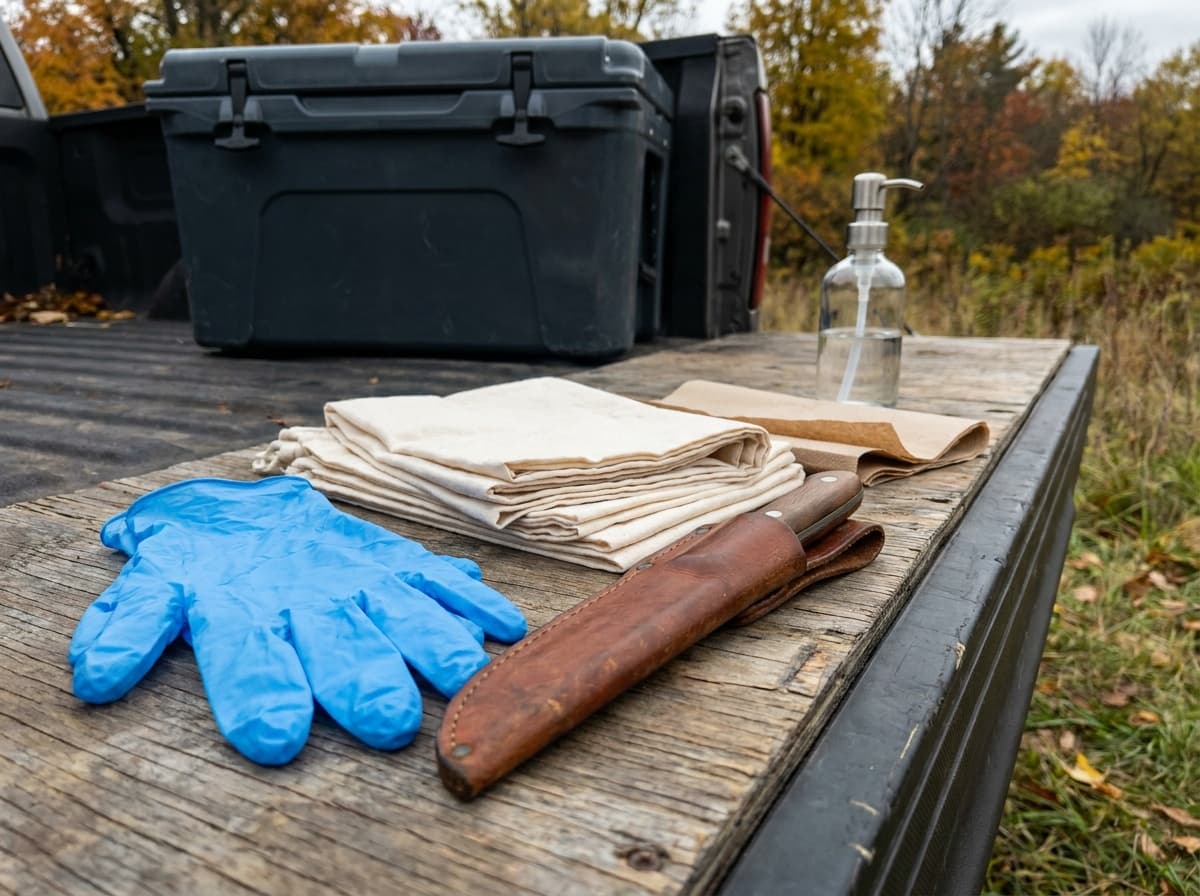
Field dressing is a skill every deer hunter needs, and it is far less intimidating than it looks. The goals are simple: remove the organs, keep the meat clean, and start the carcass cooling. According to Penn State Extension, the quality and safety of your venison are shaped in the first hour after harvest, which is why a calm, clean routine matters more than speed records.
Field dressing starts once the deer is found, and recovery itself has a modern wrinkle: thermal drone operators can locate a downed deer quickly on a tough track, but state rules differ sharply on whether that is allowed. Drone Authority's state-by-state guide to drone deer recovery laws covers where the practice is legal before you call an operator.
Why speed and cleanliness matter
Venison spoils the same way any meat does: warm temperatures let bacteria multiply. University of Minnesota Extension identifies the temperature danger zone as roughly 40 to 140 degrees Fahrenheit, the range where foodborne bacteria grow fastest. Penn State Extension adds a field-specific point: the longer meat stays above about 41 degrees from harvest to processing, the greater the risk that pathogens grow to dangerous levels, and if the outside temperature is above 41 degrees, the hide should come off quickly to help the carcass shed heat.
That is the whole reason field dressing happens in the field rather than back at camp. A body cavity full of organs holds heat; opening it up and removing that mass lets the meat begin cooling right away.
Before you cut
A little preparation makes the job cleaner and safer.
- Wear gloves. The Minnesota DNR and multiple extension services recommend latex or rubber gloves when field dressing, both for your protection and to reduce contamination. Shoulder-length gloves under a pair of fitted gloves are a common choice.
- Use a sharp knife. A sharp, moderate-sized blade is safer and more controllable than a large or dull one. A knife with a gut hook can help, but is not required.
- Handle your tag and legal requirements first according to your state's rules.
- Have a plan to cool the carcass once it is open, especially in warm early-season weather.
Field dressing, step by step
The following sequence is the standard approach. Take your time and keep the blade away from the stomach and intestines.
- Position the deer on its back, ideally with the head and chest slightly uphill so fluids drain away from the meat. Spread the hind legs.
- Open the abdomen carefully. Pinch and lift the skin near the base of the breastbone and make a shallow starting cut. Turn the blade edge up and use two fingers to guide it, opening the skin and abdominal wall down toward the pelvis without puncturing the stomach or intestines beneath.
- Free the diaphragm. Cut the sheet of muscle separating the chest from the abdomen along the rib cage on both sides.
- Reach into the chest and cut the windpipe and esophagus as high up as you can reach, then pull them free. This releases the top of the organ mass.
- Loosen the lower connections. Free the bladder and bowel carefully, keeping them intact to avoid spilling contents onto the meat. Many hunters loosen the vent from the outside and tie it off. Follow your state's rules on evidence of sex and carcass tags.
- Roll out the entrails. Tip the deer and let the organ mass roll out. Save the heart and liver in a clean bag if you want them.
- Drain and prop open the cavity so air can circulate, and begin cooling immediately.
Keep the meat as clean and dry as possible throughout. Wipe away contamination with clean disposable towels. If rinsing is necessary, use potable water and dry the cavity promptly rather than leaving standing moisture.
CWD precautions
Chronic wasting disease is a fatal neurological disease of deer, and while public-health agencies report no known cases of it infecting people, the CDC advises hunters to take precautions as a matter of prudence. The current CDC guidance and hunter recommendations translate into a clear field checklist:
- Do not shoot, handle, or eat an animal that looks sick or is acting abnormally.
- Wear latex or rubber gloves when field dressing and processing.
- Minimize handling of brain and spinal cord tissue. Avoid cutting through the spinal column or brain, and bone out the meat rather than sawing through bone.
- Clean knives and equipment thoroughly after field dressing and processing, ideally keeping a dedicated set.
- Have your deer tested where CWD is known to be present. The CDC recommends hunters in affected areas strongly consider having the animal tested before eating the meat, and if a deer tests positive, do not eat it.
- Consider individual processing. Extension guidance suggests asking commercial processors to handle your animal individually so meat is not commingled with other deer.
After the field
Field dressing is the first step, not the last. Once the carcass is cooling, the next stages are aging at the right temperature, then cutting and packaging for the freezer. Our field to freezer guide covers aging, temperature safety, and packaging in detail, and the game processing hub collects more on turning a deer into meals. A clean, sharp knife carries through every one of those steps; our roundup of vacuum sealers and processing knives covers the tools. For hunting tactics and timing, see the hunting hub. This guide covers field technique and food safety only; follow your state's regulations for tagging, transport, and CWD.
How quickly do I need to field dress a deer?
As soon as is practical after recovery. Field dressing lets the carcass cool, and extension food-safety guidance warns that risk rises the longer meat stays above about 41 degrees Fahrenheit. In warm weather, remove the hide quickly to help shed heat, and get the meat toward 40 degrees or below as fast as conditions allow.
Do I need gloves to field dress a deer?
Yes, they are strongly recommended. The Minnesota DNR and extension services advise wearing latex or rubber gloves when field dressing, both to protect you from bacteria deer naturally carry and as a standard CWD precaution. Many hunters use long gloves under a fitted pair, and wash hands and instruments thoroughly afterward.
What are the CWD precautions when field dressing?
Per current CDC guidance: do not handle animals that appear sick, wear gloves, minimize contact with brain and spinal cord tissue, bone out the meat instead of sawing through bone, and clean equipment afterward. In areas where CWD is present, the CDC recommends having the deer tested and waiting for results before eating it, and not eating any animal that tests positive.
Sources
- Penn State Extension, Safe Handling of Venison is Easy with Advance Planning
- University of Minnesota Extension, Food safety
- Minnesota DNR, Field Dressing Deer With Food Safety In Mind
- CDC, About Chronic Wasting Disease