Grinding your own wild game is where DIY processing pays off first: burger, sausage, and snack sticks from an animal you handled start to finish. The grinder decision is mostly a volume question. A hunter grinding one deer a year has no use for commercial throughput, while a western hunter facing an elk's worth of trim will hate a slow machine by hour three. Motor build is the second axis, because peak-watt marketing on value grinders overstates what they sustain under sinew-heavy loads, and all-metal construction is what separates a decade-long tool from a seasonal gamble. The picks below are ordered around those two questions.
Best meat grinder overall: LEM BigBite #8
The BigBite #8 is the grinder deer camps standardize on: a 0.5 HP motor in a stainless housing with metal gears, built to commercial grade for home use, and the BigBite auger geometry keeps pulling meat as fast as you can feed a whole-deer grind. It costs two to three times a big-box grinder, which is genuinely hard to justify for a single deer a year, and at roughly 50 pounds it is not a casually portable appliance. For the hunter who grinds every fall, it is the one-purchase answer.
Best meat grinder overall
LEM Products · Meat Grinders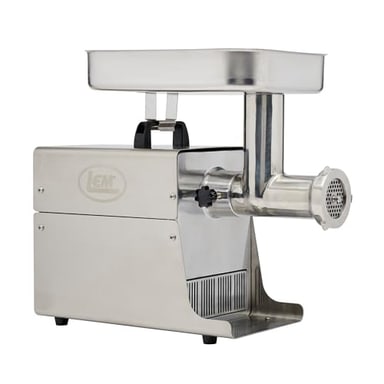
LEM BigBite #8 Meat Grinder (0.5 HP)
The default deer-camp recommendation, commercial-grade build for home use. The main tradeoff is costs two to three times a big-box grinder, which is hard to justify for one deer a year.
Best for: Hunters processing one or more deer per season who want the buy-once grinder.
View product details- Price band
- $250–$500
- Motor
- 0.5 HP
- Head size
- #8
- Construction
- Stainless steel
Why it works
- The default deer-camp recommendation, commercial-grade build for home use
- BigBite auger geometry keeps up with fast feeding on whole-deer grinds
- Stainless housing and metal gears built for years of seasons
Watch for
- Costs two to three times a big-box grinder, which is hard to justify for one deer a year
- At roughly 50 pounds it is not a casually portable appliance
Best for small batches: LEM BigBite #5
The BigBite #5 delivers the same stainless build and BigBite auger design in a smaller countertop footprint, with a 0.35 HP motor that LEM itself positions for small batches. It is easier to lift, store, and clean up after than the #8 and everything above it. The honest math: throughput is slower, so a full elk or a multi-deer weekend becomes a long session, and the price gap to the #8 is modest enough that the value case is thin unless kitchen space rules the decision.
Best for small batches
LEM Products · Meat Grinders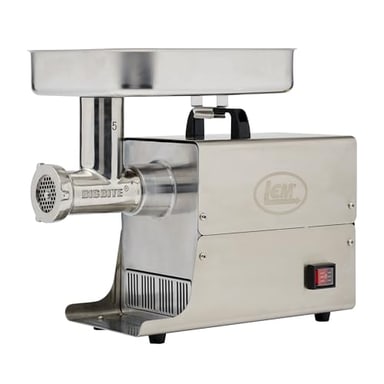
LEM BigBite #5 Meat Grinder (0.35 HP)
Same BigBite auger design and stainless build in a smaller countertop footprint. The main tradeoff is slower throughput makes a full elk or multiple deer a long session.
Best for: Small-batch processors grinding a deer's worth of trim at a relaxed pace in a small kitchen.
View product details- Price band
- $250–$500
- Motor
- 0.35 HP
- Head size
- #5
- Construction
- Stainless steel
Why it works
- Same BigBite auger design and stainless build in a smaller countertop footprint
- Ideal for small batches per LEM's own positioning
- Easier to lift and store than the #8 and up
Watch for
- Slower throughput makes a full elk or multiple deer a long session
- Only modestly cheaper than the #8, so the value case is thin unless space rules
Best high-volume grinder: LEM BigBite #12
The BigBite #12 is for camps that measure the season in animals rather than pounds. The #12 head steps up throughput for elk quarters and multi-deer processing days, and Food & Wine's 2026 grinder testing named it the most efficient meat grinder they tested. It shares parts and service with the rest of the LEM line. At the top of this price band it overlaps used commercial grinders, and it is a heavy unit that wants a dedicated processing bench, not a kitchen cabinet.
Best high-volume grinder
LEM Products · Meat Grinders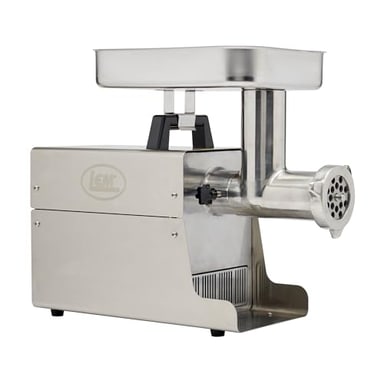
LEM BigBite #12 Meat Grinder
Steps up throughput for elk quarters and multi-deer processing days. The main tradeoff is at the top of this price band it overlaps used commercial grinders.
Best for: High-volume hunters and groups grinding several animals per year who want speed over savings.
View product details- Price band
- $250–$500
- Head size
- #12
- Line
- LEM BigBite, stainless steel
- Recognition
- Food & Wine 2026 tested pick for efficiency
Why it works
- Steps up throughput for elk quarters and multi-deer processing days
- Named the most efficient grinder in Food & Wine's 2026 test
- Same parts and service ecosystem as the rest of the LEM line
Watch for
- At the top of this price band it overlaps used commercial grinders
- Heavy unit that wants a dedicated processing bench, not a kitchen cabinet
Best midprice LEM: LEM MightyBite #8
The MightyBite is LEM's value tier, and it hits the spot a lot of new deer hunters are actually shopping: the LEM name, parts, and customer support at a mid-market price. Owner reports back it up, with one Rokslide member writing that it grinds meat faster than he could feed it and calling it great value. Value-tier construction gives up the BigBite's stainless-and-steel heft, and published specification detail is thinner than the BigBite line, so compare motor ratings before buying.
Best midprice LEM
LEM Products · Meat Grinders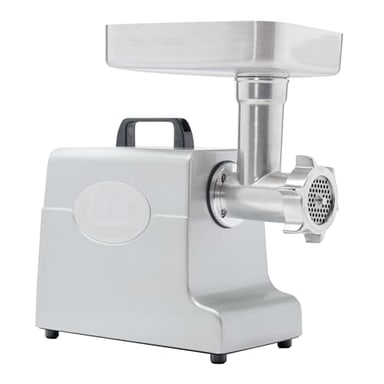
LEM MightyBite #8 Meat Grinder
LEM name and support at a mid-market price. The main tradeoff is value-tier construction gives up the BigBite's stainless-and-steel heft.
Best for: Budget-conscious hunters who want real LEM support without BigBite pricing.
View product details- Price band
- $150–$250
- Head size
- #8
- Line
- MightyBite, LEM's value tier below BigBite
- Availability
- Sold on Amazon per owner reports
Why it works
- LEM name and support at a mid-market price
- Owners report it grinds faster than they can feed it
- Sensible first dedicated grinder for a new deer hunter
Watch for
- Value-tier construction gives up the BigBite's stainless-and-steel heft
- Less documented specification detail online than the BigBite line, so compare motor ratings before buying
Best budget grinder: STX Turboforce II 4000
The Turboforce II 4000 is the entry point that keeps first-time processors in the game: strong claimed throughput of 175 to 225 pounds per hour, three speeds, and a full accessory set with sausage stuffing tubes and a kubbe attachment, all compact and light next to commercial-style machines. Go in clear-eyed about the marketing: the 2,000 watt figure is peak output, not continuous, and owners report it bogging under heavy sinew-laden loads, with one Smoking Meat Forums owner describing it loading down heavily in use. The plastic housing and gear components will not survive abuse the way an all-metal LEM does.
Best budget grinder
STX International · Meat Grinders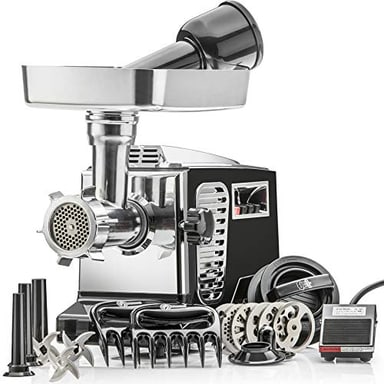
STX International Turboforce II 4000 Electric Meat Grinder
Strong throughput for the money, popular with first-time deer processors. The main tradeoff is peak-watt marketing overstates continuous power, and owners report it bogging under heavy sinew-laden loads.
Best for: Hunters grinding a deer or two per year who want speed and accessories at an entry price.
View product details- Price band
- $150–$250
- Power
- Up to 2,000 watts peak output
- Throughput
- 175 to 225 lb of meat per hour on high
- Speeds
- 3 speeds, quad air-cooled motor
Why it works
- Strong throughput for the money, popular with first-time deer processors
- Ships with a full accessory set including sausage stuffing tubes
- Compact and light next to commercial-style grinders
Watch for
- Peak-watt marketing overstates continuous power, and owners report it bogging under heavy sinew-laden loads
- Plastic housing and gear components will not survive abuse the way an all-metal LEM does
Best countertop step-up: LEM #8 575 Watt
The 575 watt countertop LEM bridges the gap between value grinders and the BigBite line: LEM parts and customer service behind a mid-priced unit, with independent testing finding it grinds well for its class. Serious Eats' grinder testing confirmed it did a good job grinding but ran unpleasantly loud, and the same testers criticized the feed opening. If you can grind with ear protection on processing day, it is a sensible middle path.
Best countertop step-up
LEM Products · Meat Grinders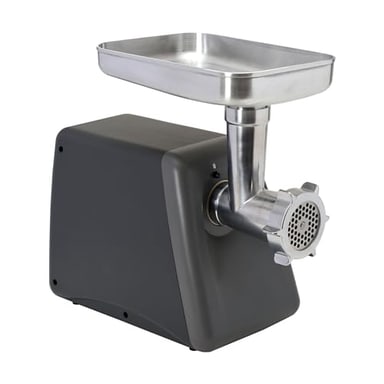
LEM #8 575 Watt Countertop Meat Grinder
Independent testing found it grinds well for its class. The main tradeoff is serious Eats testers found it unpleasantly loud in use.
Best for: Hunters who want LEM reliability at mid-tier money and do not mind ear protection on grind day.
View product details- Price band
- $150–$250
- Motor
- 575 watts
- Head size
- #8
- Format
- Countertop electric grinder
Why it works
- Independent testing found it grinds well for its class
- LEM parts and customer service behind a mid-priced unit
- Bridges the gap between value grinders and the BigBite line
Watch for
- Serious Eats testers found it unpleasantly loud in use
- Feed opening drew criticism in the same testing
Fit, sizing, and handling
Grinders are not gendered, but machine weight, feed height, control placement, and cleanup effort determine whether a workstation fits its operator. Women, shorter users, and anyone with limited grip strength should check that the unit can be moved safely, the switch is reachable without crossing the feed path, and parts can be lifted into the sink. Build the counter height around a neutral wrist and shoulder position rather than adapting to an oversized machine.
How we picked
We compared cited independent testing, including Food & Wine's and Serious Eats' 2026 grinder coverage, plus consistent owner reports from hunting and barbecue communities. We weighted the results by sustained throughput under real game trim, motor and gear construction, cleanup, and parts support. Headline wattage carried little weight unless the motor and gear construction could sustain it through sinew-heavy batches. Grinding is half the job, so finish the workflow with our best vacuum sealers and processing knives roundup and find the rest of the game-care chain in the game processing hub.
What size grinder head do I need for deer?
A #8 head handles one to a few deer per season comfortably, which is why both the BigBite #8 and MightyBite #8 anchor this list. Step to a #12 when elk-class volume or multi-animal processing days are normal, and drop to a #5 only when small batches and storage space drive the decision.
Why do cheap grinders bog down on wild game?
Wild game trim carries more sinew and silverskin than the clean pork shoulder grinders are demoed on, and stringy tissue wraps augers and blades. Value machines with peak-watt marketing lack the continuous torque to power through, which matches owner reports on the STX. Trimming diligently and keeping meat near-frozen helps any grinder, but sustained torque is what you are paying for in the LEM tier.
Is a manual grinder worth considering?
For occasional small batches, a manual grinder costs little and never trips a breaker, but hand-cranking a whole deer is a miserable afternoon. Every pick here is electric because the realistic use case, a deer or more per fall, sits beyond what hand power does pleasantly.