Search for a UTV intercom and the results funnel you straight into purpose-built powersports kits with four-figure prices. That funnel skips a whole category of gear that solves the same problem, often better and almost always cheaper. Industrial, construction, landscaping, aviation, and marine crews have been working in noise for decades, and the equipment they buy is earmuff-style hearing protection with an intercom built into the cup. The Sena Tufftalk line is the clearest example. It is sold to tree crews and jobsite foremen, and it happens to be close to perfect on an open-cab side by side, where engine drone, wind, and trail noise defeat earbuds and reduce normal conversation to shouting.
That crossover insight reframes the whole buying decision. A UTV cab is a high-noise workplace that moves. The two things that matter are attenuating the noise reaching the ear and getting a voice through it cleanly. Purpose-built powersports kits are excellent at the second job and expensive. Industrial hearing-protection headsets are excellent at both jobs and cost less. Helmet-mounted motorcycle units are excellent at the second job and contribute nothing to the first. Handheld radios solve distance and nothing else. This roundup covers all four routes and states plainly where each one wins and where it fails.
One number to carry through the whole page: Noise Reduction Rating, or NRR. It is the published attenuation figure on hearing protection, and it is the fastest way to separate a real earmuff from a headphone with a foam cup. The products below range from NRR 15 to NRR 26, and that spread is not a rounding error.
Best affordable four-person headset: Sena Tufftalk Lite
The Tufftalk Lite is the crossover answer for a four-person UTV group. Buy four matching units and the Bluetooth intercom can connect up to four users, while each person also gets an NRR 21 dB hearing-protection earmuff. Sena sells it for loud industrial work, and that is the useful transfer: engine drone, wind, and trail noise are the same problem whether the headset is on a plant floor or an open-cab side by side. The sealed cups cut the noise that makes earbuds useless, and the boom mic sits close enough to a mouth to be understood without shouting. The honest limit is the intercom itself: Bluetooth 4.1 and roughly 800 m according to Sena. That is fine for a group staying together and not enough to hold a strung-out convoy together on a long trail. It also will not fit under a full-face helmet, so helmeted riders should look elsewhere on this page.
Best overall crossover
Sena · UTV Intercoms & Comms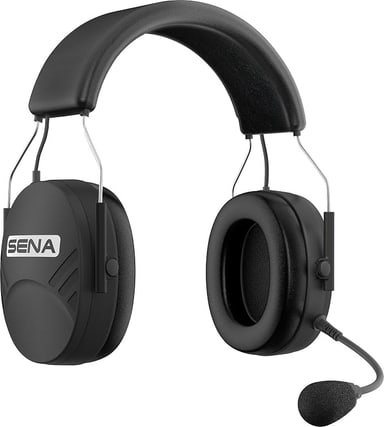
Sena Tufftalk Lite Over-the-Head Earmuff Bluetooth Intercom
Solves hearing protection and communication in one unit, which is the whole reason loud-work crews buy it. The main tradeoff is bluetooth intercom tops out at four users and roughly 800 m, so it will not hold a long, spread-out convoy together.
Best for: Open-cab UTV riders who want hearing protection and rider-to-rider talk in a single headset without wiring anything into the machine.
View product details- Price band
- $150–$250
- Authority Score
- 8.7 / 10
- Type
- Over-the-head hearing protection earmuff with built-in Bluetooth intercom
- Hearing protection
- Noise Reduction Rating 21 dB per Sena Industrial
- Intercom
- Bluetooth 4.1 intercom with up to three other users, up to 800 m per Sena
Why it works
- Solves hearing protection and communication in one unit, which is the whole reason loud-work crews buy it
- Earmuff cups seal against engine, wind, and trail noise far better than earbuds or an open helmet speaker
- Costs less than most complete purpose-built powersports intercom kits and requires no wiring into the machine
Watch for
- Bluetooth intercom tops out at four users and roughly 800 m, so it will not hold a long, spread-out convoy together
- NRR 21 dB is real protection but sits below the 26 dB muffs sold purely as hearing protectors
Best purpose-built kit: Rugged Radios RRP696 Plus with H22-STX Headsets
If the machine is a dedicated rig with the same crew in it every weekend, a hardwired intercom removes the entire class of problems that Bluetooth introduces. The RRP696 Plus kit ships with the module, two over-the-head H22-STX headsets, cabling, and push-to-talk switches, adds Bluetooth for music and phone calls, and includes a port for a mobile two-way radio so the same headsets cover in-cab talk and machine-to-machine range. Two costs are real. It is many times the price of a crossover earmuff and the two-way radio is still a separate purchase, and every occupant is tethered by a coil cord, which means unplugging before stepping out of the machine.
Best purpose-built kit
Rugged Radios · UTV Intercoms & Comms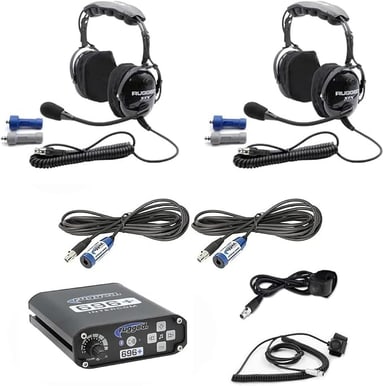
Rugged Radios RRP696 Plus Intercom Kit with H22-STX Over-the-Head Headsets
Hardwired cabling removes the pairing failures and dropouts that plague Bluetooth intercoms in a bouncing cab. The main tradeoff is costs many times what a crossover earmuff headset costs, and the two-way radio is still an extra purchase.
Best for: Riders who run the same machine with the same crew constantly and want a permanently installed, radio-ready intercom rather than a headset they carry around.
View product details- Price band
- $500+
- Authority Score
- 8.2 / 10
- Type
- Hardwired two-place UTV intercom with two over-the-head headsets
- Expansion
- Expandable to four users with an add-on kit per Rugged Radios
- Audio
- Bluetooth music and phone calls, VOX voice activation, push-to-talk switches
Why it works
- Hardwired cabling removes the pairing failures and dropouts that plague Bluetooth intercoms in a bouncing cab
- Adds a two-way radio port, so the same headsets cover in-cab talk and machine-to-machine range
- Push-to-talk plus VOX gives riders a choice between hands-free and deliberate transmission
Watch for
- Costs many times what a crossover earmuff headset costs, and the two-way radio is still an extra purchase
- Coil cords tether every occupant to the machine, so stepping out means unplugging first
Best mesh crossover: Sena Tufftalk M
The Tufftalk M is the same crossover idea as the Lite with the two upgrades a riding group actually feels: Sena Mesh instead of paired Bluetooth, and a 26 dB rating on the over-the-head version instead of 21. Mesh matters because it self-heals. Riders who drop out of range rejoin the conversation without anybody re-pairing anything, which is the normal state of affairs when machines separate on a trail. The tradeoff is price and interoperability. It runs roughly double the Lite, and mesh only links to other Sena Mesh units, so a group running mixed brands falls back to plain Bluetooth and loses the reason they paid for it. It is also taller and heavier on the head, which registers by hour six.
Best mesh crossover
Sena · UTV Intercoms & Comms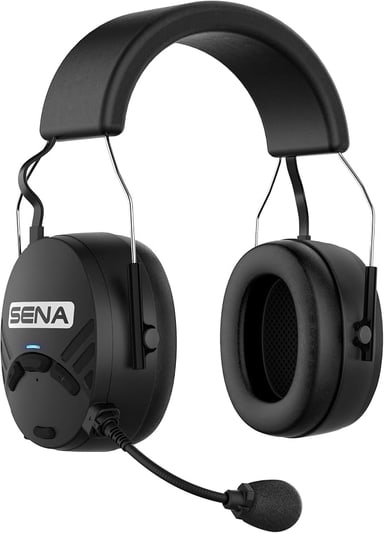
Sena Tufftalk M Over-the-Head Earmuff with Mesh Intercom
Mesh handles a moving group far better than paired Bluetooth, since riders drop out and rejoin without re-pairing. The main tradeoff is roughly double the price of the Tufftalk Lite for a benefit that only shows up in larger or more spread-out groups.
Best for: Riding groups of three or more open-cab machines who want self-healing mesh range plus full hearing protection in one headset.
View product details- Price band
- $250–$500
- Authority Score
- 8.1 / 10
- Type
- Over-the-head hearing protection earmuff with Sena Mesh Intercom
- Hearing protection
- Noise Reduction Rating 26 dB on the over-the-head version per Sena
- Intercom
- Mesh group communication that self-heals as users move in and out of range
Why it works
- Mesh handles a moving group far better than paired Bluetooth, since riders drop out and rejoin without re-pairing
- 26 dB rating on the over-the-head version is genuine hearing protection, not a headphone with a foam cup
- Same crossover logic as the Lite, with the range and group size an actual riding party needs
Watch for
- Roughly double the price of the Tufftalk Lite for a benefit that only shows up in larger or more spread-out groups
- Mesh only talks to other Sena Mesh units, so a mixed-brand group loses the main advantage
Best hearing-protection-first: 3M WorkTunes Connect
This is the crossover argument stripped to its cheapest form. The WorkTunes Connect is a 26 dB Bluetooth hearing protector sold to mowing, shop, and construction crews, and at its price a rider can buy a set for every passenger for less than one premium headset. It streams music and takes hands-free phone calls. It has no intercom, and that is the limitation to weigh honestly: rider-to-rider talk depends on a phone call and a cell signal, and the call microphone is tuned for a shop rather than a moving open cab, so wind noise leaks through to whoever is listening. Nothing about it is rated for vibration, dust, or weather the way the powersports products are.
Best hearing-protection-first
3M · UTV Intercoms & Comms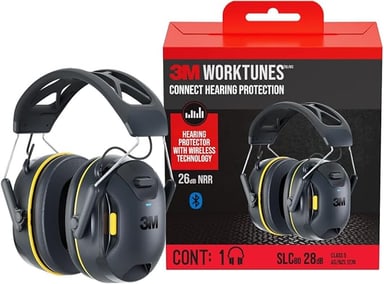
3M WorkTunes Connect Wireless Hearing Protector with Bluetooth
26 dB rating is the highest protection in this roundup, and it costs a fraction of every intercom here. The main tradeoff is no intercom at all, which is the single biggest limitation in this category. Rider-to-rider talk depends on cell signal and a phone call.
Best for: Riders whose first problem is protecting their hearing and who can live without a true intercom, or who want cheap muffs for passengers.
View product details- Price band
- $100–$150
- Authority Score
- 7.8 / 10
- Type
- Bluetooth over-ear hearing protector
- Hearing protection
- Noise Reduction Rating 26 dB
- Audio
- Bluetooth music streaming and hands-free phone calls with a built-in microphone
Why it works
- 26 dB rating is the highest protection in this roundup, and it costs a fraction of every intercom here
- Widely owned by mowing, construction, and shop crews, so the long-term ownership record is unusually deep
- Simple controls and a low price make it easy to buy a set for passengers and occasional riders
Watch for
- No intercom at all, which is the single biggest limitation in this category. Rider-to-rider talk depends on cell signal and a phone call
- The call microphone is tuned for a shop, not a moving open cab, so wind noise gets through on the far end
Best for helmet riders: Sena 5S Dual Pack
Plenty of UTV riders wear a helmet, and once a helmet is on, an external earmuff headset stops making sense. The 5S dual pack ships two complete units, so a driver and a passenger, or two machines, are covered in one purchase. Speakers and boom mic mount inside the helmet, the jog dial works with gloves on, and the same unit handles phone audio and navigation prompts. Be clear about what it does not do: a helmet speaker offers no attenuation, so wind and engine noise still reach the ear at full strength. The 5S also trails the mesh systems here on intercom range and group size.
Best for helmet riders
Sena · UTV Intercoms & Comms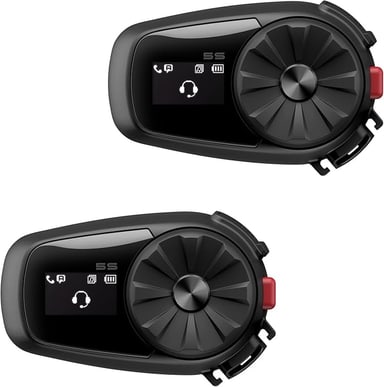
Sena 5S Motorcycle Bluetooth Communication System, Dual Pack
Ships as two complete units, so a driver and a passenger or a second machine are covered in one purchase. The main tradeoff is only useful if everyone in the group actually wears a helmet, which many open-cab UTV riders do not.
Best for: Helmet-wearing UTV riders and passengers who want in-helmet intercom and phone audio without adding an external headset.
View product details- Price band
- $150–$250
- Authority Score
- 7.8 / 10
- Type
- Helmet-mounted Bluetooth communication system, two complete units
- Intercom
- Bluetooth intercom between 5S units
- Audio
- HD speakers, phone calls, music, and GPS navigation prompts
Why it works
- Ships as two complete units, so a driver and a passenger or a second machine are covered in one purchase
- Speakers and boom mic mount inside the helmet, which keeps the crossover earmuff bulk off the head
- The jog dial is usable with gloves on, which is not true of every touch-control headset
Watch for
- Only useful if everyone in the group actually wears a helmet, which many open-cab UTV riders do not
- Helmet speakers offer no hearing protection, so wind and engine noise still reach the ear unattenuated
Best mesh range without a helmet: Cardo Packtalk Edgephones ORV
Cardo built this one specifically for off-road vehicles rather than adapting a street motorcycle unit. It is an over-the-head headset for non-helmet use, running Cardo DMC mesh with roughly a mile of range between units per Cardo, mounted with a magnetic Air Mount so the same brain can move to a helmet kit later. Range and flexibility are genuinely strong. Hearing protection is not: Cardo publishes NRR 15, the lowest figure in this roundup, which undercuts the main reason to put a headset on in an open cab. It also costs more than the Tufftalk M while protecting less, and its mesh only links to other Cardo units.
Best mesh range without a helmet
Cardo · UTV Intercoms & Comms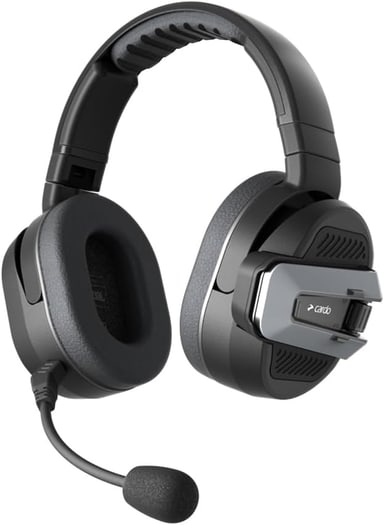
Cardo Packtalk Edgephones ORV Non-Helmet Headset, Single Pack
Mesh intercom with roughly a mile of range covers machines that separate on a trail, not just people in one cab. The main tradeoff is nRR 15 is the lowest hearing protection in this roundup, which undercuts the main reason to wear a headset in an open cab.
Best for: Groups on separate machines who want a mile of mesh range and one unit that moves between an open cab and a helmet.
View product details- Price band
- $250–$500
- Authority Score
- 7.7 / 10
- Type
- Over-the-head headset built for non-helmet off-road use
- Hearing protection
- Passive noise reduction, NRR 15 per Cardo
- Intercom
- Cardo DMC mesh, up to about 1 mile between units per Cardo
Why it works
- Mesh intercom with roughly a mile of range covers machines that separate on a trail, not just people in one cab
- The magnetic mount lets the same brain move between an open-cab headset and a helmet, which suits mixed riding
- Cardo builds this specifically for off-road vehicles rather than adapting a street motorcycle unit
Watch for
- NRR 15 is the lowest hearing protection in this roundup, which undercuts the main reason to wear a headset in an open cab
- Priced above the Tufftalk M while protecting less, so you pay a premium for range and mount flexibility
Best machine-to-machine radio: Midland GXT1000X3VP4 3-Pack
This is how a lot of riding groups actually communicate, and the economics are hard to argue with. Three GMRS handhelds cost less than one premium headset, they connect three separate machines rather than three people in one cab, and they work alongside any brand of muff, helmet, or bare ear. NOAA weather scan and AA backup power make them useful trip safety gear too. Two caveats matter. A radio does nothing about noise, so hearing an incoming call in an open cab still requires a headset or an earpiece, and the advertised mileage figures assume line of sight, which wooded ridges and hills do not provide. GMRS also requires an FCC license in the United States.
Best machine-to-machine radio
Midland · UTV Intercoms & Comms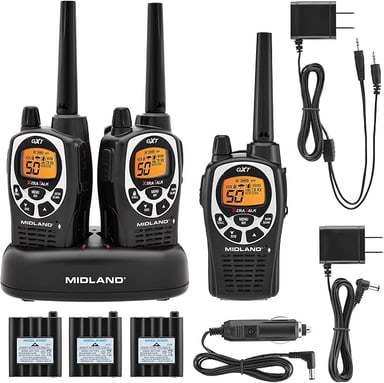
Midland GXT1000X3VP4 GMRS Two-Way Radio, 3-Pack
Three radios cost less than one premium headset and connect three separate machines, which no in-cab intercom does. The main tradeoff is a handheld radio does nothing about noise. Hearing a call in an open cab still needs a headset or an earpiece.
Best for: Riding groups on multiple machines who need machine-to-machine range on a budget and already have a hearing protection plan.
View product details- Price band
- $100–$150
- Authority Score
- 7.5 / 10
- Type
- GMRS handheld two-way radios, three units
- Channels
- 50 GMRS channels with 142 privacy codes
- Weather
- NOAA weather scan and hazard alerts
Why it works
- Three radios cost less than one premium headset and connect three separate machines, which no in-cab intercom does
- Works with any brand of headset, helmet, or bare ear, so a mixed group is never locked out
- NOAA weather alerts and AA backup power make it useful as trip safety gear, not only as a talk device
Watch for
- A handheld radio does nothing about noise. Hearing a call in an open cab still needs a headset or an earpiece
- Advertised mileage figures assume line of sight, and real wooded or hilly terrain cuts usable range dramatically
Best budget helmet unit: Sena SMH5
For a helmeted rider who wants to find out whether an intercom is worth it before spending real money, the SMH5 is the least expensive route from a brand with long firmware and warranty support. Bluetooth 5.1, a glove-operable control dial, and a single push button instead of a touch surface that gloves cannot use. The catch is arithmetic: it is sold as a single unit, and an intercom needs two, so the real cost for a conversation is double the sticker. It is also an older platform with shorter range and a smaller group ceiling than the mesh systems above, and like every helmet unit it adds no hearing protection.
Best budget helmet unit
Sena · UTV Intercoms & Comms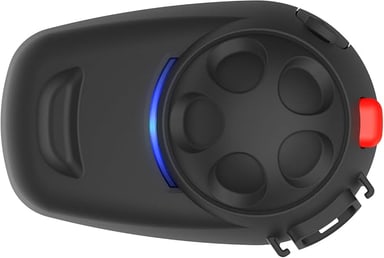
Sena SMH5 Bluetooth Motorcycle and Scooter Communication System
The lowest-cost route into a real helmet intercom from a brand with long firmware and warranty support. The main tradeoff is sold as one unit, so a two-person conversation means buying two and the real cost doubles.
Best for: Budget-minded helmet riders who want to try in-helmet intercom without committing to a premium mesh system.
View product details- Price band
- $100–$150
- Authority Score
- 7.4 / 10
- Type
- Single helmet-mounted Bluetooth communication unit
- Bluetooth
- Bluetooth 5.1
- Controls
- Control dial for volume plus a push button for device functions
Why it works
- The lowest-cost route into a real helmet intercom from a brand with long firmware and warranty support
- Glove-friendly dial and single button instead of a touch surface that gloves cannot operate
- Small enough that it does not unbalance a lightweight open-face helmet
Watch for
- Sold as one unit, so a two-person conversation means buying two and the real cost doubles
- Older platform with shorter intercom range and a smaller group ceiling than the mesh systems here
How to choose: helmet, open cab, or machine to machine
Start with the helmet question, because it eliminates half the field immediately. If everyone in the group wears a helmet, buy a helmet unit like the 5S or the SMH5 and accept that hearing protection has to come from the helmet itself plus earplugs. If riders sit bare-headed or in a ball cap, which describes most utility and hunting use, buy an over-the-head earmuff system and let it do both jobs at once.
Next, decide whether the conversation happens inside one cab or between machines. In-cab talk is easy and almost any product here handles it. Talking to a machine a quarter mile back is a different problem, and only three approaches solve it: mesh intercom, a two-way radio, or riding closer together. Mesh from Sena or Cardo is cleaner and hands-free but locks the group to one brand. Handheld GMRS or FRS radios work across every brand and every rider, at the cost of pressing a button and hearing the call over cab noise.
Then read the NRR figure rather than the marketing copy. In this roundup the spread runs from NRR 15 on the Cardo Edgephones ORV to 21 on the Tufftalk Lite to 26 on the Tufftalk M and the 3M WorkTunes Connect. NRR is measured in a lab and real-world attenuation is lower, so treat it as a comparison tool between products rather than a promise about a specific cab. What it does tell you reliably is which products are hearing protection with electronics added and which are electronics with a cup around them.
Finally, understand the range reality across the three technologies. Classic Bluetooth intercom is a paired connection, typically a few hundred meters to under a kilometer between units, and it drops when a machine falls behind. Mesh maintains a group network that repairs itself as riders move, which is why manufacturers quote longer figures for it. FRS and GMRS handhelds broadcast on licensed radio bands and reach much farther in open country, though terrain and canopy cut published mileage claims sharply. On licensing: FRS operation requires no license in the United States, while GMRS does require an individual FCC license that covers the licensee's immediate family. If nobody in the group wants to deal with that, choose FRS-only radios or stay on an intercom.
Fit, sizing, and handling
Headset fit is where these products succeed or fail over a long day, and the specifications rarely tell you. Over-the-head earmuffs have to clear whatever is already on the head. A ball cap brim usually works fine; a thick beanie or a hood pushes the cups off the ear and destroys the seal, which means the NRR number on the box no longer applies. Anyone riding in cold weather should plan on a thin balaclava under the band rather than a bulky hat over it.
Glasses are the second common seal breaker. Any temple arm passing between the cushion and the skull opens a leak path, and thick or wraparound safety frames leak more than thin ones. Riders who wear glasses all day should look for gel ear cushions, which conform around a temple arm better than standard foam, and Cardo offers gel cups for the Edgephones ORV specifically.
Clamping force deserves attention for smaller heads. Industrial muffs are engineered to seal on a broad range of adults, and on a narrower head the same band pressure that seals correctly can become a headache after two or three hours. Riders with smaller heads, and anyone who has abandoned earmuffs in the past because of pressure, should check that the headband adjusts short enough to sit correctly rather than perching high, and be ready to swap cushions.
Controls need to be operable with gloves on, which is exactly where touch surfaces fail. Physical dials and raised buttons win here, and it is a real reason the Sena jog dial and the Rugged Radios push-to-talk switches score well for winter use. Test every control with the gloves you actually ride in before the first cold trip.
All-day comfort comes down to weight, cushion material, and heat. Heavier mesh units put more mass on the crown, sealed cups trap warmth in summer, and a boom mic that will not stay positioned becomes a constant annoyance. If the machine sees eight-hour days, favor the lighter unit even at some cost in range.
How we picked
We compared published NRR figures, intercom technology and stated range, group size limits, control ergonomics with gloves, and the depth of the owner record behind each product, then weighted the crossover question directly: whether gear built for another loud-work team solves the UTV problem better than gear marketed for it. Price entered the picture as value against peers, not as a raw number, which is why a sixty-dollar hearing protector sits in the same roundup as a four-figure hardwired kit. If you are building out a machine for cold-weather use, our best UTV cab enclosures guide covers keeping weather out of the cab, the UTV winter prep checklist covers the seasonal service items, our best UTV storage roundup covers securing gear, and the rest of the category lives at the UTV hub.
Do I really need a UTV-specific intercom?
Often not. The core problem is a loud environment plus a need to talk, which industrial, construction, and marine crews solved years ago. An earmuff-style Bluetooth headset like the Sena Tufftalk Lite or Tufftalk M delivers hearing protection and intercom in one unit at a lower price than most purpose-built powersports kits. Purpose-built kits earn their money on a dedicated machine with a fixed crew, where hardwired cabling and a two-way radio port matter more than portability.
What does NRR mean, and what number should I look for?
NRR is the Noise Reduction Rating, the published attenuation figure for hearing protection. In this roundup it ranges from 15 dB on the Cardo Edgephones ORV to 26 dB on the Sena Tufftalk M and the 3M WorkTunes Connect. It is measured under lab conditions, so real-world attenuation is lower, and anything that breaks the cushion seal, including glasses arms and thick hats, reduces it further. Use it to compare products against each other rather than as a guarantee for your specific cab.
Bluetooth, mesh, or FRS and GMRS radio?
Bluetooth intercom pairs units directly and typically covers a few hundred meters to under a kilometer, which suits people sharing one cab. Mesh maintains a self-healing group network and holds a spread-out riding party together far better, but only across units from the same brand. FRS and GMRS handhelds reach much farther in open terrain and work across every brand and every rider, at the cost of pressing a button and hearing the call over cab noise. Many groups end up running an earmuff headset for in-cab talk plus radios for machine-to-machine.
Does a GMRS radio need a license?
In the United States, yes. GMRS operation requires an individual FCC license, which covers the licensee's immediate family and is renewable. FRS operation requires no license at all, which is why FRS-only radios are the simpler choice for a casual group. Many consumer handhelds, including the Midland GXT series, are sold as GMRS radios, so check the FCC guidance for the service you intend to use before transmitting.
What is the affordable four-person UTV headset setup?
Start with four matching Sena Tufftalk Lite headsets when the group stays together and everyone wants hearing protection plus conversation. Each headset is built for loud industrial work, connects by Bluetooth with up to four users, and avoids the wiring and install work of a dedicated cab intercom. Move up to the Tufftalk M when a larger or more spread-out group needs mesh, or add licensed GMRS radios when the conversation needs to move from person-to-person talk to machine-to-machine range.