Tip-ups are the coverage half of ice fishing: baited lines waiting under flags while you jig elsewhere, up to your state's line limit. The category splits into rail-style frames that span the hole, insulated hole-cover designs that fight freeze-up and block light, and hybrid devices that fish an actual rod. What separates good from frustrating is the spool: freeze-proof designs keep paying out line in brutal cold, while cheap mechanisms stick, false-flag, or seize. How tip-ups fit alongside a jigging rod, including line limits by state, is covered in our jigging versus tip-ups guide.
Best overall tip-up: Beaver Dam Original Tip-Up
The Arctic Fisherman design has been made in the USA for decades, and it stays on top for one mechanical reason: a lubricated spool shaft that simply does not freeze, in cold that seizes lesser tip-ups mid-run. In-Fisherman's tip-up coverage notes these remain among the most coveted tip-ups for hardcore ice anglers, and they are rebuildable to the point of lasting generations. The costs are real: two to three times the price of plastic budget units, wood rails that want drying after wet outings, and no thermal hole cover, so slush management is on you.
Best overall tip-up
Beaver Dam · Tip-Ups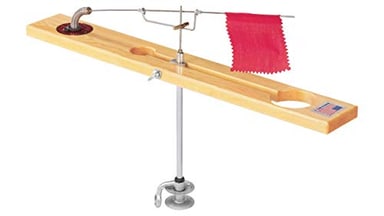
Beaver Dam Original Tip-Up
The reference-standard rail tip-up that serious pike and walleye anglers still buy. The main tradeoff is costs two to three times more than plastic budget tip-ups.
Best for: The lifetime-buy tip-up for anglers who run traditional flag lines every weekend.
View product details- Price band
- $100–$150
- Style
- Classic wooden rail tip-up
- Spool
- Freeze-proof lubricated spool shaft
- Heritage
- Arctic Fisherman design made in the USA for decades
Why it works
- The reference-standard rail tip-up that serious pike and walleye anglers still buy
- Freeze-proof spool keeps turning in brutal cold
- Rebuildable and known to last generations
Watch for
- Costs two to three times more than plastic budget tip-ups
- Wood rails want drying and care after wet outings
Best hole-cover tip-up: Beaver Dam Round Jolly Roger Tip-Up
The current Jolly Rogers model puts Beaver Dam's main assembly on a 10 inch round platform with one inch of foam insulation. It covers the hole against blowing snow and reduces the column of light reaching shallow, clear water. The flag rides lower than on a rail-style design, so drifted snow can hide it. Space the spread with clean sightlines.
Best hole-cover tip-up
Beaver Dam · Tip-Ups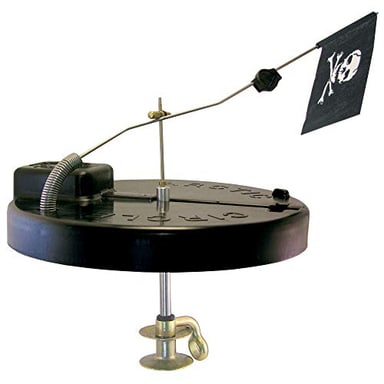
Beaver Dam Round Jolly Roger Tip-Up
Beaver Dam build quality in a hole-covering format. The main tradeoff is flags sit lower than rail-style tip-ups and can hide behind drifted snow.
Best for: Shallow-water pike and walleye sets where light penetration and freeze-up are the enemies.
View product details- Price band
- $25–$50
- Style
- Jolly Rogers insulated round tip-up, 10 inch platform
- SKU
- BD10 JR
- Insulation
- One inch foam platform
Why it works
- Beaver Dam build quality in a hole-covering format
- Blocks light from the hole, which helps in shallow, clear water
- Slows hole freeze-up compared with open rail designs
Watch for
- Flags sit lower than rail-style tip-ups and can hide behind drifted snow
Best thermal tip-up: Frabill Pro Thermal Tip-Up
The Pro Thermal model 1660 covers a 10 inch hole with an insulated circular base that keeps blowing snow and slush out and blocks unnatural light. Its spool shaft comes pre-lubricated for low temperatures, can be re-greased, and offers light or heavy trip settings. The shaft folds into the base, and the units stack inside a 5 to 6 gallon bucket. The round base is still bulkier than a flat-folding rail, so bucket storage matters when you carry a full spread.
Best thermal tip-up
Frabill · Tip-Ups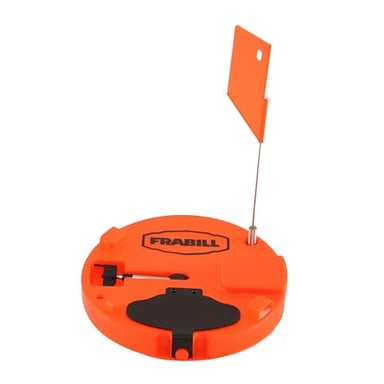
Frabill Pro Thermal Tip-Up
Covers the hole to keep blowing snow and slush out and block unnatural light. The main tradeoff is round bases take more room than flat-folding rail tip-ups.
Best for: Cold-snap flag lines where keeping the hole open matters more than tradition.
View product details- Price band
- $25–$50
- Model
- 1660, SKU PMC1660
- Coverage
- Round insulated base covers a hole up to 10 inches
- Storage
- Folds and stacks inside a 5 to 6 gallon bucket
Why it works
- Covers the hole to keep blowing snow and slush out and block unnatural light
- Sub-Zero lubricant and a shaft-in-shaft design support low-temperature operation and seasonal re-greasing
- Bucket-friendly shape makes a full spread easier to carry
Watch for
- Round bases take more room than flat-folding rail tip-ups
- The 10 inch coverage limit must match the holes you drill
Best budget rail: Frabill Classic Wood Tip-Up
The Classic Wood delivers traditional cross-rail function at an entry price, folds flat, and stacks in a bucket or sled tray, which is exactly what a walk-on angler building a first spread needs. The compromises match the price: no thermal protection, so holes freeze fast in hard cold, and lighter-duty hardware than Beaver Dam rails. As the affordable middle ground between premium rails and plastic bargain units, it earns its slot.
Best budget rail
Frabill · Tip-Ups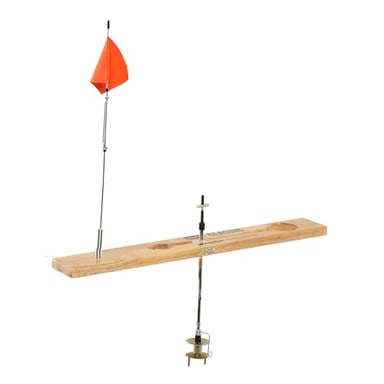
Frabill Classic Wood Tip-Up
Classic rail function at an entry price. The main tradeoff is no thermal cover, so holes freeze fast in hard cold.
Best for: Building out a budget flag spread without going to plastic bargain units.
View product details- Price band
- $25–$50
- Style
- Traditional wooden cross-rail tip-up
- Spool
- Large metal spool on a removable shaft
- Flag shaft
- 17.5 in
Why it works
- Classic rail function at an entry price
- Folds flat and stacks in a bucket or sled tray
Watch for
- No thermal cover, so holes freeze fast in hard cold
- Hardware is lighter duty than Beaver Dam rails
Best rod-and-reel tip-up: iFishPro 2.0 Tip-Up
The iFishPro solves the tip-up's oldest complaint: hand-over-hand fights and re-rigging frozen line. It fishes your own rod and reel, so when the flag flies, you pick up the rod and let the drag do the work on big pike runs. An adjustable trigger with light, medium, and heavy settings tames wind and big-minnow false flags, and a slip-stop system returns the bait to the same depth every reset. It is bulkier to haul and set than flat rails, and every set ties up a dedicated rod and reel.
Best rod-and-reel tip-up
iFishPro · Tip-Ups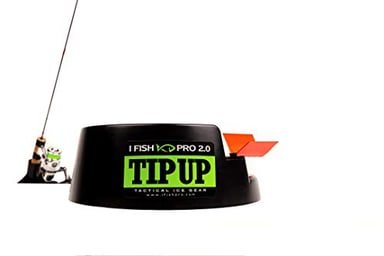
iFishPro 2.0 Tip-Up
You fight the fish on a rod and reel instead of hand-lining. The main tradeoff is bulkier to haul and set than flat rail tip-ups.
Best for: Anglers who love flags but hate hand-over-hand fights and re-rigging frozen line.
View product details- Price band
- $100–$150
- Style
- Tip-up that fishes your own rod and reel
- Trigger
- Adjustable light, medium, and heavy settings to cut false flags
- Line control
- Slip-stop system for repeatable depth
Why it works
- You fight the fish on a rod and reel instead of hand-lining
- Adjustable trigger tames wind and big-minnow false flags
- Drag does the work on big pike runs
Watch for
- Bulkier to haul and set than flat rail tip-ups
- Ties up a dedicated rod and reel for every set
Best bargain spread builder: HT Enterprises Polar Tip-Up
The PTU-2B Polar is a straightforward open tip-up with a sealed mechanism, a black V-shaped frame with a built-in ruler, a 200 foot plastic spool, and a trip that adjusts for lighter or heavier bait. Its wind-free trip wire helps cut down on weather-driven flags. The open frame does not cover the hole against snow, light, or refreeze, and HT also sells a higher-capacity PTU-50B, so check the model before buying.
Best bargain spread builder
HT Enterprises · Tip-Ups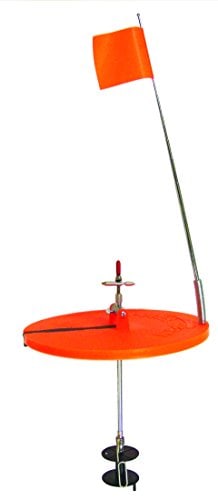
HT Enterprises Polar Tip-Up
V-shaped frame lifts cleanly from the hole and provides a built-in measuring surface. The main tradeoff is open frame does not cover the hole against snow, light, or refreeze.
Best for: Anglers who want a traditional open tip-up with adjustable trip tension and straightforward line handling.
View product details- Price band
- $25–$50
- Model
- PTU-2B black frame with 200 foot plastic spool
- Frame
- V-shaped high-impact plastic with a built-in ruler
- Mechanism
- Sealed mechanism with an adjustable multi-tension trip
Why it works
- V-shaped frame lifts cleanly from the hole and provides a built-in measuring surface
- Multi-tension trip can be set for lighter or heavier bait
- Wind-free trip wire helps reduce weather-driven flags
Watch for
- Open frame does not cover the hole against snow, light, or refreeze
- Choose the exact model carefully because the PTU-2B and PTU-50B use different spool capacities
Best hook setter, where legal: JawJacker Hook Setter
The JawJacker is not a classic tip-up: it is a spring-loaded holder that fishes your own rod and fires the hookset the instant a fish takes, which converts the light biters that grab a bait, feel resistance, and drop it. Owner feedback widely reports it out-producing plain deadsticks, and it works with rods you already own. Two cautions from the catalog data: hook-setting devices are not legal in every state, so check your regulations before fishing one, and the spring and trigger wire need careful adjustment in extreme cold.
Best hook setter, where legal
JawJacker · Tip-Ups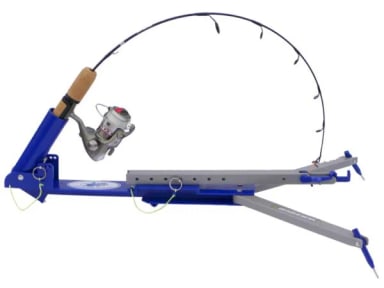
JawJacker Hook Setter
Sets the hook for you, which converts light biters that drop a normal tip-up bait. The main tradeoff is hook-setting devices are not legal in every state, so check regulations before fishing one.
Best for: Legal-where-you-fish deadstick duty when fish are striking short and dropping baits.
View product details- Price band
- $25–$50
- Style
- Spring-loaded hook-setting rod holder, fished with your own rod
- Function
- Trigger releases the loaded rod to set the hook the instant a fish takes
- Use case
- Deadstick sets for trout, walleye, and pike
Why it works
- Sets the hook for you, which converts light biters that drop a normal tip-up bait
- Widely reported to out-produce plain deadsticks
- Works with the rods and reels you already own
Watch for
- Hook-setting devices are not legal in every state, so check regulations before fishing one
- Spring and trigger wire need careful adjustment in extreme cold
Fit, sizing, and handling
Tip-ups are not gendered, but their controls can become difficult through gloves and deep cold. Women and anglers with smaller hands should compare spool access, trip-tension adjustment, hole-cover lift, and whether the flag and release can be reset without bare fingers. High-contrast flags and simple mechanisms also make a spread easier to monitor for anglers with limited color vision or dexterity.
How we picked
Tip-ups were judged on spool reliability in deep cold, hole coverage, trip quality, flag visibility, and long-term durability. Current manufacturer pages and catalogs establish exact models and mechanisms, while independent coverage and owner reports provide the longer field history. Rig the jigging half of the system from the best ice fishing rods roundup, spool up with lures from the best ice fishing tackle guide, and find everything else in the ice fishing hub. Flags pull anglers across more ice than a single hole ever will, and no ice is ever fully safe, so check conditions for your lake in the Ice & Water Report before spreading out.
How many tip-ups can I legally run?
Line limits are state law and tip-ups count against them: Wisconsin's general inland rule allows up to three lines per angler, Minnesota generally allows two through the ice, and border waters and special-regulation lakes differ. Verify your water in the current state regulations before setting a spread.
Thermal or rail: which style should I buy?
Buy for your common conditions. Thermal hole-cover designs like the Frabill Pro Thermal keep blowing snow and light out of the hole. Rails like the Beaver Dam offer taller flags, generational durability, and a flat carry profile. Many anglers run both and deploy by forecast.
Why does my tip-up keep false flagging?
The usual suspects are a trip set too light for the minnow, wind rocking the frame, and oversized bait. Match the trip setting to the bait. The Frabill Pro Thermal has light and heavy positions, while the HT Polar uses an adjustable multi-tension trip.
Are hook-setting devices like the JawJacker legal everywhere?
No. Some states prohibit devices that set the hook mechanically, and rules change. Check the current fishing regulations for the state and water you are on before rigging one; where they are legal, they shine on light-biting days.