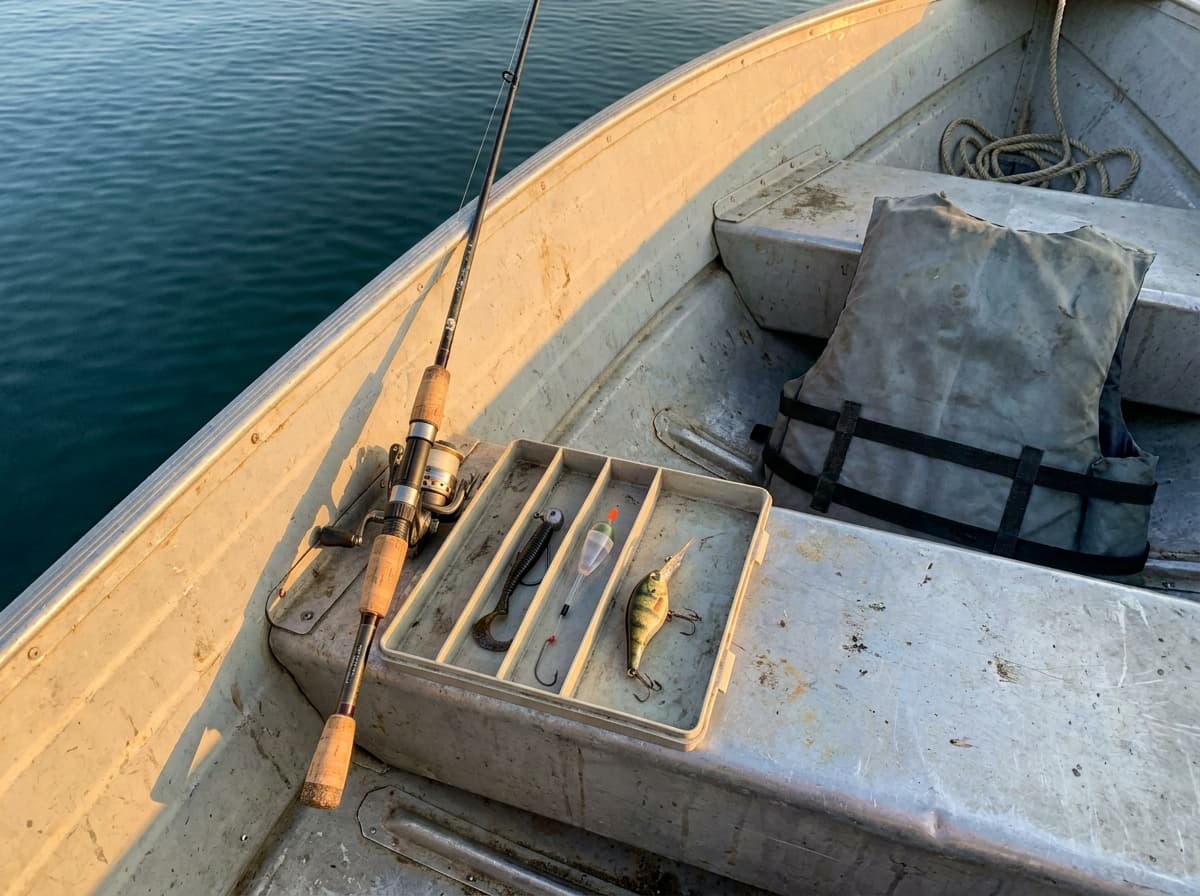
Walleye reward planning more than raw skill. According to the Minnesota DNR, their pearlescent eye carries a reflective pigment layer, the tapetum lucidum, that lets them feed in low light and murky water, which is why the hours near dawn and dusk are so often the best of the day. Get the timing and the depth right, and the presentation can be almost embarrassingly simple.
The open-water season, month by month
Walleye position around food, temperature, and oxygen, and those factors change through the season. The Minnesota DNR describes a predictable arc: fish concentrate near shore in spring, slide to deeper mid-lake structure through summer, and gradually return to shoreline areas in late summer and fall.
| Season | Where walleye hold | Productive approach |
|---|---|---|
| Spring | Near-shore sand flats and shallow structure where they feed on shiner minnows | Cast or vertically jig a jig-and-minnow |
| Summer | Deeper humps, saddles, and points off shore | Slip-sinker rig with live bait; slip bobber over structure |
| Fall | Back toward shallow and semi-shallow weedlines, gravel bars, and points | Troll or cast hard plastic baits |
The DNR notes that fishing success tends to be highest in May and June, when walleye are most frequently in shallow or semi-shallow spots near shore and are easier to reach. That makes late spring the friendliest window for a first walleye.
Four presentations that cover the year
You do not need a boat full of tackle. The Minnesota DNR highlights a short list of techniques that, between them, handle nearly every situation.
Jig-and-minnow. The classic early-season tool. Tip a jig with a shiner minnow or fathead chub and use a weight heavy enough to feel bottom without dragging, typically an eighth, a quarter, or three-eighths of an ounce. Ball-head jigs work best for vertical jigging. Experiment with dark and bright colors until one out-produces the rest.
Slip-sinker rig. Often called a Lindy rig, this mid-summer staple slides a minnow, night crawler, or leech in front of fish on the bottom. Bites are frequently a light tap-tap-tap; the DNR advises letting line feed out for a few seconds, reeling until you feel tension, then setting the hook.
Trolled or cast hard baits. In autumn, when walleye return to the shallows and spread out, small perch-imitating crankbaits shine. Trolling covers water efficiently at slow speeds, roughly one mile per hour or just fast enough to wake the lure's action.
Slip bobber. Effective year round, a slip bobber hovers a leech, crawler, or minnow just above a reef, hump, or other structure and lets you fish precise depths even beyond 20 feet.
Where to start
A first walleye trip goes better when the deck is stacked in your favor. Pick a lake with a documented walleye population rather than hoping, then plan to fish the low-light windows. A medium-action spinning combo loaded with 6 to 10 lb line covers jigging, rigging, and bobber work, and the DNR lists a net, pliers for hook removal, and a few first-aid items as smart additions, since walleye have sharp teeth and gill plates.
Sonar shortens the learning curve by showing depth, bottom transitions, and fish, and our roundup of the best fish finders breaks down options for small boats and kayaks. When you are choosing lures, the best walleye lures guide covers the jigs, rigs, and crankbaits that match each seasonal pattern above.
Reading structure and light
The unifying idea across the season is the edge. Walleye relate to transitions, hard bottom to soft, weeds to open water, flat to drop, and they move along those edges to feed as light fades. That is why the DNR emphasizes structure like points, humps, and saddles, and why "fish the edge at dusk" outperforms random casting almost everywhere.
Walleye are members of the perch family and feed heavily on other fish, especially yellow perch, so lures and live baits that imitate small prey fish tend to match the menu. Once the hardwater season arrives, the same low-light, structure-first logic carries onto the ice, as covered in our companion guide to catching walleye through the ice.
Regulations deserve a check before every trip. Bag limits, size windows, and special or experimental rules vary by water and by state, so confirm the current regulations for your specific lake. You can find more species guides and gear breakdowns across the fishing hub.
What is the best bait for walleye?
Live minnows, leeches, and night crawlers cover most situations, matched to the season: a shiner or fathead on a jig in spring, a leech or crawler on a slip-sinker rig in summer, and minnow-imitating crankbaits in fall. The Minnesota DNR stresses experimenting until you find what the fish want on a given day, then honing that technique.
What time of day is best for walleye fishing?
The hours around dawn and dusk are traditional walleye feeding windows, when fish move up from deep water onto shallow flats to feed. Overcast days and stained water can spread the bite into more of the daylight hours, while bright sun on clear lakes tends to concentrate it at the low-light edges.
What gear do I need to start walleye fishing?
A medium-action spinning rod and reel with 6 to 10 lb line handles jigs, rigs, and slip bobbers. Add a landing net, pliers or a hook-out tool for their sharp teeth, and a small selection of jigs, hooks, sinkers, and slip bobbers. Sonar helps you find structure and fish but is not required to catch your first walleye from shore or a small boat.
Sources
- Minnesota DNR, How to catch a walleye
- Minnesota DNR, Walleye biology and identification
- Wisconsin DNR, Fishing