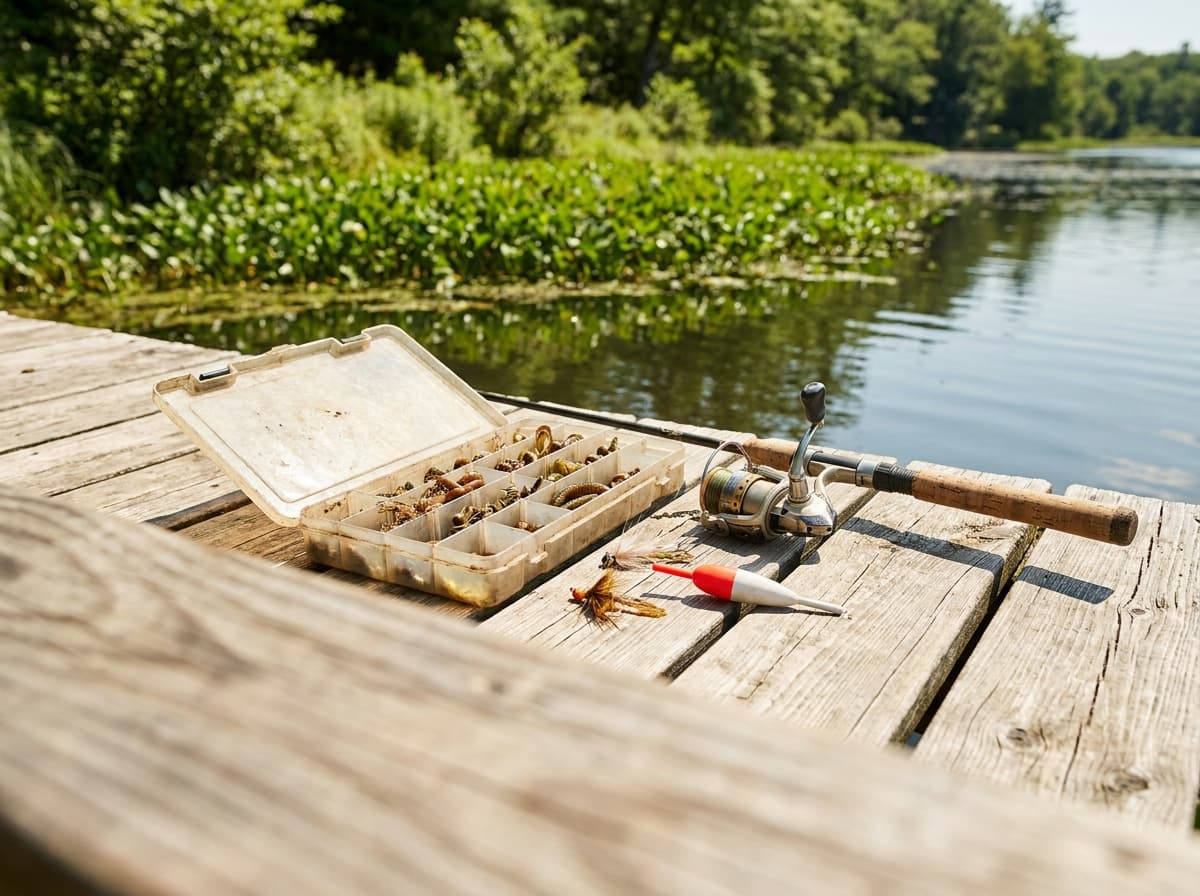
Panfish, mainly bluegill and other sunfish plus black crappie, are the on-ramp to fishing. The Minnesota DNR calls the bluegill the state's most commonly caught fish and an ideal introductory species: abundant, hard-fighting for its size, and excellent table fare. The same light tackle and simple rigs work for beginners and experts alike, which is why panfish anglers of every skill level chase them.
Know your panfish
Bluegill and other sunfish are deep-bodied, small-mouthed fish that inspect food rather than chase it. The Minnesota DNR notes bluegills typically do not pursue fleeing minnows the way predators do; instead they examine natural foods hanging in the water column, which is exactly why a slow, motionless presentation works. Crappie, by contrast, are more willing to eat small minnows and suspend in open water and around cover. Both are panfish, both are caught on small tackle, and both reward finding the right depth.
Bluegill through the season
The Minnesota DNR lays out a clear seasonal pattern for sunfish:
| Season | Where bluegills hold | How to reach them |
|---|---|---|
| Spring and early summer | Plate-sized spawning nests in gravel or sand in shallow shorelines, often in colonies | A worm, grasshopper, or tiny jig hung over a nest; nesting males attack threats |
| Summer | Larger fish move to water 10 feet deep and deeper along weedlines, sunken brush, humps, and rocky points, just above the thermocline | Fish deeper structure; a small jig or bait at the right depth |
| Fall | Late-summer locations plus shallow weedbeds and bulrush | Work cover early and late in the day |
Timing matters. The DNR says spring and summer fishing is often best early and late in the day when fish are most active, mid-day can be good in autumn as water cools, and because sunfish feed by sight, they do not bite much at night. Scouting shallow shorelines for the light-colored circular nests is a reliable way to locate spring bluegills.
Crappie through the season
Crappie shift with the seasons much like bluegill but lean harder on cover and open-water suspension. During spring spawning, the Wisconsin DNR advises fishing near vegetation close to shore; in summer and fall, crappie become harder to pattern as they seek out deep holes, river channels, and submerged logs or brush piles for shelter. The Minnesota DNR lists the go-to crappie techniques as a minnow beneath a bobber or a small jig tipped with a soft-plastic body. The Wisconsin DNR recommends small minnows, small marabou jigs, plastic minnows, or small streamer flies worked along the outer edges of weed beds.
Rig small, catch more
The Minnesota DNR's central lesson for panfish is scale. A big bluegill is only 9 to 10 inches, and most anglers start keeping them at 7 or 8, so everything about the rig is small: small lures, small hooks, small bobbers, and, when needed, small split shot on thin line.
- Bobber fishing is the most popular method because it is easy and it works. Use a small bobber shaped more like a pencil than a ball, since a bluegill that feels too much resistance will spit the bait. Thin line, around 4 lb test, helps because big bluegills inspect an offering from several angles before committing.
- Tiny jigs and spinners such as a 1/32 ounce jig, dropped and raised, or a small beetle-style spinner draw strikes from both bluegill and crappie.
- Fly fishing with poppers, rubber spiders, or ant and insect patterns is deadly in spring shallows, and bluegills are far more forgiving of imperfect casting than trout.
For gear, the DNR suggests a light spinning rod with 4 lb monofilament, or even a telescopic cane pole for kids, plus long-shank hooks in sizes 6 to 10 that are easier to remove. Our roundup of the best panfish jigs covers the small jigs that anchor most of this, and you will find more open-water guides across the fishing hub. When the lakes freeze, the same species stay catchable through the ice, as covered in our guide to panfish and crappie through the ice.
Handling and conservation
Bluegills have no teeth but do carry sharp dorsal fin spines. The Minnesota DNR describes the safe way to handle one: hold it vertically, place your hand at the head, and slide toward the tail to lay the spines down before unhooking.
What is the best bait for bluegill and crappie?
For bluegill, a small worm, grub, or sunfish leech under a pencil bobber is hard to beat, along with tiny 1/32 ounce jigs. For crappie, a small minnow under a bobber or a small jig tipped with a soft-plastic body is the standard, worked along weed edges and brush. Match the small mouths of these fish with small hooks and baits.
Where do I find panfish in summer?
As water warms, larger bluegills move out to about 10 feet and deeper along weedlines, sunken brush, humps, and rocky points, holding just above the thermocline. Crappie seek deep holes, channels, and submerged wood or brush piles. Both become more structure-oriented in summer than they were during the shallow spring spawn.
What line and hooks should I use for panfish?
Thin line matters. The Minnesota DNR recommends around 4 lb monofilament on a light spinning rod, paired with small long-shank hooks in sizes 6 to 10, which are easy to remove, and small split shot sized so a pencil bobber rides correctly. Heavier line reduces bites because curious, cautious bluegills inspect the bait closely before eating.
Sources
- Minnesota DNR, How to catch a sunfish
- Minnesota DNR, How to catch a crappie
- Minnesota DNR, Quality sunfish initiative
- Wisconsin DNR, Black crappie