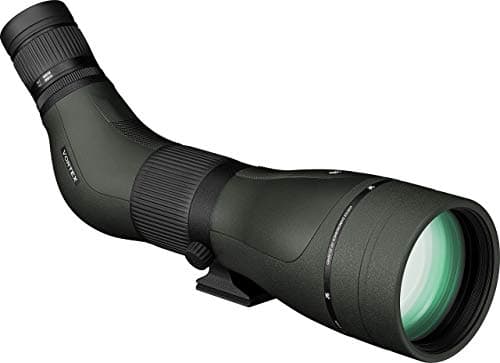
One of our picks
Vortex Diamondback HD 20-60x85 Spotting Scope
Best for: The hunter who wants one full-size spotter to read antler detail and count points across a canyon.
Spotting scopes · detail · stability
Choose a spotter you will actually set up. Browse spotting scopes by magnification, objective size, glass, focus, angle, tripod fit, and carry weight.
One of our picks
Best for: The hunter who wants one full-size spotter to read antler detail and count points across a canyon.
Research catalog updated
Detail, stability, and carry path
A spotting scope earns its place when binoculars stop resolving the detail you need. Start with the distance and light, then choose objective size, useful magnification, body angle, tripod stability, and total carry weight as one system. The highest number on the zoom ring is only useful when the image stays steady and clear.
Long glass needs a stable base. Atmospheric shimmer, wind, poor focus, and a shaky tripod can erase the detail that a larger objective or higher magnification promises. Read the exact manufacturer specifications and include the tripod, head, case, and adapter in the complete kit.
A 65 mm body can be easier to carry while an 80 or 85 mm objective gathers more light and supports detail at higher magnification. Compare the actual distance, last-light routine, pack-in length, and weight you will tolerate instead of choosing the biggest front lens by default.
An angled body can share well on a tripod and work from a lower head, while a straight body can align quickly from a vehicle, blind, or familiar window. Check eye relief, focus controls, rotating collars, digiscoping needs, and whether the objective and eyepiece caps stay attached in the field.
Add a stable tripod, compatible head or Arca plate, case or cover, lens cloth, phone adapter if needed, and a carry plan. A small scope on a steady base often resolves more useful detail than a heavier scope on a flexible bundled tripod.
Official manufacturer resource
Compare the 20-60x85 and 16-48x65 families, body angles, objective sizes, weights, eye relief, Arca compatibility, weather sealing, focus, and included covers.
Compare Vortex modelsOfficial manufacturer resource
Use the current product page to confirm the 85 mm objective, 20-60x zoom, 60.9-ounce weight, helical focus, Arca-Swiss compatibility, and argon-purged waterproof build.
Check Vortex 85 detailsOfficial manufacturer resource
Review the manufacturer's model options, 45-degree or straight body, HD glass, argon purge, weather sealing, rotating ring, tripod fit, and 70-ounce weight.
Check Athlon detailsManufacturer resources checked August 8, 2026.
Three places to start
Line up fit, strengths, limitations, and useful specifications before you open a retailer page.
Swipe sideways to compare every model.
| Compare | 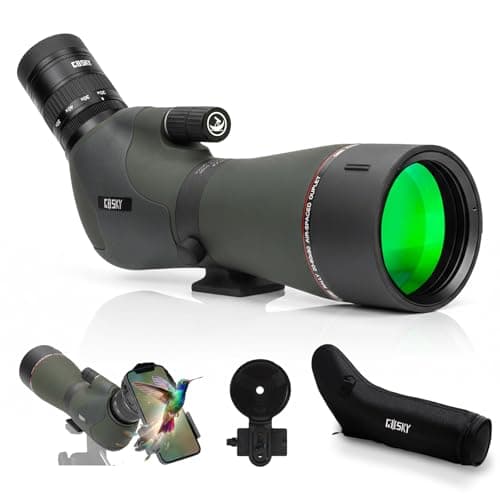 Lower price range Lower price rangeGosky 20-60x80 Spotting ScopeGosky | 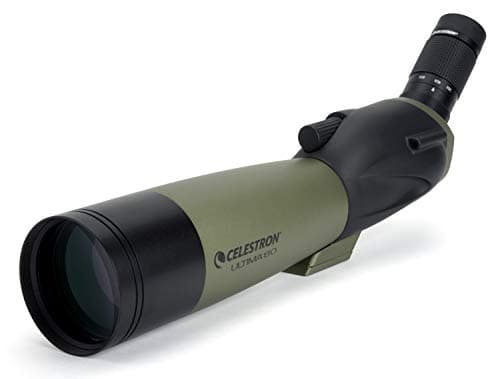 Middle price range Middle price rangeCelestron Ultima 80 Angled Spotting ScopeCelestron | Higher price rangeVortex Diamondback HD 20-60x85 Spotting ScopeVortex |
|---|---|---|---|
| Price range | $50-150 | $150-300 | $300-600 |
| Best for | The buyer who wants an 80 mm spotter and phone-scoping on the tightest budget. | The mixed-use glasser who wants a proven 80 mm scope for hunting, birding, and the range. | The hunter who wants one full-size spotter to read antler detail and count points across a canyon. |
| Strong point | Puts an 80 mm objective and phone adapter in reach at a bare-budget price | Long-running crossover favorite for hunters who also bird and target shoot | The default do-everything hunting spotter: 85 mm objective stays bright at legal light |
| Watch for | Image quality and low-light performance trail name-brand glass | Older optical design shows more edge softness than newer HD glass | Full-size 85 mm body is heavy for long backcountry pack-ins |
| Configuration | 20-60x zoom, 80 mm objective, angled body | 20-60x zoom, 80 mm objective, 45 degree angled | 20-60x zoom, 85 mm objective, angled body |
| Glass | BaK-4 prism, fully multi-coated optics, dual-focus | Multi-coated optics, BaK-4 prisms | HD extra-low dispersion, fully multi-coated |
| Build | Waterproof, fogproof, rubber armor | Waterproof with protective rubber armor | Argon-purged, waterproof and fogproof |
| Next step | Check at AmazonProduct details | Check at AmazonProduct details | Check at AmazonProduct details |
We chose one lower, middle, and higher-priced model from products we researched and matched to a current retailer page. This is a useful starting point, not a ranking.
What to compare
Once you know how and where you will use the gear, the specifications become much easier to compare.
Useful detail at dawn, dusk, and real field distances matters more than the highest magnification number.
Straight and angled bodies suit different tripod heights, sharing, windows, and extended glassing sessions.
Include tripod, head, case, eyepiece, adapter, and total carry weight when comparing cost and use.
Build around the job
Each system connects spotting scopes to the other roles that matter in the field. Keep what already works and replace only the weak link.
Shop every activitySportsman Authority picks
Every card tells you who it fits, what it does well, what to watch for, and where to check the current price.
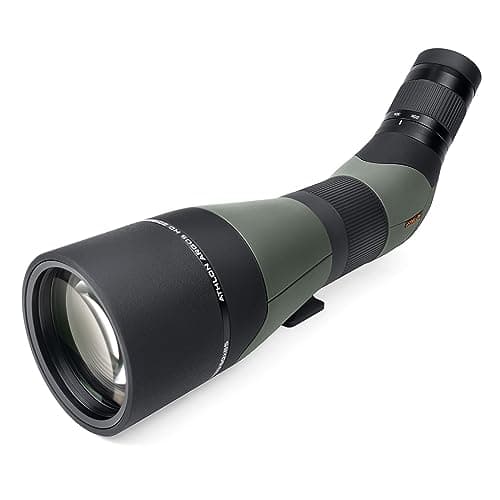
Athlon · Spotting Scopes
Best for: The value-focused hunter who wants full-size aperture without stepping into alpha pricing.
Delivers a full-size 85 mm objective near the bottom of the serious-spotter price range. The main tradeoff is standard multi-coatings trail the ED and HD glass in pricier spotters.
$300-600
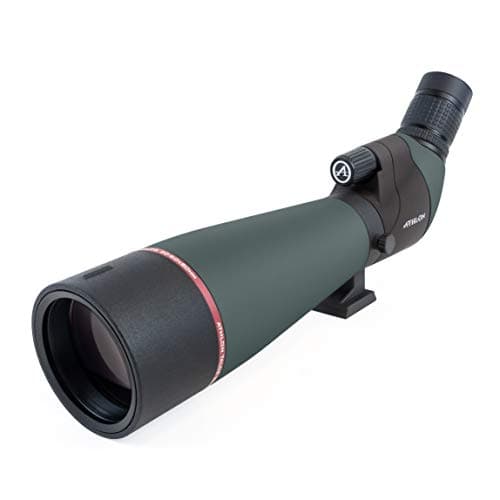
Athlon · Spotting Scopes
Best for: The first-time spotter buyer who wants a ready-to-glass kit at an entry price.
Includes a tripod and case, so it is a complete glassing setup out of the box. The main tradeoff is bundled tripod is a starter unit, not a stable long-range base.
$150-300
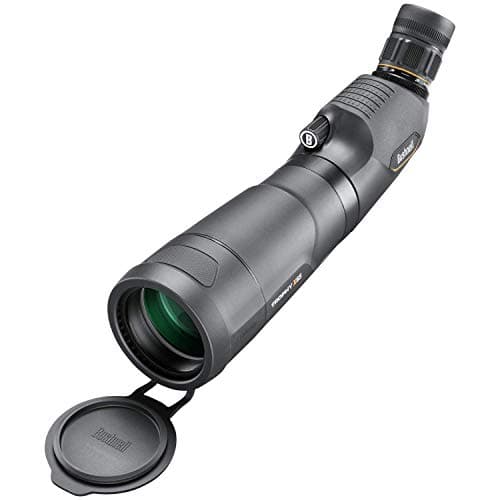
Bushnell · Spotting Scopes
Best for: The western hunter who wants a light, weatherproof spotter for glassing on the move.
Compact 65 mm body keeps pack weight down for spot-and-stalk hunts. The main tradeoff is 65 mm aperture is dimmer than 80 mm scopes at last light.
$150-300
Celestron · Spotting Scopes
Best for: The mixed-use glasser who wants a proven 80 mm scope for hunting, birding, and the range.
Long-running crossover favorite for hunters who also bird and target shoot. The main tradeoff is older optical design shows more edge softness than newer HD glass.
$150-300
Gosky · Spotting Scopes
Best for: The buyer who wants an 80 mm spotter and phone-scoping on the tightest budget.
Puts an 80 mm objective and phone adapter in reach at a bare-budget price. The main tradeoff is image quality and low-light performance trail name-brand glass.
$50-150
Vortex · Spotting Scopes
Best for: The mobile hunter who counts ounces and wants HD glass that still packs down small.
The 65 mm body drops real weight for backpack and western hunts. The main tradeoff is smaller objective gathers less light than an 85 mm at dawn and dusk.
$300-600
Vortex · Spotting Scopes
Best for: The hunter who wants one full-size spotter to read antler detail and count points across a canyon.
The default do-everything hunting spotter: 85 mm objective stays bright at legal light. The main tradeoff is full-size 85 mm body is heavy for long backcountry pack-ins.
$300-600
Category FAQ
Binoculars are faster for scanning and moving through a day. A spotting scope makes sense when you need more detail at distance and are willing to stop, mount a tripod, focus carefully, and carry the extra weight. If the position does not allow that setup time, better binocular carry may be the more useful choice.
Only when the atmosphere, focus, light, and tripod are steady enough to support it. Heat shimmer, wind, and a flexible head can make a lower power image easier to use. Compare the useful range of the zoom, not just the top number, and check the objective size and exit pupil with it.
An angled body can share comfortably on a tripod, work from a lower head, and suit longer glassing sessions. A straight body can align quickly from a vehicle, window, or familiar eye line. Choose around the tripod height, viewing partners, cover, and carry position you actually use.
Use a tripod and head rated for the complete scope, eyepiece, adapter, and any phone or camera load. Check the mounting foot, Arca compatibility, pan control, leg stability, height, and packed weight. A steady base is part of the optical system, not an optional accessory after the scope purchase.