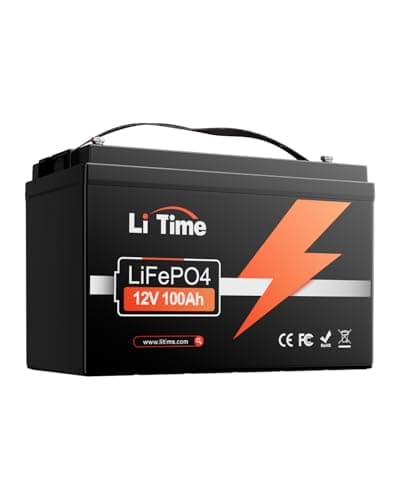
One of our picks
LiTime 12V 100Ah Group 31 LiFePO4 Lithium Battery
Best for: Anglers wanting the lowest-cost lithium upgrade for trolling motors and electronics.
Marine batteries · AGM · lithium
Browse marine batteries by chemistry, capacity, voltage, cold performance, charger, and the load they need to run.
One of our picks
Best for: Anglers wanting the lowest-cost lithium upgrade for trolling motors and electronics.
Research catalog updated
Capacity, chemistry, and charging path
A marine battery is a system decision that starts with voltage and usable capacity, then adds chemistry, weight, charging, storage, terminals, cables, and the actual loads on the boat or kayak. Count the trolling motor, fish finder, pumps, lights, and accessories before comparing a battery by amp hours alone.
A 12V 100Ah AGM and a 12V 100Ah LiFePO4 battery do not create the same install. Confirm voltage, series or parallel layout, usable capacity, charger chemistry, cold-weather guidance, dimensions, terminal hardware, cable and fuse sizing, and the boat's battery compartment before ordering.
Write down the motor voltage, typical speed, wind and current, electronics, pumps, lights, and how long the boat stays out. A 12V setup is not interchangeable with 24V or 36V, and a battery sized for a fish finder alone is not a trolling-motor bank.
AGM can be a straightforward fit for owners who already have lead-acid charging and room for the weight. LiFePO4 can reduce weight and add a different usable-capacity and cycle profile, but it needs compatible charging, protection, temperature guidance, and a plan for the series or parallel bank.
Add the charger, battery box or tray, terminals, cables, fuse or breaker, disconnect, monitor, tie-downs, and any new mounting work. Confirm the compartment dimensions and ventilation or service instructions, then set up a storage and charging routine before the first launch.
Official manufacturer resource
Use Renogy's official product and manual to compare the AGM battery's capacity, dimensions, weight, charging requirements, terminals, and the exact series or parallel arrangement you need.
Check Renogy battery dataOfficial manufacturer resource
Review LiTime's official battery page for Group 31 dimensions, weight, BMS, capacity, charging guidance, series or parallel limits, and the temperature instructions that matter in a boat or kayak.
Review LiTime specificationsOfficial manufacturer resource
Use the official ExpertPower page to check Bluetooth monitoring, BMS, dimensions, terminals, operating temperature, charger compatibility, warranty, and current availability before choosing a connected bank.
Check ExpertPower detailsManufacturer resources checked August 9, 2026.
Three places to start
Line up fit, strengths, limitations, and useful specifications before you open a retailer page.
Swipe sideways to compare every model.
| Compare | 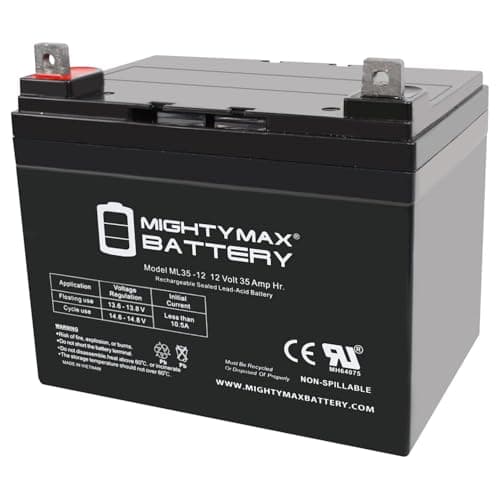 Lower price range Lower price rangeMighty Max ML35-12 12V 35Ah U1 Deep Cycle AGM BatteryMighty Max | 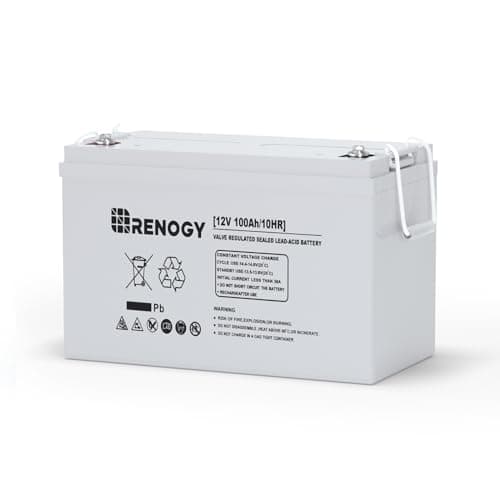 Middle price range Middle price rangeRenogy Deep Cycle AGM 12 Volt 100Ah BatteryRenogy | 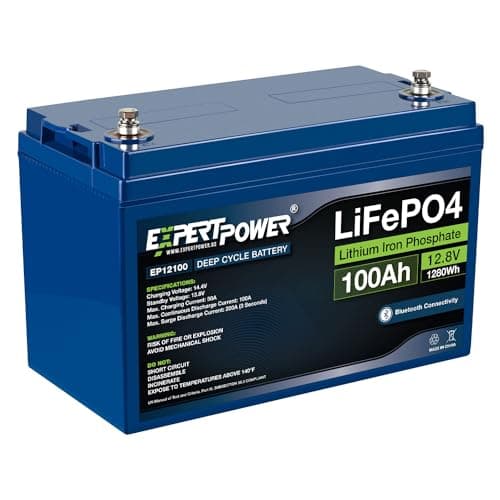 Higher price range Higher price rangeExpertPower 12V 100Ah LiFePO4 Deep Cycle Battery with BluetoothExpertPower |
|---|---|---|---|
| Price range | $50-150 | $150-300 | $300-600 |
| Best for | Powering a fish finder, aerator, or small kayak setup on a budget. | Marine and solar hybrid setups where you want a name-brand AGM. | Boaters who want app-based battery monitoring in a mid-priced lithium. |
| Strong point | Cheap entry point for a sealed deep-cycle battery | Trusted solar and marine brand | Bluetooth state-of-charge monitoring from your phone |
| Watch for | Heavy for its capacity | Heavy at about 66 lb | Pricier than the budget LiTime lithium |
| Chemistry | Sealed AGM lead-acid | AGM lead-acid | LiFePO4 lithium |
| Capacity | 35Ah | 100Ah | 100Ah |
| Weight | About 23 lb | About 66 lb | Not specified |
| Next step | Check at AmazonProduct details | Check at AmazonProduct details | Check at AmazonProduct details |
We chose one lower, middle, and higher-priced model from products we researched and matched to a current retailer page. This is a useful starting point, not a ranking.
What to compare
Once you know how and where you will use the gear, the specifications become much easier to compare.
Add the motor and electronics draw, expected runtime, reserve, and voltage before choosing capacity.
Lithium and lead-acid systems differ in usable capacity, weight, charging, low-temperature limits, and initial cost.
Use the correct charger, wire, fuse, terminals, ventilation, and secure mounting for the battery maker's requirements.
Build around the job
Each system connects marine batteries to the other roles that matter in the field. Keep what already works and replace only the weak link.
Shop every activityMarine Batteries roleSupplies the voltage, reserve, and charging plan the motor and electronics require.
Trolling Motors · Fish Finders · Tackle Boxes & Bags
See the complete setupMarine Batteries roleProvides a contained power source sized to the electronics and available storage.
Fishing Kayaks · Kayak Fishing Accessories · Fish Finders
See the complete setupSportsman Authority picks
Every card tells you who it fits, what it does well, what to watch for, and where to check the current price.
ExpertPower · Marine Batteries
Best for: Boaters who want app-based battery monitoring in a mid-priced lithium.
Bluetooth state-of-charge monitoring from your phone. The main tradeoff is pricier than the budget LiTime lithium.
$300-600
LiTime · Marine Batteries
Best for: Anglers wanting the lowest-cost lithium upgrade for trolling motors and electronics.
One of the cheapest 100Ah lithium batteries. The main tradeoff is base model has no low-temperature charging protection, which matters for ice fishing.
$150-300
Mighty Max · Marine Batteries
Best for: Powering a fish finder, aerator, or small kayak setup on a budget.
Cheap entry point for a sealed deep-cycle battery. The main tradeoff is heavy for its capacity.
$50-150
Renogy · Marine Batteries
Best for: Marine and solar hybrid setups where you want a name-brand AGM.
Trusted solar and marine brand. The main tradeoff is heavy at about 66 lb.
$150-300
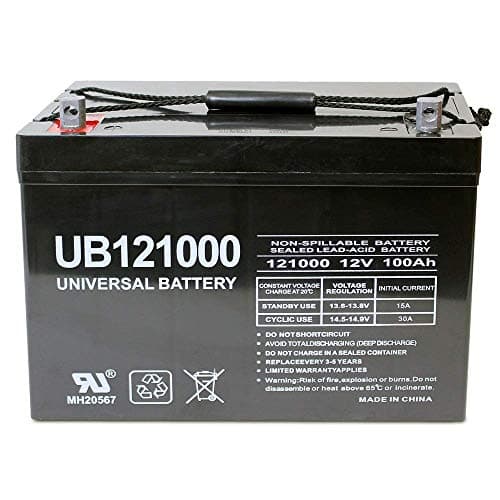
Universal Power Group · Marine Batteries
Best for: A dependable all-purpose AGM for trolling motors, solar, and marine accessories.
Long-standing and widely stocked. The main tradeoff is heavy at more than 60 lb.
$150-300
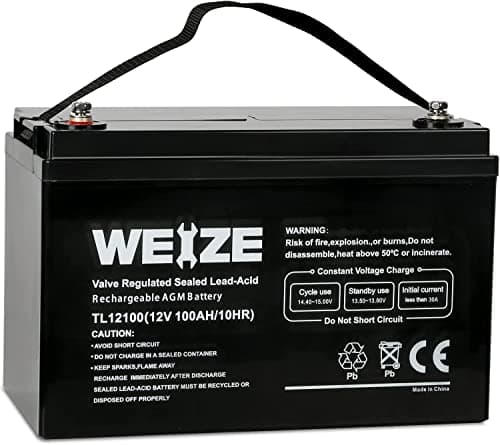
Weize · Marine Batteries
Best for: Budget-conscious trolling motor or house power use where weight is not critical.
Popular value AGM at a low price per amp hour. The main tradeoff is weighs more than 60 lb.
$150-300
Category FAQ
Choose around the motor voltage, expected run time, weight limit, budget, charger, temperature, and the bank layout. AGM can be a simpler fit when the boat already uses lead-acid charging and has room for the weight. LiFePO4 can reduce weight and change usable-capacity and cycle behavior, but it needs compatible charging and battery protection.
The motor's voltage controls the series-bank count: a 12V motor uses a 12V bank, while 24V and 36V motors need the matching series arrangement. Confirm the manufacturer's wiring, fuse or breaker, charger, and battery guidance for the exact motor before connecting batteries or mixing chemistries.
Do not assume it can. Check the charger maker's chemistry profile, voltage, current, series count, and temperature behavior against the battery manual. AGM and LiFePO4 charge differently, and a bank with a battery-management system still needs a compatible charger and correct wiring.
Follow the exact battery and charger manual for state of charge, temperature, disconnects, storage duration, and maintenance. Keep terminals protected, secure the battery against movement, and check the compartment, charger, and cables before the next launch. Cold-weather charging limits are chemistry-specific, especially for lithium.