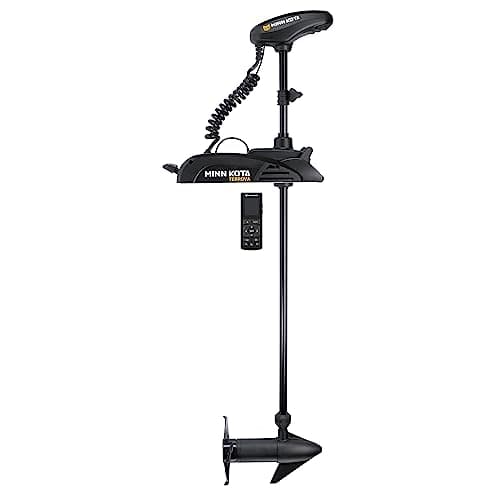
One of our picks
Minn Kota Terrova 55 with i-Pilot
Best for: The aluminum boat owner adding proven Spot-Lock control without stepping up to brushless pricing.
Boat fit · thrust · rigging
Choose a trolling motor that fits the boat and the day. Compare freshwater trolling motors by thrust, shaft length, voltage, steering system, and boat fit.
One of our picks
Best for: The aluminum boat owner adding proven Spot-Lock control without stepping up to brushless pricing.
Research catalog updated
Thrust and rigging path
A trolling motor has to fit the boat, the mounting position, the water, and the battery system. Start with the boat's loaded weight and bow or transom layout, then choose thrust, voltage, shaft length, control style, and electronics compatibility as one setup.
The sticker price is only the motor. A 24 or 36 volt system changes the battery count, charger, wiring, fuse, storage, and installation. The wrong shaft length or mount position can be a bigger problem than choosing the wrong control app.
Use the loaded boat, people, batteries, gear, and typical wind or current to set the thrust range. Then confirm whether the motor is 12, 24, or 36 volt and price the matching batteries and charger before comparing features.
Choose bow or transom placement, measure the deck and stowed clearance, and confirm the shaft reaches the water with room for waves and trim changes. A short shaft can lose bite, while an oversized mount can steal usable deck space.
Decide whether you need a foot pedal, handheld remote, GPS anchor, chartplotter control, built-in sonar, or live-sonar cable routing. Confirm the motor, fish finder, networking cable, and software family before buying into an ecosystem.
Official manufacturer resource
Use the manufacturer's thrust, voltage, shaft-length, and Spot-Lock guidance before choosing a freshwater bow or transom motor.
Check Minn Kota's guideOfficial manufacturer resource
Review the wiring, battery, circuit-breaker, installation, and networking diagrams for 12, 24, 36, and 48 volt systems.
Check wiring and installOfficial manufacturer resource
Compare a brushless, GPS-controlled motor with multiple shaft lengths, chartplotter integration, and optional built-in CHIRP, ClearVü, and SideVü sonar.
Check Garmin Force KrakenManufacturer resources checked August 8, 2026.
Three places to start
Line up fit, strengths, limitations, and useful specifications before you open a retailer page.
Swipe sideways to compare every model.
| Compare | 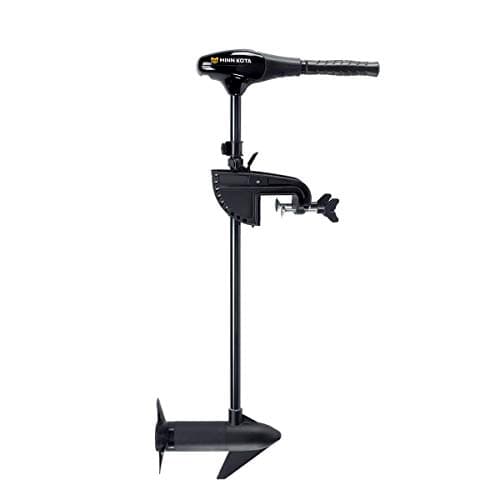 Lower price range Lower price rangeMinn Kota Endura C2 30Minn Kota | 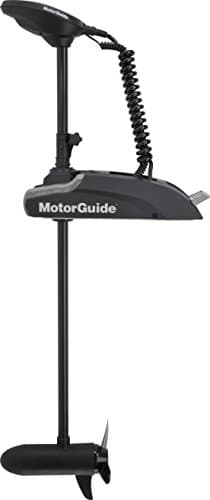 Middle price range Middle price rangeMotorGuide Xi3 Wireless Freshwater 55lb 48-inch with Pinpoint GPSMotorGuide | 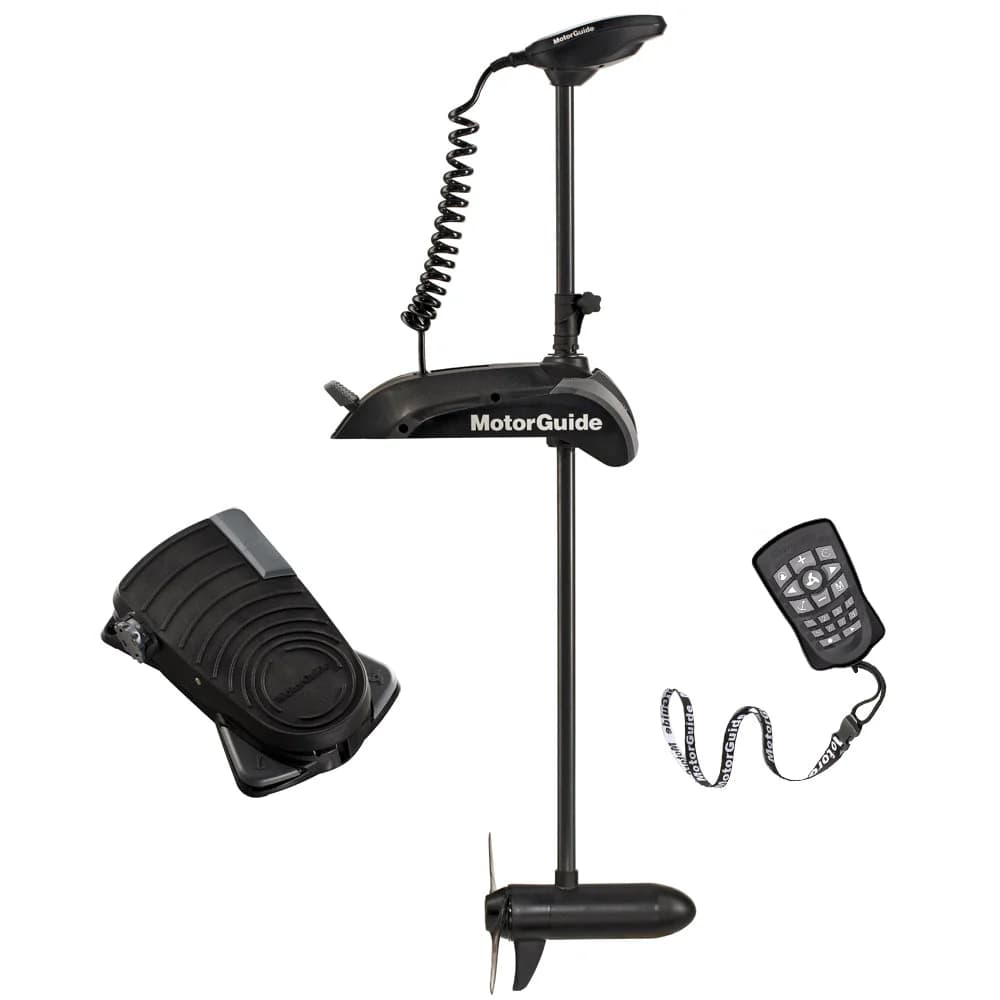 Higher price range Higher price rangeMotorGuide Xi5 Wireless Freshwater 80lb 60-inch with Pinpoint GPS and SonarMotorGuide |
|---|---|---|---|
| Price range | $150-300 | $600-1000 | Over $1000 |
| Best for | The small-craft owner who needs quiet, reliable push for ponds and small lakes at minimal cost. | Freshwater boaters who need a 48 inch shaft and want wireless Pinpoint GPS positioning from a single 12 volt battery. | Deep-V freshwater boats that need an exact 60 inch, 80 pound configuration with bundled GPS positioning and 2D sonar. |
| Strong point | The standard first trolling motor for jon boats, canoes, and small tenders | Exact 48 inch freshwater configuration includes Pinpoint GPS | Exact deep-V configuration combines an 80 pound motor, 60 inch shaft, GPS, and sonar |
| Watch for | Fixed-speed brushed motor wastes battery compared to variable systems | This exact SKU does not include integrated sonar | Chartplotter integration requires a separate Pinpoint GPS Gateway Cable |
| Thrust | 30 lb, 12 volt | 55 lb, 12 volt | 80 lb, 24 volt |
| Shaft | 30 in composite shaft | 48 inch composite shaft | 60 inch composite shaft for deep-V hulls |
| Control | Telescoping tiller with 5 forward and 3 reverse speeds | Wireless handheld remote with electric steer; optional wireless foot pedal | Included wireless foot pedal and handheld remote |
| Next step | Check at AmazonProduct details | Check at AmazonProduct details | Check at MotorGuide dealersProduct details |
We chose one lower, middle, and higher-priced model from products we researched and matched to a current retailer page. This is a useful starting point, not a ranking.
What to compare
Once you know how and where you will use the gear, the specifications become much easier to compare.
Hull weight, wind exposure, current, and mounting position determine useful thrust more than the largest number on the box.
Measure the actual mounting height and leave enough submersion for rough water without creating excess shaft above deck.
Account for battery voltage, runtime, charging, wiring, and total installed cost rather than comparing motor price alone.
Build around the job
Each system connects trolling motors to the other roles that matter in the field. Keep what already works and replace only the weak link.
Shop every activitySportsman Authority picks
Every card tells you who it fits, what it does well, what to watch for, and where to check the current price.
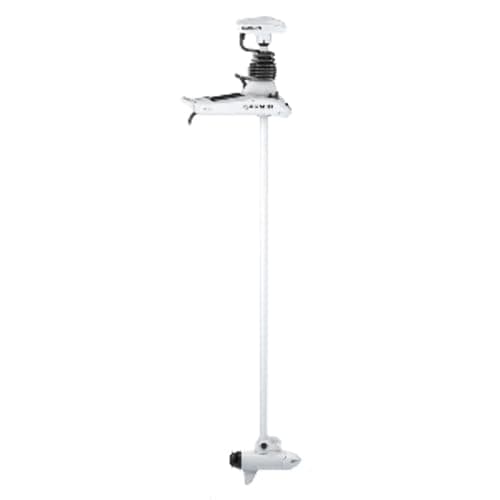
Garmin · Trolling Motors
Best for: The LiveScope-equipped boat owner consolidating motor and electronics into one Garmin ecosystem.
Deepest electronics integration for boats already running Garmin units. The main tradeoff is ecosystem value collapses if your electronics are not Garmin.
Over $1000
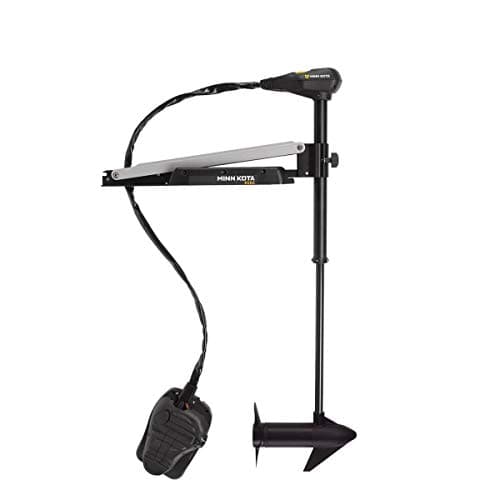
Minn Kota · Trolling Motors
Best for: The hands-on angler who wants bow control for casting without paying for GPS features.
Cheapest way onto the bow with instant cable-steer response. The main tradeoff is no GPS anchoring or autopilot features at all.
$300-600
Minn Kota · Trolling Motors
Best for: The small-craft owner who needs quiet, reliable push for ponds and small lakes at minimal cost.
The standard first trolling motor for jon boats, canoes, and small tenders. The main tradeoff is fixed-speed brushed motor wastes battery compared to variable systems.
$150-300
Minn Kota · Trolling Motors
Best for: The aluminum boat owner adding proven Spot-Lock control without stepping up to brushless pricing.
Spot-Lock remains the benchmark GPS anchor for walleye and crappie boats. The main tradeoff is brushed motor is louder and less efficient than the newer QUEST brushless line.
Over $1000
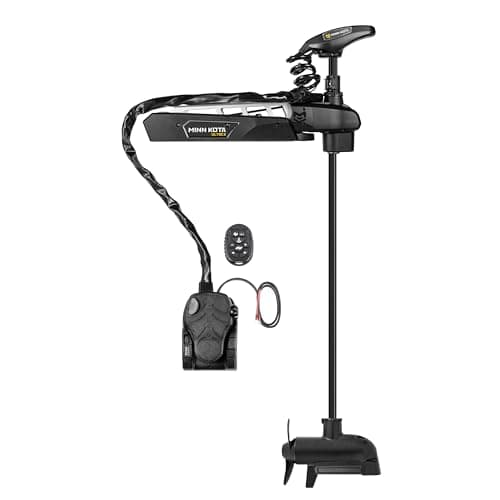
Minn Kota · Trolling Motors
Best for: The tournament-minded angler who refuses to give up cable steer but wants full GPS control.
Combines instant cable-steer feel with full GPS automation, unique in the market. The main tradeoff is flagship price before batteries and rigging.
Over $1000
MotorGuide · Trolling Motors
Best for: Freshwater boaters who need a 48 inch shaft and want wireless Pinpoint GPS positioning from a single 12 volt battery.
Exact 48 inch freshwater configuration includes Pinpoint GPS. The main tradeoff is this exact SKU does not include integrated sonar.
$600-1000
MotorGuide · Trolling Motors
Best for: Deep-V freshwater boats that need an exact 60 inch, 80 pound configuration with bundled GPS positioning and 2D sonar.
Exact deep-V configuration combines an 80 pound motor, 60 inch shaft, GPS, and sonar. The main tradeoff is chartplotter integration requires a separate Pinpoint GPS Gateway Cable.
Over $1000
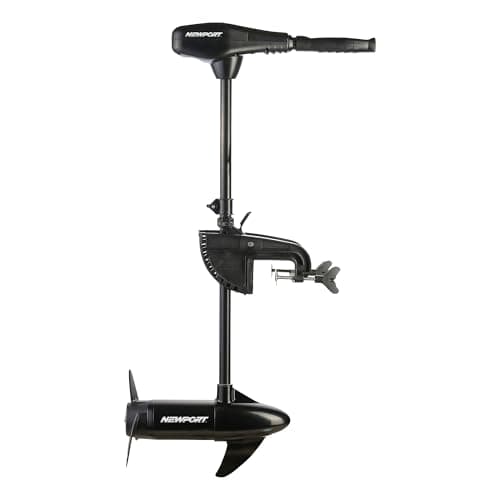
Newport · Trolling Motors
Best for: The kayak, dinghy, or small skiff owner who wants maximum budget thrust including brackish use.
More thrust per dollar than the equivalent Minn Kota transom motors. The main tradeoff is dealer and parts network is thin compared to Minn Kota.
$150-300
Category FAQ
Start with the boat's loaded weight, people, batteries, gear, typical wind, and current. Use the manufacturer's current selection guidance, then compare the motor's thrust and voltage with the battery system you can carry and charge. More thrust is not useful if the boat, mount, or battery setup cannot support it.
Measure from the mounting surface to the waterline, account for the bow height and expected waves, and choose a shaft that keeps the motor section submerged while leaving room to stow and steer. Bow and transom mounts use different measurements, so follow the manufacturer's chart for the exact motor position.
The motor determines the voltage system. A 12 volt motor can use one battery, while 24 and 36 volt systems require the corresponding battery count, series wiring, charger, fuse or breaker, and storage. Price the complete electrical system and run time instead of comparing thrust alone.
Sometimes, but compatibility depends on the motor family, fish finder, network connection, transducer, software, and control features. Check the manufacturer's compatibility list before assuming a motor will share waypoints, control a chartplotter, or carry a live-sonar cable.