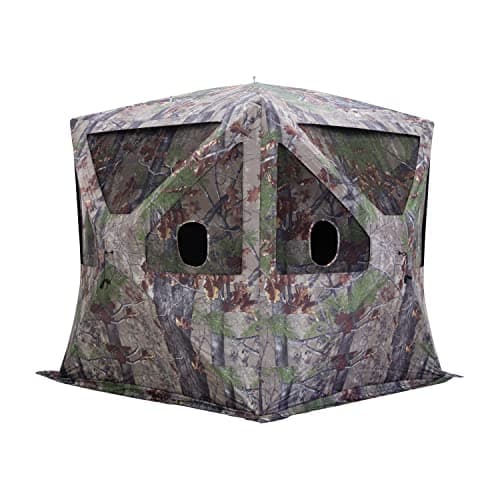
One of our picks
Barronett Big Cat 350 Ground Blind
Best for: Bow hunters and families who prioritize interior space and standing room over ultralight portability.
Hunting blinds · room · setup
Choose a ground blind for the way you sit. Browse portable ground blinds by interior room, window layout, weather control, setup, and packed size.
One of our picks
Best for: Bow hunters and families who prioritize interior space and standing room over ultralight portability.
Research catalog updated
Room and setup path
A ground blind changes what you can carry, how quietly you can get set, and how much room you have to draw, turn, or share a seat. Start with the number of people, shooting position, window layout, and travel distance, then compare a blind as part of the complete field setup.
The blind alone is not a finished hunting position. Budget for stakes and tie-downs, a quiet chair, brush or natural cover, window management, scent and access planning, and the packed size you can actually move to the spot.
Count hunters, seats, packs, camera gear, and the movement your setup needs. A compact one- or two-person blind is easier to carry, while a taller three- or four-person blind gives more standing room and space to turn. Match the interior to the way you will actually sit and move.
Place the blind around likely approaches, prevailing wind, and the direction you need to watch. Check window height, quiet opening panels, shooting-lane width, door position, and whether the blind lets you see without exposing unnecessary movement. Manufacturer diagrams are more useful than a photo alone.
Add the blind, stakes, tie-off ropes, chair, ground mat, brush or natural cover, rain protection, pack or sled, and any window accessories. Include the carry distance and setup time. A light blind that never reaches the spot is not the lower-cost setup.
Official manufacturer resource
Use the official dimensions, three-to-four-person capacity, 80-inch standing height, quiet zipperless windows, fabric, and included stakes and tie-off ropes as a reference for a roomy hub blind.
Check Big Cat detailsOfficial manufacturer resource
Compare the official small hub blind footprint, ShadowGuard interior, Spider Hub frame, window layout, and carry approach for a mobile one- or two-person sit.
Check Care Taker detailsOfficial manufacturer resource
Review the manufacturer's compact stakeout design, see-through panels, three shooting windows, two-hub frame, and lightweight carry profile for run-and-gun hunting.
Check Stakeout specificationsManufacturer resources checked August 8, 2026.
Three places to start
Line up fit, strengths, limitations, and useful specifications before you open a retailer page.
Swipe sideways to compare every model.
| Compare | 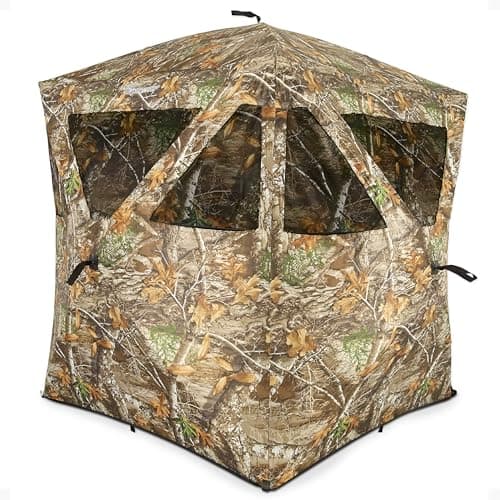 Lower price range Lower price rangeAmeristep Care Taker Ground BlindAmeristep | 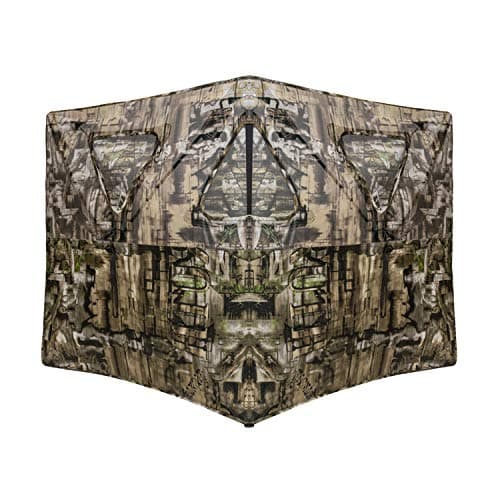 Middle price range Middle price rangePrimos Double Bull Stakeout Blind with SurroundViewPrimos | Higher price rangeBarronett Big Cat 350 Ground BlindBarronett Blinds |
|---|---|---|---|
| Price range | $50-150 | $50-150 | $150-300 |
| Best for | The run-and-gun hunter who wants an affordable, packable hub blind for one person and occasional two-person use. | The mobile turkey or run-and-gun hunter who wants an ultralight see-through hub to carry far and set up fast. | Bow hunters and families who prioritize interior space and standing room over ultralight portability. |
| Strong point | Light and compact for a quick carry-in setup | Very light 2-hub design packs down for run-and-gun mobility | Generous interior volume for bow hunters and multiple occupants |
| Watch for | Tight for two adults with gear, so it suits a solo hunter with room to move | Low 37 in height needs a low seat and suits sitting rather than standing | Larger, heavier packed size makes it less ideal for long walk-ins |
| Type | Hub-style with Spider Hub frame | Ultralight 2-hub see-through ground blind | Oversized hub-style |
| Camo | Realtree | Truth | Bloodtrail Backwoods |
| Capacity | 1 to 2 hunters | Not specified | 3 hunters |
| Next step | Check at AmazonProduct details | Check at AmazonProduct details | Check at AmazonProduct details |
We chose one lower, middle, and higher-priced model from products we researched and matched to a current retailer page. This is a useful starting point, not a ranking.
What to compare
Once you know how and where you will use the gear, the specifications become much easier to compare.
Seating, bows, camera gear, clothing, and shooting position determine the useful floor area and height.
Opening shape, height, noise, screens, and visibility should work from the seat and direction you expect to use.
Fabric, hubs, stakes, tie-downs, brush loops, packed weight, and practice affect how reliably the blind works.
Build around the job
Each system connects ground blinds to the other roles that matter in the field. Keep what already works and replace only the weak link.
Shop every activitySportsman Authority picks
Every card tells you who it fits, what it does well, what to watch for, and where to check the current price.
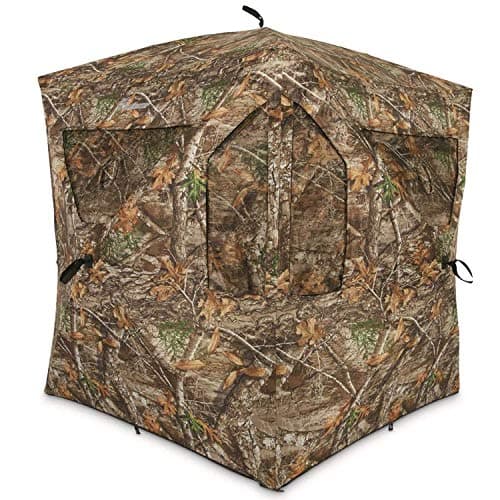
Ameristep · Ground Blinds
Best for: The hunter or pair who wants a durable, roomy three-person hub with a blackout interior and many window options.
Durable Durashell Plus shell with a ShadowGuard blackout interior that hides movement. The main tradeoff is heavier packed size than compact hubs, so it suits setups you can cart or drive close to.
$150-300
Ameristep · Ground Blinds
Best for: The run-and-gun hunter who wants an affordable, packable hub blind for one person and occasional two-person use.
Light and compact for a quick carry-in setup. The main tradeoff is tight for two adults with gear, so it suits a solo hunter with room to move.
$50-150
Barronett Blinds · Ground Blinds
Best for: Bow hunters and families who prioritize interior space and standing room over ultralight portability.
Generous interior volume for bow hunters and multiple occupants. The main tradeoff is larger, heavier packed size makes it less ideal for long walk-ins.
$150-300
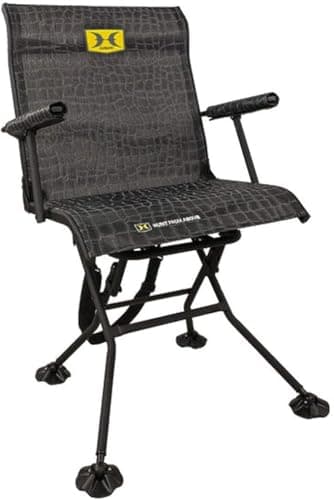
Hawk · Ground Blinds
Best for: The blind hunter who wants a quiet swiveling seat to pair with an existing ground blind.
Silent 360 degree swivel lets a hunter cover every window. The main tradeoff is this is a chair accessory, not a blind, so it provides no concealment on its own.
$50-150
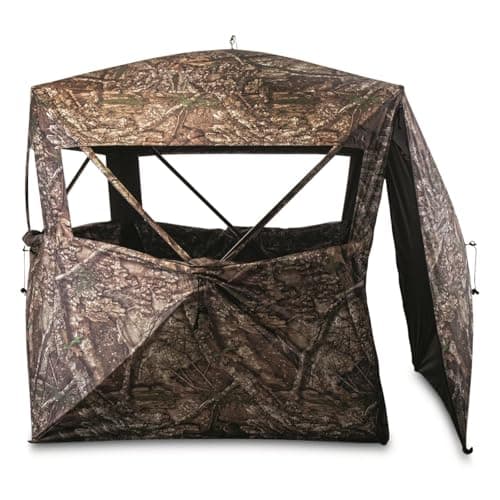
HuntRite · Ground Blinds
Best for: The first-time or budget buyer who needs a simple two-person blind for occasional seasons.
Very affordable entry-level blind. The main tradeoff is house-brand fabric and hardware are lighter duty than premium blinds.
$50-150
Primos · Ground Blinds
Best for: The mobile turkey or run-and-gun hunter who wants an ultralight see-through hub to carry far and set up fast.
Very light 2-hub design packs down for run-and-gun mobility. The main tradeoff is low 37 in height needs a low seat and suits sitting rather than standing.
$50-150
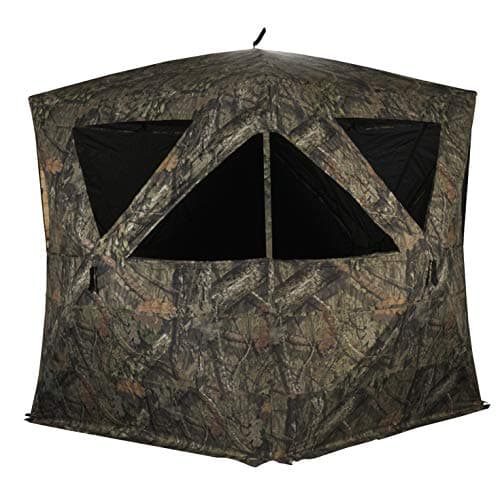
Rhino Blinds · Ground Blinds
Best for: The hunter or group who wants an affordable, roomy hub blind with tall standing room and quick setup.
Roomy three to four person footprint with a tall 80 in center height. The main tradeoff is the 150D shell is lighter duty than premium blinds, so stake and guy it in high wind.
$50-150
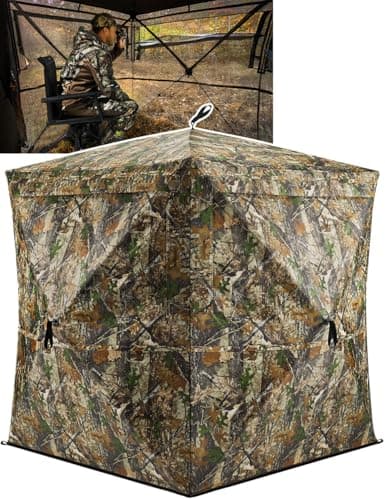
TIDEWE · Ground Blinds
Best for: The value-focused hunter who wants see-through visibility without a premium-brand price.
See-through concealment at a value price. The main tradeoff is less multi-season field reporting than long-established blind brands.
$50-150
Category FAQ
Count the hunters, seats, packs, camera gear, and movement your setup requires. A one-person mobile sit can favor a compact blind, while two hunters or standing shots need more width and height. Use the manufacturer's interior dimensions and capacity, then leave room to turn and manage equipment without brushing the walls.
Choose windows around the approaches and shooting or observation lanes you expect to use. Check height, opening style, noise, door position, and whether you can see enough of the lane while staying seated. A blind with more windows is not automatically better if the openings do not match the site.
A hub blind usually gives more room and weather coverage, while a stakeout blind is lighter and faster to carry when the spot changes often. Compare the packed weight, setup steps, visibility, and room to move with the exact way you hunt rather than choosing by style alone.
Budget for stakes, tie-off ropes, a quiet chair, ground mat, brush or natural cover, window accessories, rain protection, and a pack or sled when the carry is long. Check the product contents first because some blinds include stakes and ropes while others leave those pieces to you.