One of our picks
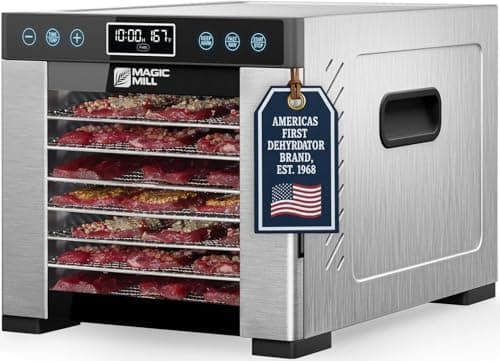
Magic Mill Pro 7-Tray Stainless Steel Food Dehydrator
Best for: Higher-volume jerky makers who want stainless trays and a high heat ceiling without a premium price.
Game Processing · 8 researched picks plus current listings
Browse dehydrators by tray area, airflow, temperature control, timer, cleanup, and batch size.
One of our picks
Best for: Higher-volume jerky makers who want stainless trays and a high heat ceiling without a premium price.
Research catalog updated
Three places to start
Line up fit, strengths, limitations, and useful specifications before you open a retailer page.
Swipe sideways to compare every model.
| Compare | 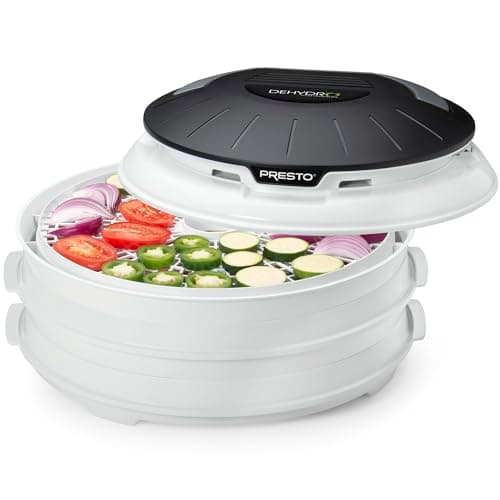 Lower price range Lower price rangePresto 06300 Dehydro Electric Food DehydratorPresto | Middle price rangeMagic Mill Pro 7-Tray Stainless Steel Food DehydratorMagic Mill | 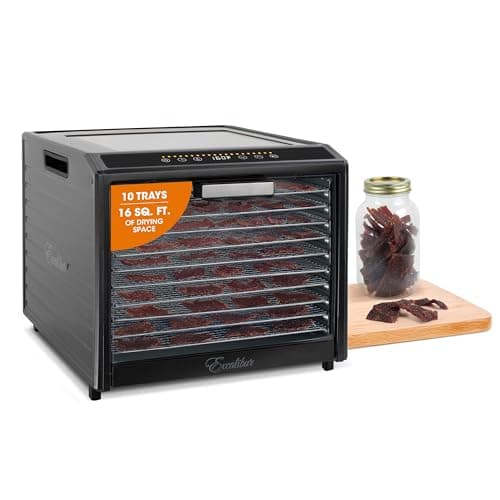 Higher price range Higher price rangeExcalibur Performance Series 10-Tray Stainless Steel DehydratorExcalibur |
|---|---|---|---|
| Price range | Under $50 | $50-150 | $300-600 |
| Best for | Budget first-timers drying fruit and simple jerky batches who do not need fine temperature control. | Higher-volume jerky makers who want stainless trays and a high heat ceiling without a premium price. | Enthusiasts who want a premium, high-capacity box dehydrator with a viewing window and monitoring. |
| Strong point | The cheapest way into home drying and simple jerky | High 176 F ceiling suits food-safe jerky targets | Large premium capacity with a glass door to monitor batches |
| Watch for | No adjustable thermostat, so jerky temperature control is limited | Plastic housing rather than a full stainless cabinet | Expensive with a large footprint |
| Trays | 6 trays, expandable to 8 | 7 full-size stainless steel trays | 10 stainless steel trays |
| Temperature | Fixed, no adjustable thermostat | Adjustable 95 F to 176 F | Adjustable control |
| Airflow | Vertical, bottom-mounted fan | Not specified | Horizontal, rear-mounted fan |
| Next step | Check at AmazonProduct details | Check at AmazonProduct details | Check at AmazonProduct details |
We chose one lower, middle, and higher-priced model from products we researched and matched to a current retailer page. This is a useful starting point, not a ranking.
What to compare
Once you know how and where you will use the gear, the specifications become much easier to compare.
Usable tray area and airflow should match the pounds and thickness you prepare in one session.
Stable temperature, timer range, fan placement, tray rotation, and an easy-to-read control panel support repeatable results.
Follow current USDA guidance for meat preparation, heating, drying, storage, sanitation, and shelf life.
Build around the job
Each system connects food dehydrators to the other roles that matter in the field. Keep what already works and replace only the weak link.
Shop every activitySportsman Authority picks
Every card tells you who it fits, what it does well, what to watch for, and where to check the current price.
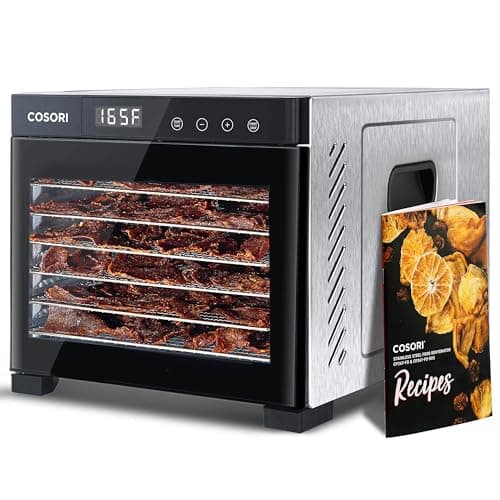
COSORI · Food Dehydrators
Best for: Home cooks and anglers who want even, hands-off jerky and fish drying with a digital timer.
Even horizontal drying and dishwasher-safe stainless trays. The main tradeoff is larger counter footprint than round stackable units.
$50-150
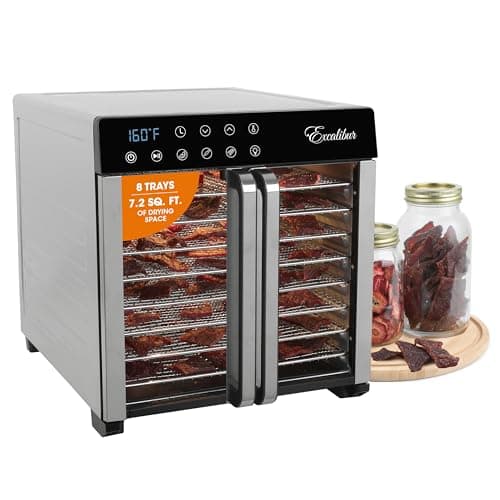
Excalibur · Food Dehydrators
Best for: Serious jerky and fish batches that need a lot of even drying space in one box.
Large capacity with even horizontal airflow. The main tradeoff is bulky footprint that wants dedicated counter space.
$150-300
Excalibur · Food Dehydrators
Best for: Enthusiasts who want a premium, high-capacity box dehydrator with a viewing window and monitoring.
Large premium capacity with a glass door to monitor batches. The main tradeoff is expensive with a large footprint.
$300-600
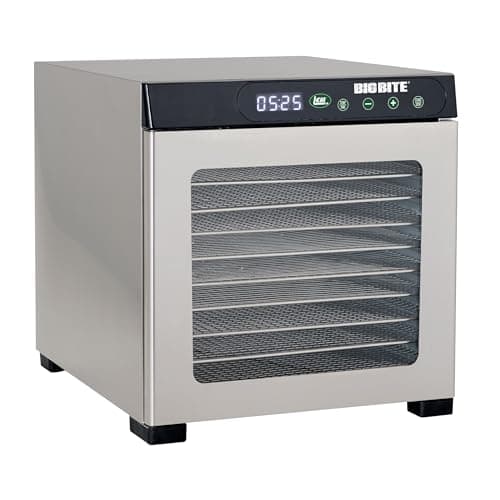
LEM Products · Food Dehydrators
Best for: Hunters processing large game harvests into jerky in volume.
Big stainless capacity from a hunter-focused brand. The main tradeoff is premium price for the tier.
$150-300
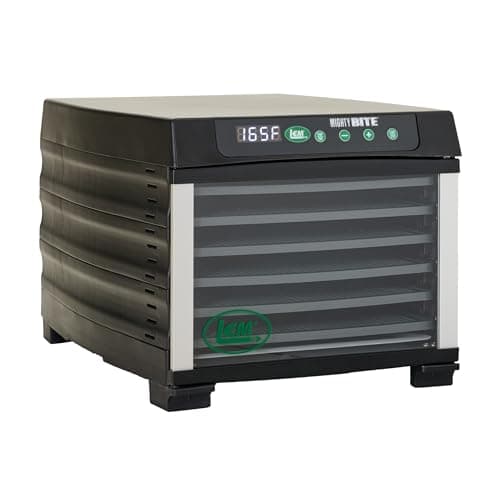
LEM Products · Food Dehydrators
Best for: Hunters already running LEM processing gear who want a matching entry dehydrator.
A trusted game-processing brand at an entry price. The main tradeoff is mixed tray materials rather than full stainless.
$50-150
Magic Mill · Food Dehydrators
Best for: Higher-volume jerky makers who want stainless trays and a high heat ceiling without a premium price.
High 176 F ceiling suits food-safe jerky targets. The main tradeoff is plastic housing rather than a full stainless cabinet.
$50-150
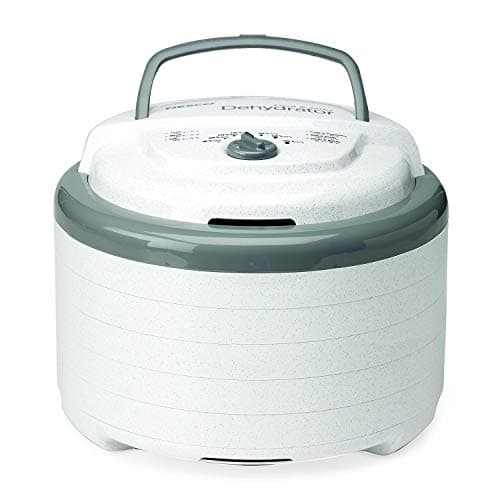
Nesco · Food Dehydrators
Best for: Hunters and anglers who want an affordable, proven jerky maker with temperature control.
A proven value pick with a real adjustable thermostat. The main tradeoff is round stackable trays hold less than box-style shelves.
$50-150
Presto · Food Dehydrators
Best for: Budget first-timers drying fruit and simple jerky batches who do not need fine temperature control.
The cheapest way into home drying and simple jerky. The main tradeoff is no adjustable thermostat, so jerky temperature control is limited.
Under $50
More gear to browse
These are current Amazon listings with exact listing photos. They are not Sportsman Authority picks until we have reviewed them.
Current retailer listingsRefreshed when you browse
These broader results stay out of the way until you reach them. They are retailer listings, not Sportsman Authority picks.
Category FAQ
Browse dehydrators by tray area, airflow, temperature control, timer, cleanup, and batch size. Rule out anything that misses batch size, control, and food handling; only then compare conveniences and price.
Usable tray area and airflow should match the pounds and thickness you prepare in one session. Let the way you use the gear set the threshold instead of chasing the biggest specification.
Stable temperature, timer range, fan placement, tray rotation, and an easy-to-read control panel support repeatable results. Picture the handoff, carry, storage, and cleanup around it before you pay for an upgrade.
Follow current USDA guidance for meat preparation, heating, drying, storage, sanitation, and shelf life. Spending more makes sense only when it fixes a limitation you will actually notice.