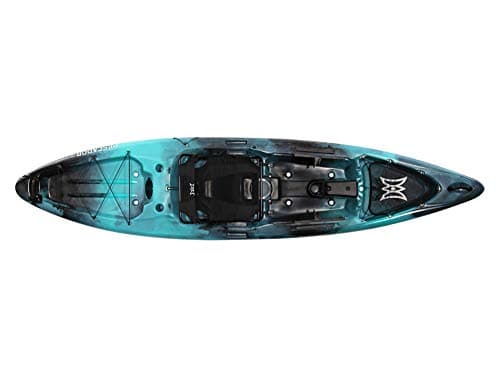
One of our picks
Perception Pescador Pro 12 Sit-on-Top Fishing Kayak with Lawn Chair Seat
Best for: Serious recreational anglers who prioritize speed, glide, and seat comfort on larger lakes and bays.
Fishing kayaks · hull · carry
Choose a fishing kayak you can actually move. Browse fishing kayaks by water type, propulsion, stability, transport, seat, and usable deck layout.
One of our picks
Best for: Serious recreational anglers who prioritize speed, glide, and seat comfort on larger lakes and bays.
Research catalog updated
Hull, rigging, and transport path
A fishing kayak has two jobs: put you in position to fish and make it possible to get there without dreading the launch. Start with the water, hull shape, stability, and propulsion, then check usable capacity, seat fit, rigging, storage, and the way you transport and carry the boat.
Published capacity is not the same as a comfortable fishing load. Count the angler, seat, paddle, tackle, battery, electronics, cooler, safety equipment, and launch cart before comparing a kayak by length or price.
Longer hulls can track and glide better, while wider platforms can make casting and gear management feel steadier. Match the hull to calm ponds, open lakes, light current, or protected salt water, then confirm the launch and storage space you actually have.
Start with the manufacturer's capacity, then subtract the angler and everything that stays aboard: seat, paddle, tackle, battery, fish finder, cooler, anchor, dry bags, and a properly fitted PFD. Leave room for the deck and tankwell to remain useful instead of shopping to the maximum number.
Add the paddle, PFD, cart, roof-rack pads or trailer, tie-downs, dry storage, anchor system, rod holders, fish finder mount, battery box, and storage cover. A kayak that fits the water but not the vehicle or launch path is not the lower-cost choice.
Official manufacturer resource
Use the current Pescador Pro page to compare the adjustable seat, storage, accessory mounting, rod holders, and 12-foot hull profile for a serious recreational fishing kayak.
Check Pescador detailsOfficial manufacturer resource
Review the manufacturer's open fishing deck, elevated lawn-chair seat, stability-focused layout, and current specifications before building a stand-and-fish setup.
Check Catch Mode detailsOfficial manufacturer resource
Compare the 11-foot hull, rudder-ready setup, Hero Seat, storage, and rigging options for lake and light-current fishing where tracking matters.
Check Sea Ghost detailsManufacturer resources checked August 8, 2026.
Three places to start
Line up fit, strengths, limitations, and useful specifications before you open a retailer page.
Swipe sideways to compare every model.
| Compare | 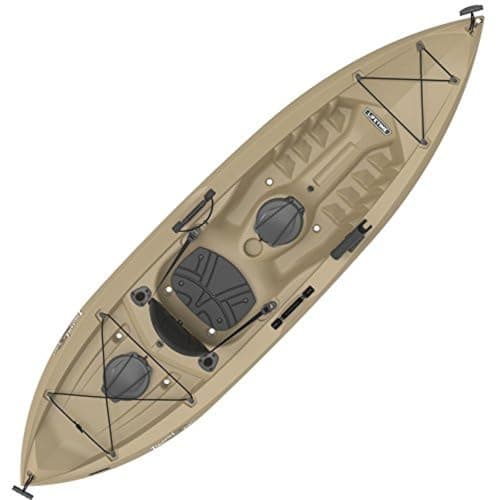 Lower price range Lower price rangeLifetime Tamarack Angler 100 Sit-on-Top Fishing KayakLifetime | 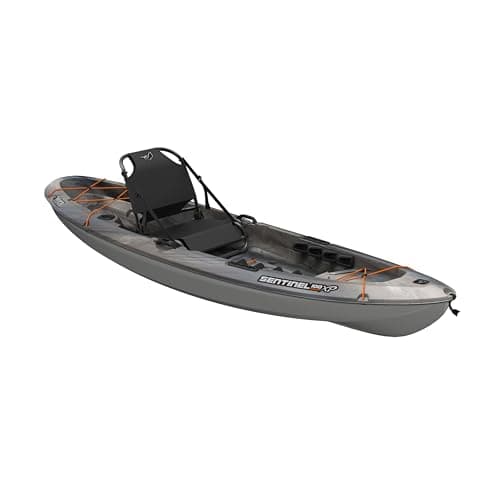 Middle price range Middle price rangePelican Sentinel 100X Angler Sit-on-Top Fishing KayakPelican | 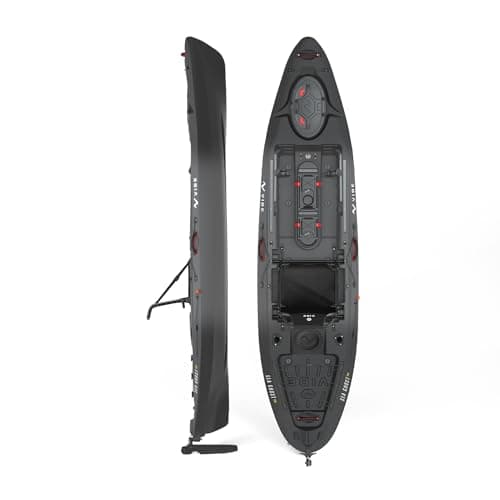 Higher price range Higher price rangeVibe Kayaks Sea Ghost 110 Angler Sit-on-Top Fishing Kayak with RudderVibe Kayaks |
|---|---|---|---|
| Price range | $300-600 | $300-600 | $600-1000 |
| Best for | Anglers who want a nearly indestructible, ultra-stable platform for calm water on a budget. | Smaller or first-time paddlers who need the lightest possible hull to car-top alone. | Anglers who want a fully rigged, high-capacity kayak with a rudder for open lakes and light current. |
| Strong point | Nearly indestructible HDPE build | One of the lightest hulls here, easy to load onto a roof rack unassisted | Highest weight capacity here at 425 lb, the most headroom for body weight plus gear |
| Watch for | Heavy for its size at 52 lb | Short 9 ft 6 in hull glides and tracks less efficiently on open water | 62 lb and 11 ft 6 in make solo loading a two-person or cart job |
| Length | 10 ft | 9 ft 6 in | 11 ft 6 in |
| Hull weight | 52 lb | About 44 lb | 62 lb |
| Weight capacity | 275 lb | About 275 lb | 425 lb |
| Next step | Check at AmazonProduct details | Check at AmazonProduct details | Check at AmazonProduct details |
We chose one lower, middle, and higher-priced model from products we researched and matched to a current retailer page. This is a useful starting point, not a ranking.
What to compare
Once you know how and where you will use the gear, the specifications become much easier to compare.
Hull length, width, rocker, and propulsion should fit the lakes, rivers, wind, current, and distance you expect.
Weight, carry points, vehicle height, storage length, and launch access can matter more than one extra deck feature.
Seat position, standing room, pedal clearance, storage access, and electronics mounts should support how you fish.
Build around the job
Each system connects fishing kayaks to the other roles that matter in the field. Keep what already works and replace only the weak link.
Shop every activitySportsman Authority picks
Every card tells you who it fits, what it does well, what to watch for, and where to check the current price.
Lifetime · Fishing Kayaks
Best for: Anglers who want a nearly indestructible, ultra-stable platform for calm water on a budget.
Nearly indestructible HDPE build. The main tradeoff is heavy for its size at 52 lb.
$300-600
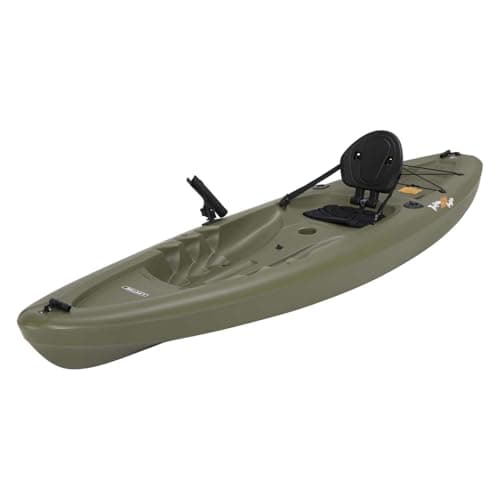
Lifetime · Fishing Kayaks
Best for: Budget anglers who want slightly better tracking than a pure flat-bottom hull.
Built-in skeg tracks better than most flat-bottom rec kayaks. The main tradeoff is basic padded seat back rather than a framed lawn-chair seat.
$300-600
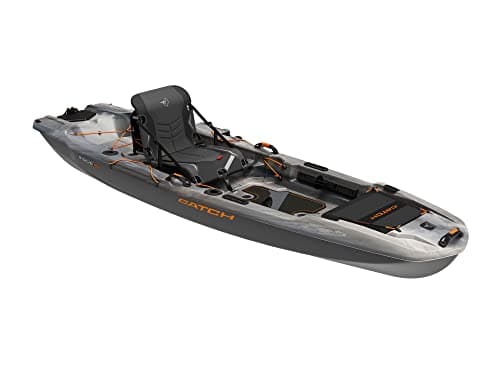
Pelican · Fishing Kayaks
Best for: Anglers who want a stand-and-fish platform with a premium seat without passing the mid hundreds.
Elevated framed seat is far more comfortable for all-day fishing. The main tradeoff is 63 lb hull is heavy to car-top solo.
$600-1000
Pelican · Fishing Kayaks
Best for: Smaller or first-time paddlers who need the lightest possible hull to car-top alone.
One of the lightest hulls here, easy to load onto a roof rack unassisted. The main tradeoff is short 9 ft 6 in hull glides and tracks less efficiently on open water.
$300-600
Perception · Fishing Kayaks
Best for: Serious recreational anglers who prioritize speed, glide, and seat comfort on larger lakes and bays.
Longest hull here tracks and glides best for covering water. The main tradeoff is heaviest and longest here at 64 lb and 12 ft, the hardest to transport solo.
$600-1000
Vibe Kayaks · Fishing Kayaks
Best for: Anglers who want a fully rigged, high-capacity kayak with a rudder for open lakes and light current.
Highest weight capacity here at 425 lb, the most headroom for body weight plus gear. The main tradeoff is 62 lb and 11 ft 6 in make solo loading a two-person or cart job.
$600-1000
Category FAQ
Match length and width to the water, carry method, and posture you need. A longer hull can glide and track better, while a wider platform can give more room for casting and gear. Check the actual launch, roof-rack, storage, and cart constraints before choosing from dimensions alone.
Use the manufacturer's capacity as a ceiling, then subtract the angler and every item that stays aboard: seat, paddle, tackle, battery, fish finder, cooler, anchor, dry bags, and PFD. Leave useful freeboard and deck space instead of planning to fish at the maximum published load.
A rudder can help a longer kayak hold a line in wind, current, or while reaching for gear, but it adds parts, cost, and maintenance. Paddle the hull you choose first when possible, then confirm the manufacturer's rudder compatibility and replacement-parts path before paying for the upgrade.
Plan for a paddle, properly fitted PFD, cart, roof-rack pads or trailer, tie-downs, dry storage, cover, anchor system, rod holders, and any fish finder, battery box, or mount. Follow local boating rules and the manufacturer's launch and transport guidance rather than treating the hull as a complete water system.